By Rodger Morrow
Editor & Publisher, Beaver County Business
Listen to a podcast discussion about this article.
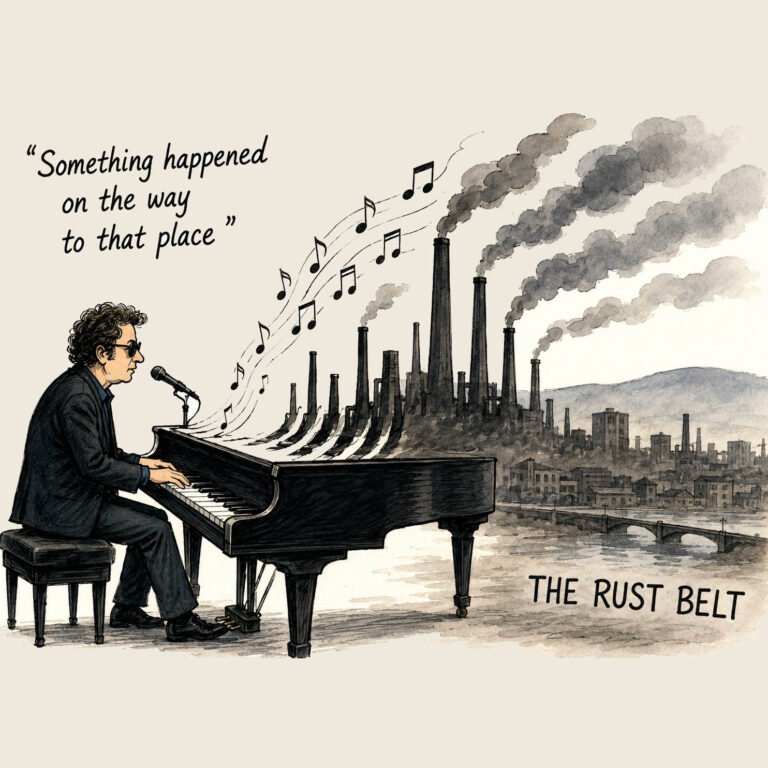
When you live in Beaver County long enough, you start to collect facts the way other people collect bottle caps or unpaid parking tickets. Some are impressive, some are absurd, and most leave you wondering why the rest of the world hasn’t noticed.
For instance: Fort McIntosh, which sat right here on the riverbank, was the first peacetime home of the U.S. Army. That means Beaver County was where the American military first learned how to march without being shot at. Archaeologists later dug up 80,000 artifacts on the site—stone footers, fireplaces, the occasional musket ball. You might think 80,000 objects would warrant at least a Smithsonian gift shop. Instead we got a plaque and, if you’re lucky, a reenactor in a tricorn hat.
Logstown, just downriver in present-day Baden, was once more important than Pittsburgh, which is the kind of fact that makes Pittsburghers nervous. George Washington dropped by in 1753, probably on his way to invent the cherry tree anecdote. The Treaty of Logstown was signed there, too, though today the spot is better known for Sheetz runs.
If utopians are more your thing, we had those too. The Harmony Society—an industrious band of celibate Germans—founded Economy (today’s Ambridge), ran a ten-cent museum, pioneered the American silk trade, and then sold the whole place to the American Bridge Company, which helpfully abbreviated the name to “Ambridge.” I always liked that: a tidy act of corporate branding a century before Madison Avenue.
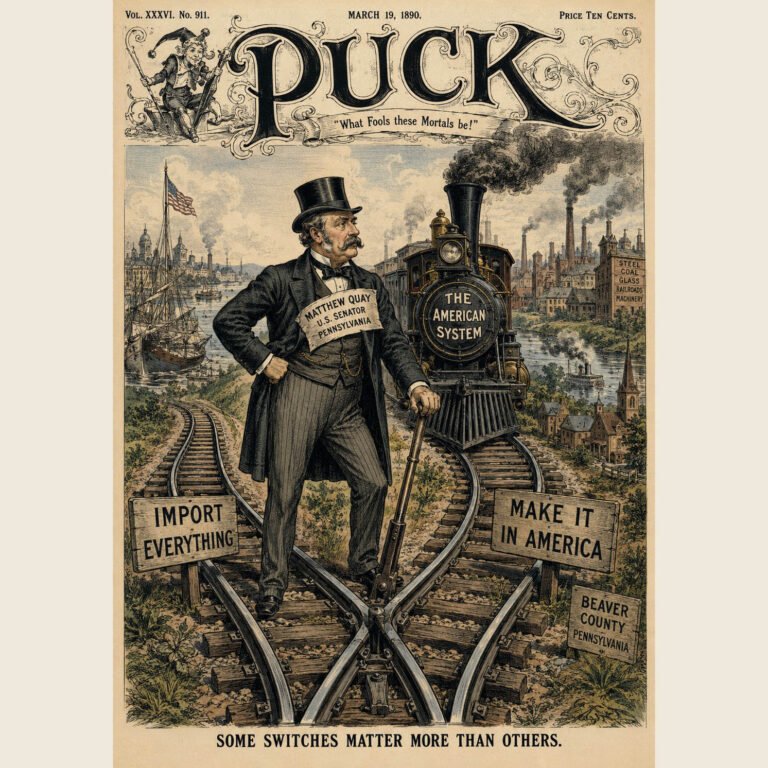
And then there’s Matthew Quay, Beaver’s most famous politician, who managed to get himself described as “the ablest politician this country has ever produced.” He won the Medal of Honor at 29, helped elect presidents, and left behind a National Historic Landmark of a house. Around here we simply call it “Quay’s place,” as if he were still out front reading the paper.
Of course, Beaver County has its natural wonders too. Buttermilk Falls, named by Civil War veterans toasting with actual buttermilk (because champagne was scarce in 1870), is one of the few waterfalls in Pennsylvania you can walk behind. Raccoon Creek State Park boasts 700 species of wildflowers, which is more than I can name, and Frankfort Mineral Springs was once a 19th-century health spa, offering the sort of cure-all waters that were later replaced by ibuprofen and Gatorade.
We also lay claim to one of the longest-serving mayors in U.S. history: Robert Linn of Beaver, who held office from 1946 to 2004. Fifty-eight years. Entire nations have risen and fallen in less time. People who were in diapers when he took office were on Medicare by the time he left.
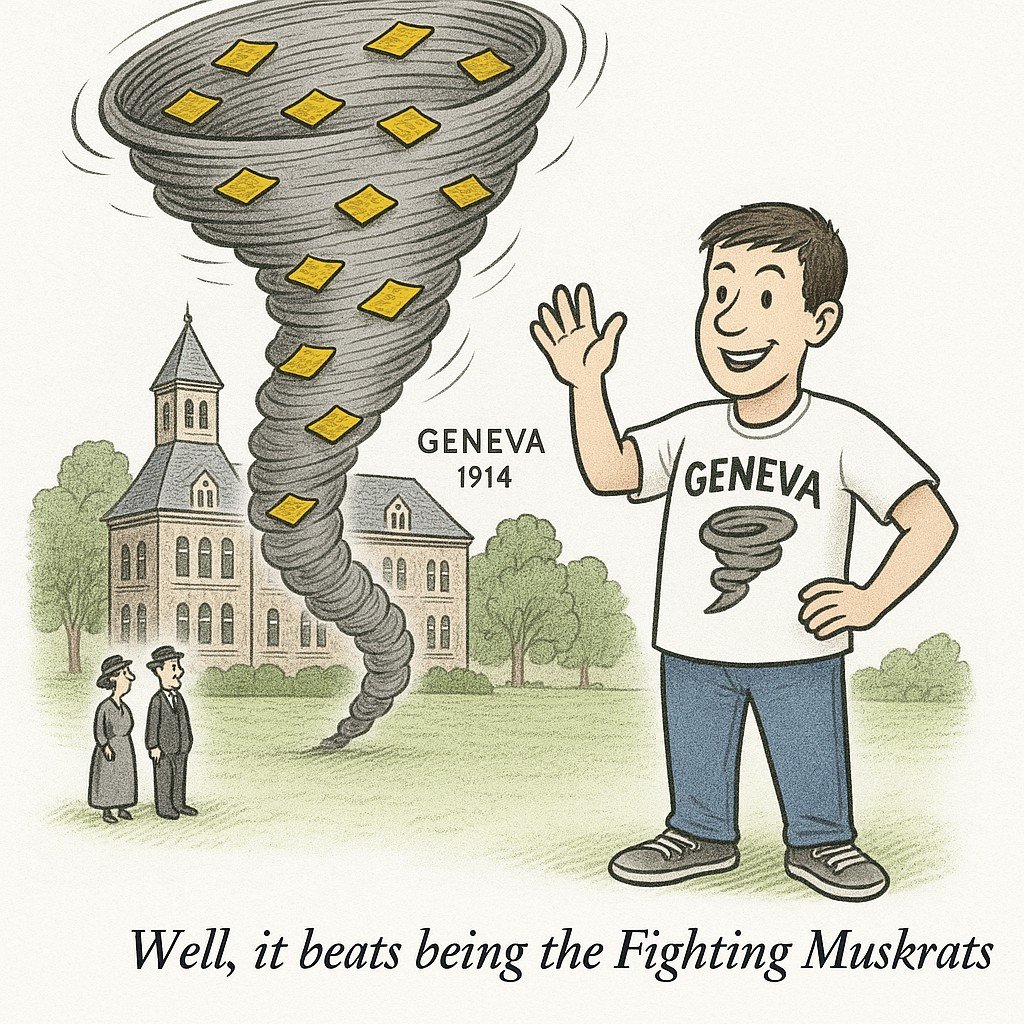
There’s coal that lit like wood, land that was fought over in courtrooms longer than on battlefields, and a tornado in 1914 that ripped the golden shingles off Geneva College’s Old Main—hence the school mascot, the “Golden Tornado.” Personally, I think it beats being the “Fighting Muskrats.”
If I had to sum it all up, I’d say Beaver County is a place where history never quite sits still. It pokes its head up in odd places: a Revolutionary War treaty underfoot, a utopian silk mill around the corner, a mayor whose tenure lasted longer than most marriages. It’s all endlessly fascinating, in that small-town way that sneaks up on you.
And if you think these facts are impressive, just wait until I tell you about the Dairy Queen at Third and Third.