By Rodger Morrow,
Editor & Publisher, Beaver County Business
Listen to a podcast discussion about this article.
Steel tariffs may not make for stirring cocktail chatter, but in Beaver County they still move the needle.
Tenaris executives will tell you the company’s $85 million investment in its Koppel mill has as much to do with federal policy as it does with furnaces and filters.
“All of it is happening, of course, because of the commitment of Tenaris with the U.S. market to have a strong production footprint,” said Guillermo Moreno, president of Tenaris USA. “But also because of the support that the current administration, the Trump administration, is giving to the steel industry through the tariffs that are helping to prevent unfair imports from countries like China, Korea, Taiwan and Vietnam.”
Cleaner Air for a Century-Old Mill
The mill in question has been making steel since 1906. Its latest upgrade is a bright green baghouse — a kind of industrial vacuum filter that will clean exhaust fumes from the electric arc furnace. Instead of ten smokestacks coughing out particulates and carbon monoxide, the new system gathers dust, separates it for storage, and vents cleaner air through a single stack.
“This will help us to have a cleaner environment for our employees and the surrounding community,” Moreno said.
A Roller-Coaster Decade
The Koppel plant, just off I-76 between Beaver Falls and Ellwood City, employs about 300 people and is one of three Tenaris mills in the region (the others are in Ambridge and across the Ohio line). Tenaris acquired them all in 2020 in its $1.1 billion purchase of Ipsco Tubulars — unfortunately timed to coincide with the Covid-19 pandemic.
Within weeks, the plant was idled. It restarted in 2021, heat treatment resumed in 2022, then paused again in 2024 as low drilling activity and foreign imports undercut domestic orders. Tenaris now plans to bring those heat treatment operations back online late this year or early next.
Ribbon Cutting in Koppel
Tuesday’s dedication of the baghouse drew a bipartisan Beaver County crowd:
- U.S. Rep. Chris Deluzio (D-Pittsburgh)
- State Sen. Elder Vogel (R-Rochester)
- Beaver County Commissioner Jack Manning
- Chamber of Commerce Chair Kathryn Klaber
Deluzio struck the local-jobs chord: “That means good-paying union jobs. It means good, healthier air. It means strengthening our industrial base in a way that we need in this country.”
Betting on Beaver County Steel
For more than a century, the Koppel mill has ridden out booms, busts, idlings, and re-starts. The $85 million bet Tenaris is making now is that with a little help from tariffs — and a little less smoke in the air — steel can still be made profitably on the banks of the Beaver.
Sidebar: Tariffs 101 — Why They Matter to Koppel
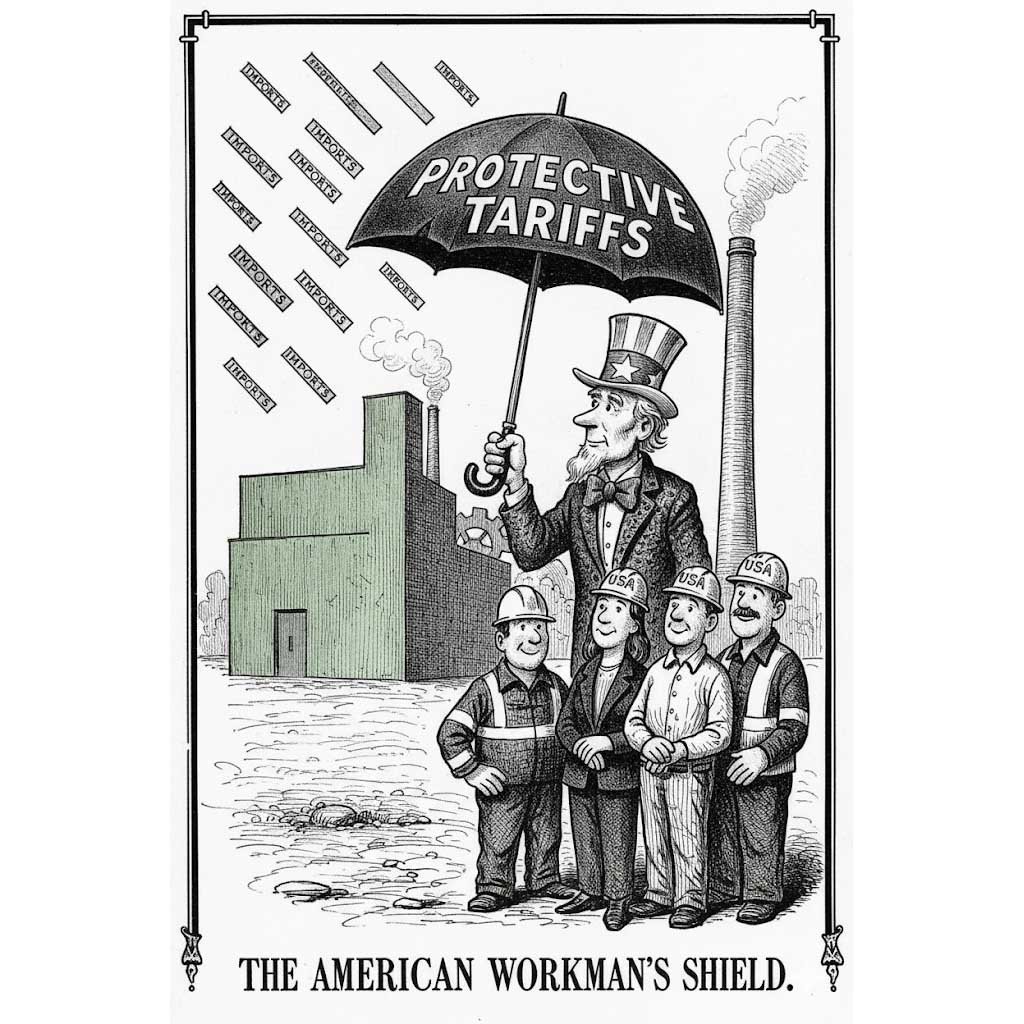
- What are they? A tariff is essentially a tax on imported goods. For steel, it means foreign producers shipping pipe into the U.S. market pay extra at the border.
- Why use them? To level the playing field. Countries like China, Korea, Taiwan, and Vietnam often subsidize their steel industries, allowing them to sell pipe more cheaply than U.S. mills can make it. Tariffs raise the cost of those imports so American-made steel can compete.
- Who benefits? Mills like Tenaris in Koppel, Ambridge, and elsewhere, which gain a buffer against unfairly priced imports. That translates into steadier operations and more secure union jobs.
- Who pays? Oil and gas producers, pipeline builders, and other buyers of steel pipe often absorb higher costs — though in the long run, local communities benefit from stronger payrolls and tax bases.
- The bottom line: Without tariffs, Tenaris’s $85 million investment in Koppel might have looked like throwing good money after bad. With them, the company sees a future in Beaver County steel.