By Rodger Morrow, Editor & Publisher, Beaver County Business
Listen to a podcast discussion about this article.
The Steel Shadow
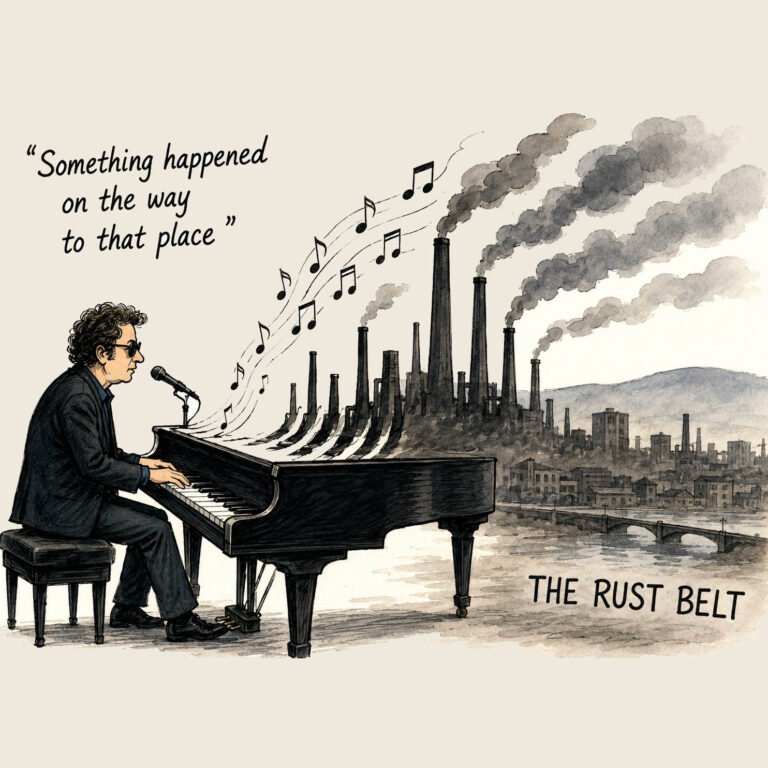
At the turn of the 20th century, the Pittsburgh steel region was the muscle of the industrial world. Half the nation’s steel and a fifth of the planet’s poured from its furnaces, feeding the growth of towns like McKeesport, Homestead, and Braddock—places so hot and noisy they made hell look under-equipped.
But when the furnaces cooled, so did everything else. McKeesport’s 55,000 became 17,000. Homestead’s boomtown buzz shrank to a whisper. Braddock, though still clanking away at the Edgar Thomson Works, lost 90 percent of its people. The mills stopped roaring, and suddenly you could hear the crickets—unemployed, naturally.
“The steel industry was the engine that built entire towns along the river. When the furnace went cold, so did everything else.”
Beaver County knows the story. Aliquippa, Midland, Koppel, Beaver Falls—each built on steel, soot, and optimism. But unlike their Mon Valley cousins, our mill towns are still wired into something the rest of Western Pennsylvania forgot existed: a live electrical current.
The Edge That Never Left
While the Mon Valley turned inward to nurse its civic hangover, Beaver County kept its grid connections. The Ohio River still hauls barges, the Turnpike and I-376 still hum with trucks, and the rails still squeal through town like they’re late for work.
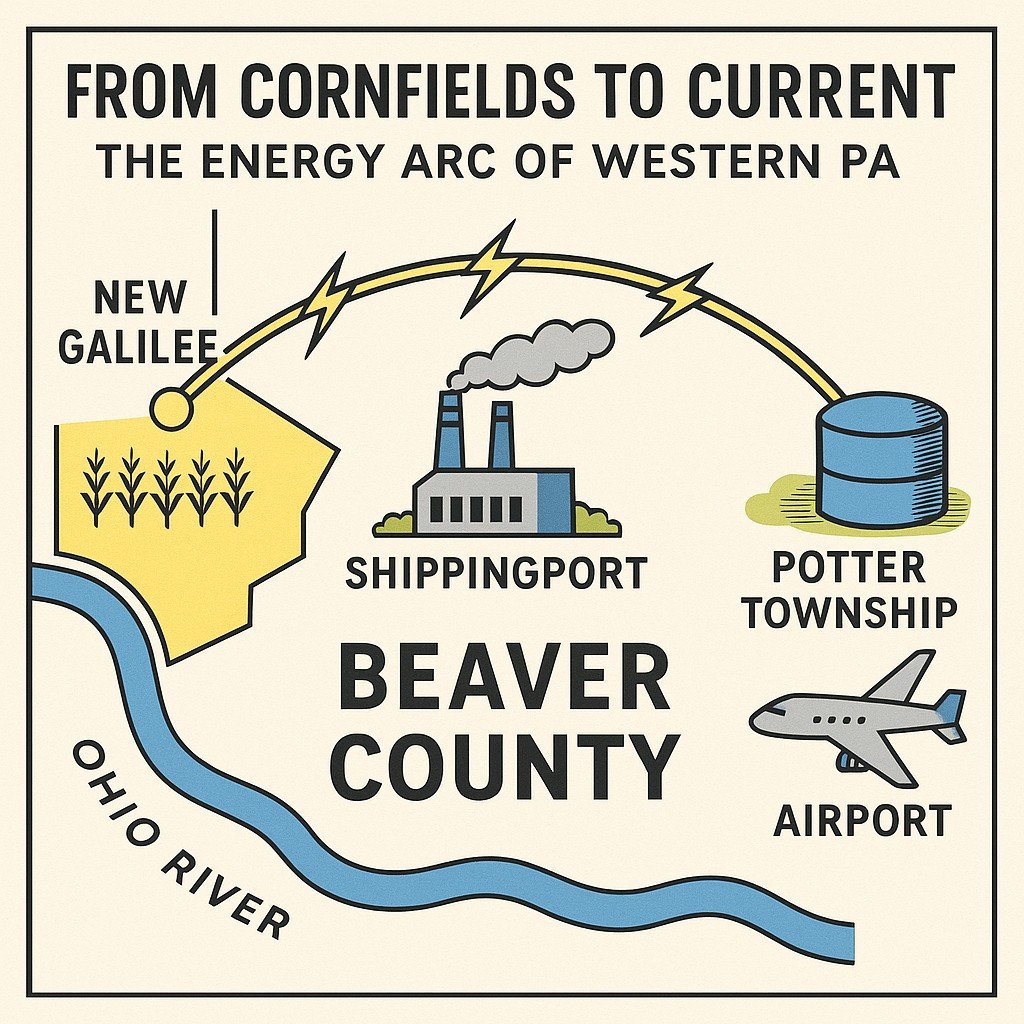
And just a few miles south, the new Pittsburgh International Airport terminal is nearing completion—a $1.57 billion expansion that will soon put world cargo and charter jets within shouting distance of Beaver County’s industrial corridor. For investors, that’s not geography; that’s divine alignment.
Industrial Renaissance, Version 2.0
In New Galilee, where corn once outnumbered commuters, Mitsubishi Electric Power Products is dropping $86 million on a high-voltage switchgear and testing facility. Two hundred new jobs, 800 retained, and enough electricity coursing through the blueprints to power the next century. The site sits a stone’s throw from the Turnpike—proof that even in a county of rolling fields, progress occasionally finds an off-ramp.
Downriver in Shippingport, the Bruce Mansfield plant, once the biggest coal burner east of the Mississippi, is being reincarnated as a $3.2 billion natural-gas facility. Around here we call that conversion therapy for boilers. Critics call it expensive; realists call it employment.
And of course there’s Shell Polymers in Potter Township—the ethane cracker so large it can be seen from low orbit and probably heard from Mars. Shell may flirt with selling or partnering, but you don’t move something like that; you just dust it off and keep it busy.
Together, these projects form what might be called Beaver County’s energy trinity—gas, grid, and polymer—all neatly aligned within an hour’s drive of the airport. It’s almost as if someone planned it that way, though history suggests we just got lucky.
Infrastructure in Motion
The Beaver River Bridge replacement on the Turnpike is halfway done and already attracting warehouse scouts who think logistics is the new steel. The Moor Industrial Park in Monaca is getting second looks from manufacturers priced out of Allegheny County—proof that Beaver can still lure business with that old-fashioned Pennsylvania incentive: cheaper dirt.
And with broadband build-outs and freight upgrades in motion, the county is starting to feel like the junction box of Western Pennsylvania—minus the electrocution hazard.
From Mill Towns to Move-In Towns
Developers in Brighton, Chippewa, and Center Townships are busy carving out new neighborhoods like Hunter’s Ridge and Antler Ridge—the kind of places where you can grill in peace without the neighbor’s Wi-Fi overpowering yours. Pittsburghers are moving north for lower taxes, shorter commutes, and an extra bedroom they don’t have to convert into a Zoom cave.
For families weary of parallel parking and city noise, Beaver County offers what no developer can mass-produce: breathing room.
Smart Downsizing and Adaptive Reuse
We’ve learned that small isn’t failure—it’s just cheaper to heat. Vacant lots have become pocket parks; old mills have been re-branded as “maker spaces,” which is what we used to call workshops before we got marketing departments.
Adaptive reuse is the county’s new civic religion. If you can’t tear it down, bless it, sandblast it, and call it mixed-use. Churches become condos; factories become start-ups; and no one complains about parking because half the town already left.
Caveats (and a Dose of Realism)
Let’s not kid ourselves. Mitsubishi’s plant won’t make New Galilee the next Silicon Valley, though it might make it slightly less pastoral. Bruce Mansfield’s rebirth depends on regulators who don’t always move faster than molasses in February. And the airport terminal, splendid though it is, will not by itself import venture capital to Beaver Falls.
State grants tend to vanish into consultant PowerPoints, and Shell’s petrochemical complex—while a marvel of engineering—still answers to oil prices, corporate accountants, and international mood swings.
But the county’s fundamentals are improving: crime is down, finances are steady, and people are starting to use the phrase “up and coming” again without irony.
Beaver vs. the Burgh: A Snapshot
- Energy Base: Mostly decommissioned vs. Expanding gas, nuclear & grid facilities
- Industrial Investment: Light tech, boutique manufacturing vs. Heavy industry 2.0: Mitsubishi, Shell, Mansfield
- Infrastructure: Congested urban arteries vs. New Turnpike bridge + airport proximity
- Housing: Costly, tight vs. Affordable, growing
- Fiscal Health: Chronic stress vs. Balanced budgets, fewer band-aids
- Population Trend: Flat to declining vs. Stable with suburban in-migration
The Long Game
Beaver County’s comeback won’t feature tech bros on scooters or a vegan café in every church basement. It’ll come in the form of turbines spinning, cranes lifting, and trucks crossing the new Turnpike bridge before dawn.
What we’re building isn’t glamorous—it’s durable. The same quality that once made us good at steel might just make us good at the 21st century, too.
“Beaver County’s mill towns were built by the furnace—but they may yet be saved by the grid.”
And if that sounds too optimistic, remember: in Western Pennsylvania, even our hope is union-made.