By Rodger Morrow, Editor & Publisher, Beaver County Business
Listen to a podcast discussion about this article.
The Consequences of Literacy in the Age of the Smartphone
When Jack Goody and Ian Watt published The Consequences of Literacy in 1963, they couldn’t have imagined a world where humanity carries the Library of Alexandria in its pocket—and uses it mainly to photograph lunch. Their thesis was simple but profound: writing transformed human consciousness, turning us from talkers into thinkers and from tribes into civilizations.
From Literacy to the Scroll
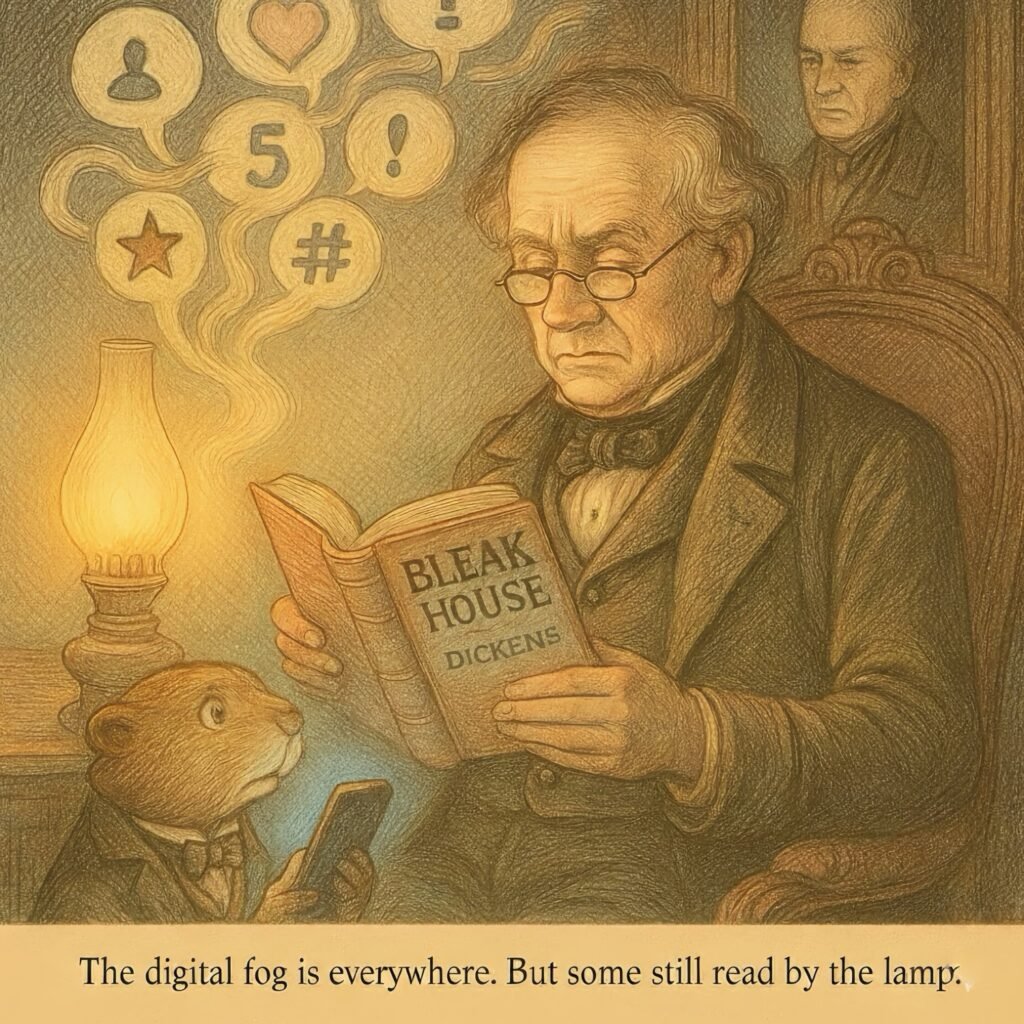
Today, we live amid the consequences of literacy without literature. Words no longer stay put—they glow, vanish, and multiply by algorithm. To be “literate” now means not that you’ve read a book, but that you can remember your passwords. The written word has been repackaged as content and shortened to fit between your thumb and your lunch.
The Medium and the Message
Marshall McLuhan warned that “the medium is the message,” and today the message seems to be “swipe again.” Writing once enabled reason and reflection; now, digital immediacy rewards reaction. We’ve traded permanence for engagement, nuance for speed, and thought for scrolling.
The Lost Art of Reading
Goody and Watt believed literacy allowed humanity to build ideas cumulatively—to fix meaning long enough for others to examine it. That stability built law, science, and philosophy. But in a post-literate world, ideas dissolve into posts and tweets. Thought is compressed into virality.
John Ray and the Power of Literacy
Beaver County once produced minds like John Ray of Michael Baker Corporation—a lawyer who negotiated oil deals with Saudi princes and quoted Dickens before dinner. He embodied literacy’s finest form: the union of technical precision and moral imagination. He understood that books cultivate patience, reasoning, and comprehension—the tools of civilization itself.
Why Books Still Matter
A book will not flatter or interrupt you. It won’t adjust to your mood or recommend “similar titles.” It simply waits for you to meet it halfway. Reading is an act of humility, a conversation across centuries, and the foundation upon which law, democracy, and culture rest.
From Blueprints to Algorithms
Beaver County’s industrial legacy was built not just on steel and concrete but on literacy—on people who could read blueprints, contracts, and technical manuals. Now, as attention fragments, the habits that built civilization are eroding. Civilization, it turns out, can’t run on memes.
The Final Defense
Books remain our last line of defense against collective amnesia. They outlast batteries and demand attention. A civilization that forgets how to read deeply will soon forget how to think deeply—and when that happens, the last safeguard won’t be an algorithm. It’ll be a bookshelf.