By Rodger Morrow, Editor & Publisher, Beaver County Business
Listen to a podcast discussion about this article.
Tariffs, Trade, and the Strange Logic That Keeps the Peace
One of the stranger developments in 21st-century diplomacy is the discovery that world peace may now depend on tariffs—those polite little taxes that used to exist chiefly to irritate importers of Canadian lumber. These days, tariffs are our new ambassadors. They fly ahead of Air Force One and speak more loudly than Marco Rubio.
Moreover, if Dr. Dale Copeland—professor of international relations at UVA and author of A World Safe for Commerce—is to be believed, they might actually be keeping us out of World War III. Copeland’s core principle, delivered with academic calm, is this: “Leaders who expect future trade to expand will pursue peace… while leaders who expect sharp declines will be more willing to consider military action.” In other words, tomorrow’s trade expectations—not today’s trade volume—are what keep great powers from doing stupid things.
Economists, who prefer a world where everyone behaves rationally and drinks green tea, tend not to like this kind of talk. They especially dislike anything that muddles their tidy charts predicting how the world should behave. Which brings us to the other heresy of the hour: the San Francisco Federal Reserve now says that 150 years of data undermine the usual claims about tariffs raising prices.
This is becoming a tough season for orthodox economics.
Grabbing the Emergency Brake
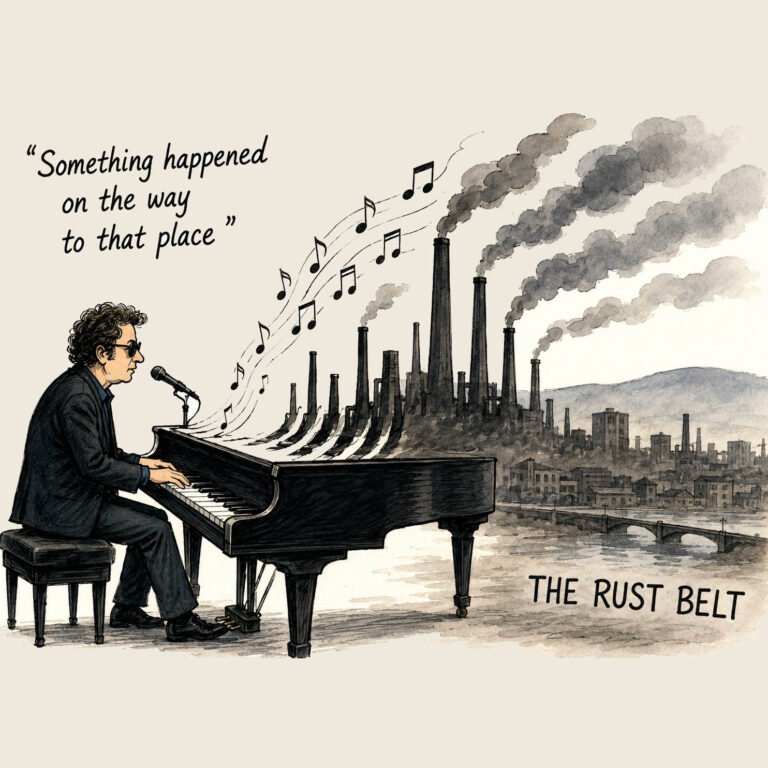
Ever since China joined the World Trade Organization in 2001 and started vacuuming up the world’s manufacturing output like a Hoover on fresh carpeting—rising from roughly 7 percent of global Manufacturing Value Added (MVA) to more than 30 percent today—the United States has been suffering the economic equivalent of watching the tools in its tool shed quietly relocate to the neighbor’s backyard.
American manufacturing’s share, once comfortably above 20 percent, slipped below 15 percent, leaving political leaders wondering at what point exactly the country became an importer of its own prosperity.
Into this breach drove Donald J. Trump with tariffs, penalties, public scolding, and the communication style of a man renegotiating a roofing estimate.
For years, critics insisted these tariffs would raise prices on consumers—“a hidden sales tax,” as Kamala Harris once put it. But a new San Francisco Fed paper analyzing 150 years of U.S., UK, and French data says precisely the opposite happened whenever tariffs rose:
- Higher tariffs → lower inflation
- Higher tariffs → higher unemployment
- A 4-point tariff increase → 2 points lower inflation, 1 point higher unemployment
In short, tariffs acted not as supply-side price hikes but as negative demand shocks—a fancy way of saying people got spooked, stopped spending, and prices fell.
The economists (Barnichon and Singh) conclude that the “tariffs = inflation” story economists keep telling may have been upside-down for roughly a century and a half. Which means Trump’s emergency brake may not have been inflationary at all—just noisy.
Copeland would call it a rational attempt to stabilize expectations; Trump would call it “a very strong move—maybe the strongest ever.”
When Tomorrow’s Trade Looks Good, Today’s Wars Don’t Happen
Copeland’s “trade expectations theory,” which sounds like it ought to come with a long footnote and a pie chart, says nations behave themselves when they believe the future of trade looks bright. If you think tomorrow’s exports will be bigger than today’s, you don’t throw punches. You smile, nod politely, and cash the checks.
China did this masterfully from the 1980s through the 2010s. Believing it had a lifetime subscription to American markets, it rose peacefully, grew explosively, and began exporting everything from Christmas lights to the occasional counterfeit Steeler jersey. It was the golden age of positive expectations.
For China, that is. For Beaver County workers—well, not so much.
Trump Interrupts the Dream
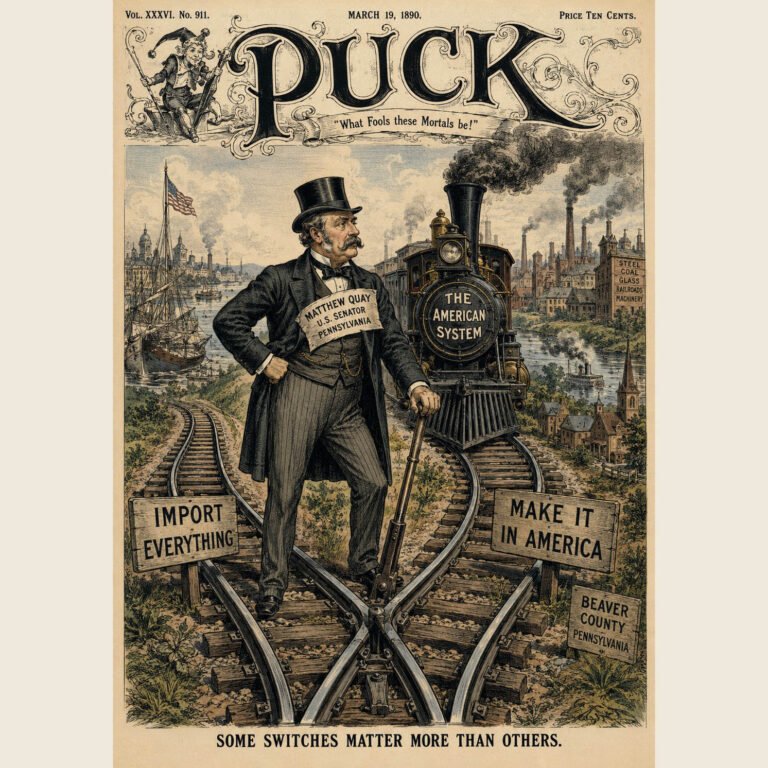
Then along came Donald Trump, who looks at the word “tariff” the way some people do Heinz ketchup: it goes on everything. Steel? Tariff it. Aluminum? Tariff it. Chinese electronics, toys, furniture, lithium batteries, and that weird crap you find in the Yinz Binz at MacBid?
Tariff, tariff, tariff, and another tariff on top for good measure.
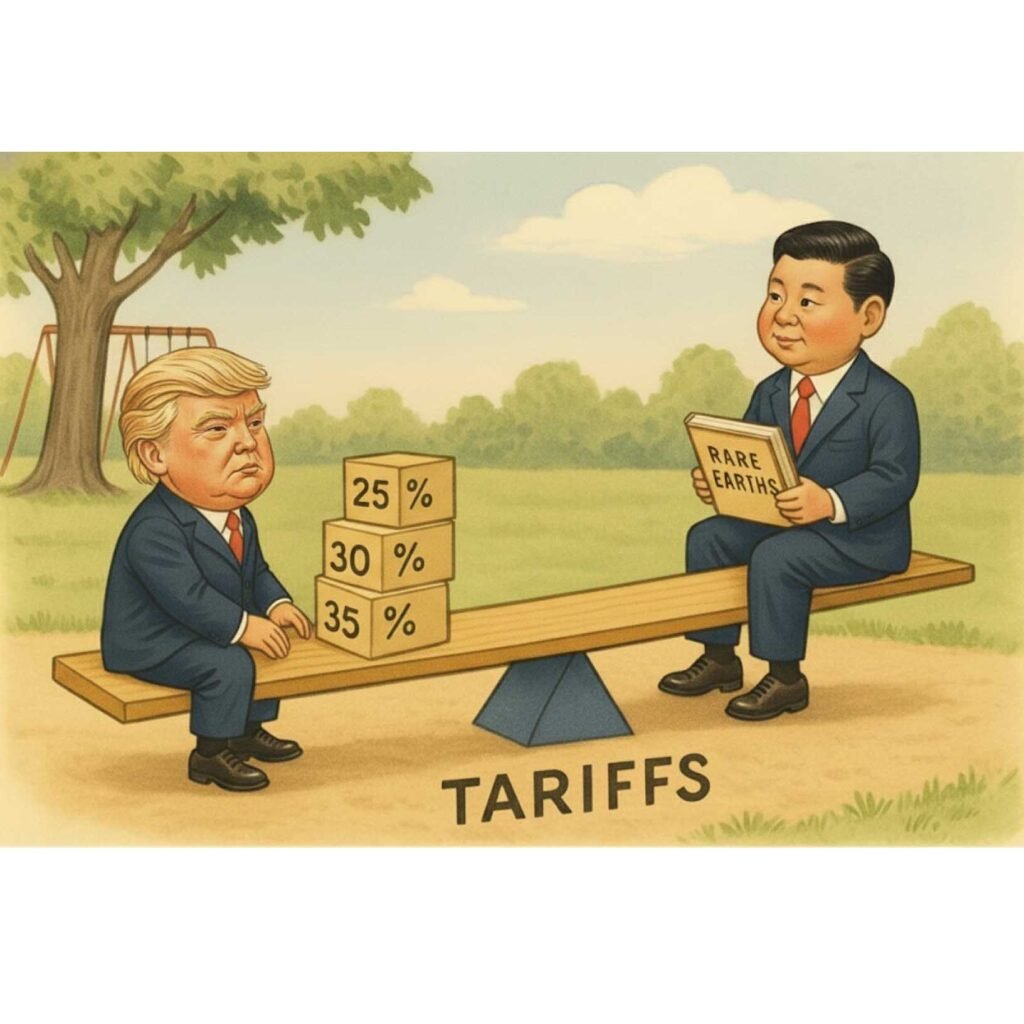
At first glance this looked about as soothing as banging on a hornet’s nest with a rake. But the tariffs may have accomplished something important: they forced Beijing to recalibrate expectations without falling into panic.
As Copeland warns, “tariffs, sanctions, and export controls can trigger insecurity spirals if perceived as harbingers of long-term decline.” But Trump’s tariffs, for all their bluster, never signaled total shutoff. They signaled renegotiation.
The Now-or-Never Problem—Avoided
History shows that nations lash out when they fear trade will evaporate entirely. Japan did this in 1941 when Washington cut off oil. That fear—now or never—is the danger Copeland highlights.
But Trump’s tariffs didn’t signal the end. They signaled: “Tuesday at 3 p.m. Bring your lawyers.”
With every tariff came an invitation to talk. With every escalation came the promise of a deal. When both sides finally exhaled—Phase One in 2020, tariff rollbacks in 2025—China still saw a future in trade, just one with higher rent.
As Copeland cautions: “The United States must be careful to avoid policies that convince Chinese leaders their future economic growth is being foreclosed.”
Trump nudged hard, but he didn’t foreclose.
Guardrails, Not Guillotines
This is what Copeland calls dynamic realism: deter your rival while reassuring him that the grocery store will still be open tomorrow.
Even Copeland, in the most understated UVA way possible, notes that tariffs can “support stability if they signal dissatisfaction while still assuring the other state that future trade is achievable.”
Or as Trump might translate: “We’re staying in business. We’re just raising the rent.”
What It Means for Beaver County
All this high-altitude geopolitical theory lands squarely in Beaver County:
- Eaton Corporation is scaling U.S. production for EV and grid components.
- Mitsubishi Electric is rolling out switchgear in New Galilee.
- Tenaris is investing millions into Koppel.
- And every industrial CEO I interview talks about supply-chain stability like it’s a new sacrament.
The San Francisco Fed’s findings matter here because they challenge the idea that tariffs automatically punish local consumers. If tariffs suppress demand and keep inflation down— as the data suggest—then the usual fears of “tariff-driven price shocks” may be misplaced.
We may not want higher unemployment, but the idea that a tariff is an automatic sales tax doesn’t square with 150 years of global history.
And if tariffs help keep expectations in balance—and if balanced expectations keep China from doing anything rash—then maybe Trump’s trade diplomacy isn’t the tantrum many assumed.
The Strange, Peaceful Logic of Loud Negotiators
No one would mistake Trump’s tariff strategy for the Vienna Congress. It has all the delicacy of someone yelling “SALE ENDS TODAY!” at the checkout line. But by Copeland’s measure, it may be the loud, imperfect way tomorrow’s trade remains possible.
In the end, peace sometimes depends not on sweet talk but on tough bargaining. Nations— like customers at a yard sale—are less likely to fight when they still think a deal is on the table.
A world safe for commerce is, as Copeland gently reminds us, a world safe for peace. Trump just adds: “And make it 30 percent. Thank you for your attention to this matter.”