By Rodger Morrow, Editor & Publisher, Beaver County Business
Listen to a podcast discussion about this article.
The Pittsburgh Post-Gazette Sets an End Date
The Pittsburgh Post-Gazette has now done what newspapers traditionally reserve for obituaries and papal conclaves: it has announced its own end date.
According to a statement released Wednesday by Block Communications, the paper plans to publish its final edition on May 3, 2026, and then cease operations altogether. The announcement is written in the careful dialect of corporate sorrow—“saddened,” “deeply regret,” “dignity intact”—the language of a long marriage ending not with a thrown plate but with an accountant quietly closing a ledger.
The owners cite more than $350 million in losses over two decades, the structural decline of local journalism, and recent court decisions requiring the paper to operate under a 2014 labor contract that management describes as “outdated and inflexible.” Translation, again: the math no longer works, and the courts have removed management’s last remaining levers.
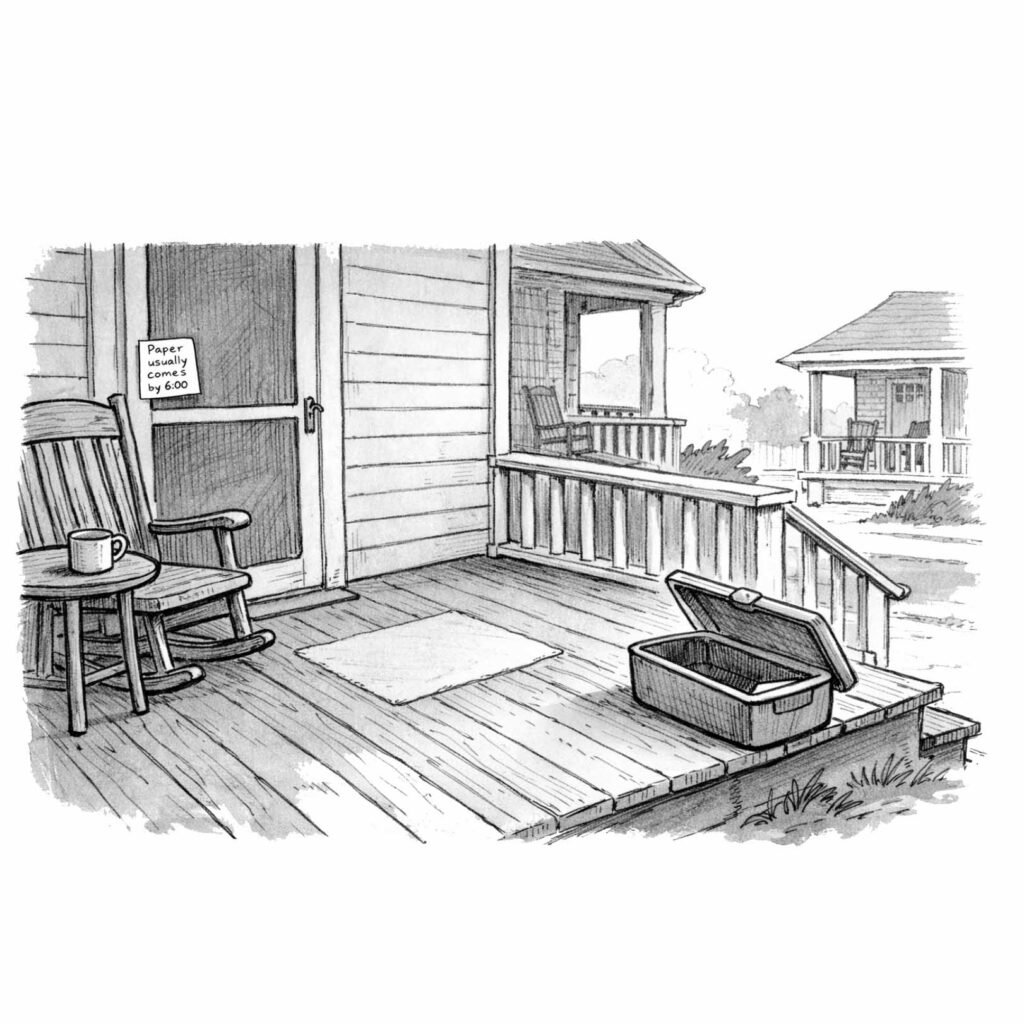
For a region raised on the daily thump of newsprint, this is the sound of the porch going quiet.
The Announcement as Negotiating Document
It is worth noting that newspapers, like railroads and steel mills, have a long tradition of dying more than once.
This announcement may be final. It may also be a pressure tactic—aimed at unions, judges, politicians, philanthropists, or some combination thereof. When institutions this old speak publicly about closing, they are often doing so with one eye on the exit and the other on the door, hoping someone unexpected will rush in waving a check.
Still, even as leverage, the statement marks a psychological crossing. It tells advertisers, readers, and employees to imagine a Pittsburgh without the Post-Gazette—and once imagined, such things have a way of becoming real.
The Obvious Question: Is There a Buyer?
Whenever a legacy asset announces its own funeral, the same questions arise. Could private equity step in? Could a rival buy it? Could the paper be split, merged, hollowed out, or reborn in some new corporate form that keeps the nameplate alive if not the institution?
Private equity is the first suspect, if only because it is always lurking nearby. The problem is arithmetic. The PG is not a distressed but salvageable chain property with real estate to monetize and costs to slash. Those moves have already been made. What remains is a brand, a newsroom still on strike, and a market that does not throw off the kind of cash flow private equity prefers.
A PE firm could buy the carcass cheaply, strip it further, and attempt a digital-only resurrection. But that requires faith that local news subscriptions can scale meaningfully without a robust newsroom. Recent history suggests otherwise.
A nonprofit conversion—backed by foundations—would align better with the civic value of the paper, but it would require the Blocks to relinquish control and accept a different legacy. Families that own newspapers often prefer closure to surrender. Pride is an undervalued balance-sheet item.
The Merger Everyone Is Thinking About
Which brings us to the most whispered-about possibility: a merger or acquisition involving the Tribune-Review.
On paper, it makes sense. One metro region, two diminished dailies, neither operating at full strength. Consolidation could eliminate duplicative costs and create a single dominant regional news operation—leaner, less romantic, but still standing.
In practice, it is fraught. The Trib and the PG aren’t just competitors; they’re ideological antipodes with distinct cultures, audiences, and scars from decades of newsroom trench warfare. Merging them would require not just financial engineering but editorial détente.
Still, history suggests that when the alternative is extinction, old enemies sometimes share a foxhole.
For Beaver County, such a merger would almost certainly mean fewer locally assigned reporters, not more. Regional consolidation tends to pull coverage inward toward the urban core. Borough councils and zoning boards do not fare well in these arrangements. The big stories survive; the small ones quietly vanish.
What Closure Actually Means—Downstream
If the Post-Gazette does, in fact, publish its last edition in May, the immediate effects will be visible and human. Jobs lost. Careers redirected. A generation of institutional memory scattered to the winds.
The longer-term effects are subtler and more dangerous.
Fewer reporters means fewer routine acts of witnessing. Fewer people sitting through meetings no one else wants to attend. Fewer phone calls asking uncomfortable but necessary questions. Power, like water, flows most freely where there are no observers.
Beaver County has already felt this during the strike years. Stories that once merited a city-desk reporter became occasional features or disappeared entirely. When the metro paper stops coming, the silence does not announce itself. It simply accumulates.
Watch This Space
Other outlets will step up—and already have. TribLIVE will expand where it can. Public radio will continue punching above its weight. Nonprofits like Spotlight PA will keep doing indispensable investigative work. Hyperlocal outlets, including this one, will have to widen their scope without losing their footing.
But none of these fully replace what a metro daily did by habit and scale. They form an ecosystem, not a spine.
The real question is whether the region can now build something sturdier than nostalgia: a sustainable, mixed-revenue model that treats local reporting not as a loss leader or a philanthropic project, but as essential infrastructure.
That work will be quieter than a final edition and harder than a eulogy.
After the Paper Stops Coming
The Post-Gazette’s announcement reads like a conclusion. It may yet turn out to be a comma. But whether through closure, consolidation, or reinvention, one truth remains: the era when Beaver County could rely on a Pittsburgh daily to consistently notice it is ending. The burden of attention is shifting closer to home.
If the PG does go dark, it will not take the region’s stories with it. Those remain. The question is who will be paid—and trusted—to tell them.
When the paper stops coming, the work does not end. It just changes hands.