By Rodger Morrow, Editor & Publisher, Beaver County Business
Listen to a podcast discussion about this article.
In the grand circus of corporate musical chairs—where the seats are upholstered in stock options and the music is piped in by venture capital—we’ve been handed a fresh program. The headliner this season is Dina Powell McCormick, lately of government, finance, diplomacy, and now, the presidency and vice chairmanship of Meta—the social network formerly known as Facebook, which rebranded itself the way a man changes his name when the sheriff starts asking questions.
You remember Dina. If Washington had a frequent-flyer card for power, hers would be platinum with a lifetime waiver. She’s served in Republican administrations of both the Bush and Trump varieties, then decamped for a tidy 16-year tour at Goldman Sachs, the Ivy League where money majors in money and graduates summa cum laude. Last April she joined Meta’s board, bowed out in December—perhaps to stretch, hydrate, and check the mirrors—and now she’s back on stage with a bigger title and a better seat.
There’s also the matter of geography, which is where this story gets its local seasoning. Dina is married to Pennsylvania Senator Dave McCormick and lives in nearby Squirrel Hill—close enough to the Monongahela to smell the history, far enough from Silicon Valley to need a jacket in February. She also helped orchestrate the senator’s Energy and Innovation Summit at Carnegie Mellon University, where advanced computing, energy, and research are mixed with the seriousness of a lab coat and the optimism of a ribbon-cutting. She even took the stage last July, proving once again that in modern America, the family that networks together stays connected forever.
Naturally, Mark Zuckerberg was delighted. In a statement that read like it had been proofread by a committee of algorithms, he praised Dina’s “experience at the highest levels of global finance” and her “deep relationships around the world.” Translation: she has the Rolodex to make even the metaverse feel properly populated.
Cheering from the wings was Joanna Doven, who runs something called the AI Strike Team—a name that conjures images of robots in camouflage storming the beaches of innovation. She called the appointment “an extraordinarily powerful signal for Pennsylvania and for America’s AI future,” then warmed to her theme like a preacher discovering a second hymnbook. Dina, she said, understands that winning the AI race is not abstract; it requires real data centers, power plants, workforce pipelines, and manufacturing capacity—preferably built here at home, with steel in the ground and electrons in the air.
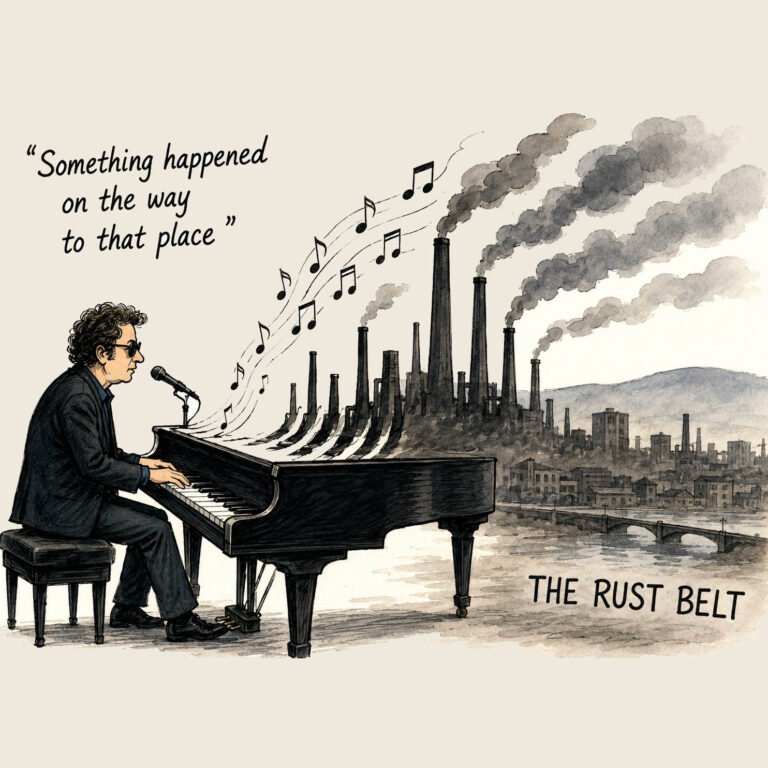
Which brings us back to Beaver County’s earlier question—posed in our own “Facebook on the Ohio” meditation—about whether the digital titans might finally be peeking eastward, past the Pacific fog, toward the hard realities of power, land, labor, and transmission lines. When a top Meta executive happens to live a short drive from the Valley of Steel, knows Pennsylvania’s universities, and speaks fluently about energy and infrastructure, one begins to suspect this is more than a coincidence. Or at least a very well-dressed one.
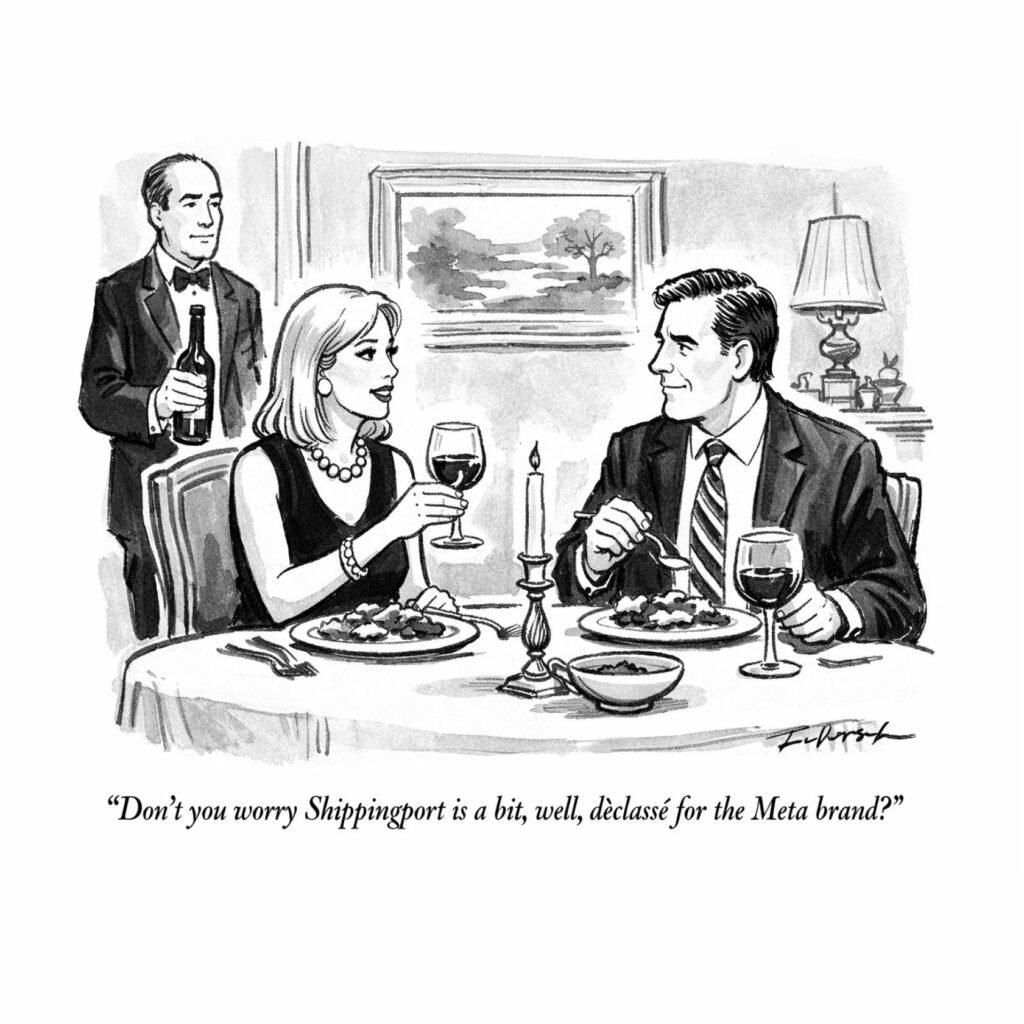
Of course, none of this means a Meta data center will sprout tomorrow between the barges and the bridges. It merely suggests that in our age of revolving doors, the hinges are well oiled and the hallway connects Washington, Wall Street, Silicon Valley—and, occasionally, Western Pennsylvania. One can imagine the McCormick family dinner table, where talk of algorithms and appropriations flows as freely as the cabernet.
In a world where yesterday’s politico becomes tomorrow’s tech titan, it’s enough to make you wonder whether the real metaverse isn’t virtual at all. Maybe it’s the one where power, profit, and policy keep bumping into each other like clumsy dancers at a crowded ball—somewhere between Silicon and steel.
We report. You decide.