By Rodger Morrow, Editor & Publisher, Beaver County Business
Listen to a podcast discussion about this article.
There was a time—children, gather round—when the word “Westinghouse” meant something solid. It meant turbines the size of courthouse domes, switchgear that hummed with quiet confidence, and engineers who believed, with straight faces, that electricity was going to make the world better. Not more entertaining. Not more clickable. Better.
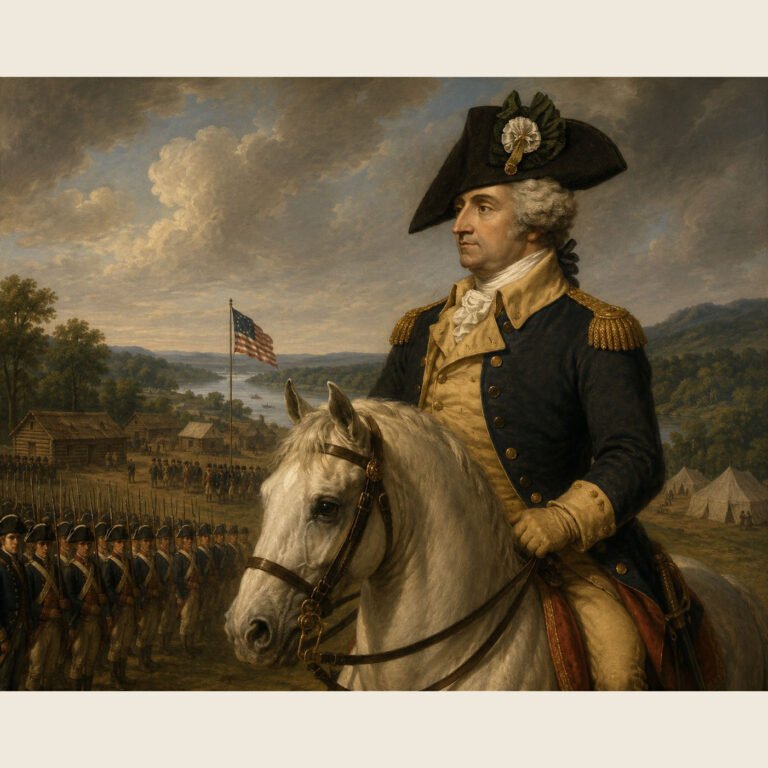
That confidence came from George Westinghouse, a rare hybrid of inventor and grown-up. He didn’t invent so much as civilize technology, taking dangerous half-baked ideas and making them safe enough to use before breakfast. At 23, he fixed railroads with the compressed-air brake, saving lives and sparing America the spectacle of trains stopping by prayer.
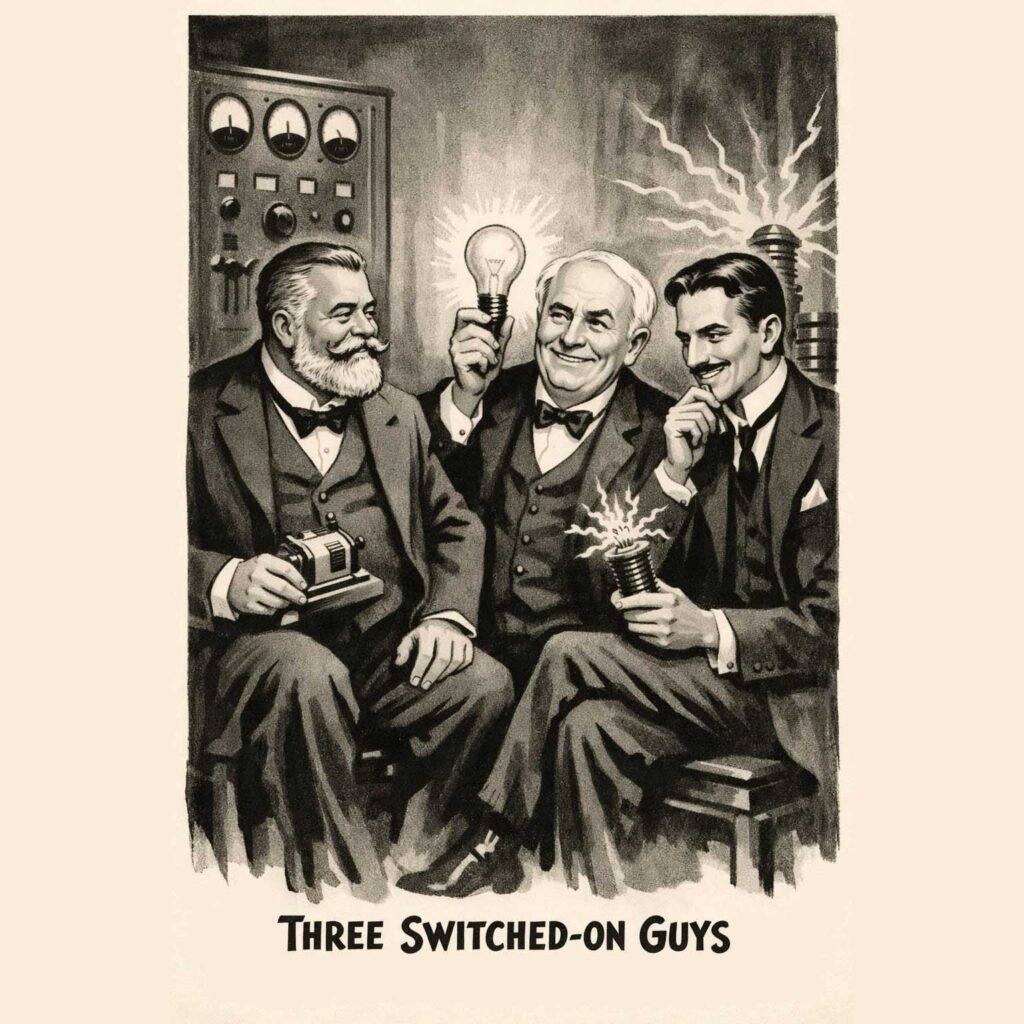
His real audacity came during the War of Currents, when electricity itself was up for grabs. On one side stood Thomas Edison, apostle of Direct Current and master of the public scare campaign. His argument against Alternating Current was simple: it might kill you. To prove it, he electrocuted animals in public, which passed for persuasive science at the time.
Westinghouse responded by lighting the Chicago World’s Fair in 1893, bathing the future in a glow so bright it made Edison look like a man selling candles. Two years later, he harnessed Niagara Falls, proving electricity could travel long distances and arrive on time. Civilization exhaled. The modern world was switched on.
By the early 20th century, Westinghouse wasn’t just a company; it was an ecosystem. The East Pittsburgh plant functioned as an industrial city, complete with its own rhythms and hierarchies. At its peak, it employed more than 20,000 people, many of whom raised children who went on to work there too. This was not just a job. It was a covenant.
World War II turned the place into a round-the-clock arsenal of competence. Radar, turbines, communications gear—if it needed to work, Westinghouse built it. Then came the Atomic Age, which the company entered with slide rules and steel, not slogans. The reactor for the USS Nautilus. The first commercial nuclear plant at Shippingport. Electricity from atoms, delivered to Beaver County without drama—perhaps the high-water mark of American engineering maturity.
By the late 1960s, Westinghouse was the second-largest electrical manufacturer on Earth, trailing only GE. It seemed unthinkable that this thing could fall over. Which, of course, is when it did.
Some forces were beyond control. The 1973 oil embargo froze infrastructure spending. Japanese competitors arrived with lower prices and an unsettling commitment to continuous improvement. Then came Three Mile Island in 1979—a Westinghouse-designed reactor, a partial meltdown, and a public panic that ended new nuclear orders almost overnight.
But the fatal wounds were self-inflicted. Instead of doubling down on turbines, power systems, and nuclear engineering, Westinghouse decided it wanted to be something sexier. Something with quarterly earnings that didn’t require pouring concrete.
Enter finance.
Westinghouse Credit Corporation ballooned from a modest appliance-financing arm into a high-risk lending operation chasing returns with the enthusiasm of a Labrador retriever. Bad loans piled up. Real estate sagged. By 1990, the credit division alone had lost more than a billion dollars. The engineers looked on as the adults discovered leverage.
Diversification became a demolition derby. In 1982, Westinghouse bought Unimation, pioneer of the industrial robot. It should have been a natural fit. Instead, innovation was smothered by process. Hydraulic robots shook themselves into irrelevance just as the industry moved to electric drives. Talent fled. Headcount collapsed. The division was sold off for a fraction of its price—an expensive lesson in how not to buy the future.
Meanwhile, the company dismantled itself. Divisions were sold. Plants closed. The East Pittsburgh works—the heart—was shuttered in the late 1980s. Families who had given three generations were handed cardboard boxes and a handshake. The site sat abandoned, toxic with PCBs, a ruin of American ambition.
Then came the final identity crisis. In 1995, Westinghouse bought CBS. Two years later, it renamed itself CBS Corporation, which is rather like Bethlehem Steel rebranding as a greeting-card company. The Westinghouse name was retired. By 1999, the industrial empire was gone, not with a bang, but with a press release.
And yet, in Beaver County, Westinghouse never entirely left. Beaver Valley Power Station still hums along. The old Vanport Township plant lives on under Eaton. The East Pittsburgh site has been reborn as Keystone Commons. It employs fewer people, but it breathes. Survival counts.
There’s even quiet talk of Westinghouse’s nuclear arm evaluating Beaver County sites for advanced microreactor manufacturing. History, it seems, has a sense of humor.
So whatever happened to Westinghouse?
It didn’t fail because Americans forgot how to build. It failed because it forgot what it was. It mistook finance for engineering, diversification for vision, and scale for strength. George Westinghouse believed progress came from making hard things work reliably in the real world. His successors decided it was easier to move money around and let someone else worry about the turbines.
Beaver County remembers the difference. Around here, we still believe there’s dignity in building things that last—and in flipping a switch and expecting the lights to come on because someone, somewhere, knew what they were doing.