Listen to a podcast discussion about this article.
Some towns try very hard to become charming. They install decorative lampposts, plant trees of a certain approved species, and pass ordinances about signage that read like doctoral dissertations in typography. After a few years, they achieve a look that might be described as “pleasant,” which is not quite the same thing as charm but will do in a pinch.
Then there is Beaver, which had the good sense to arrive early, lay itself out properly, and let the rest of us catch up.
If Beaver has an advantage—and it has several—it is that it figured out what it wanted to be before anyone thought to argue about it.
Where Rivers—and Armies—Converged
Beaver’s story begins, as most sensible stories in this county do, with geography.
The borough sits near the confluence of the Beaver and Ohio Rivers, a location that attracted attention long before zoning boards were invented. In the 18th century, this was frontier territory, and like all good frontiers, it required a fort.
That fort was Fort McIntosh, constructed in 1778 as the first U.S. Army installation west of the Alleghenies. It served as a staging ground for military campaigns and a signal that the young republic intended to take its western ambitions seriously.
Where soldiers go, settlement tends to follow. By 1802, Beaver was formally incorporated, and it quickly established itself as the county seat—a role that guaranteed a steady supply of lawyers, clerks, and people with opinions about property lines.
A Town That Didn’t Overreach
Unlike some of its neighbors, Beaver never tried to become an industrial powerhouse.
This was either a failure of imagination or a stroke of genius, depending on your perspective. While mills and factories rose along the rivers in places like Aliquippa and Ambridge, Beaver settled into a different rhythm—one built around governance, commerce, and the quieter business of being a place where people might actually want to live.
The town developed gradually, with an eye toward proportion. Streets were laid out with a certain confidence. Homes were built with materials and craftsmanship that suggested their owners intended to stay awhile. Trees were planted, and—this is important—allowed to grow.
Over time, Beaver acquired the sort of physical character that cannot be installed after the fact. It simply accumulated.
Third Street and the Art of the Everyday
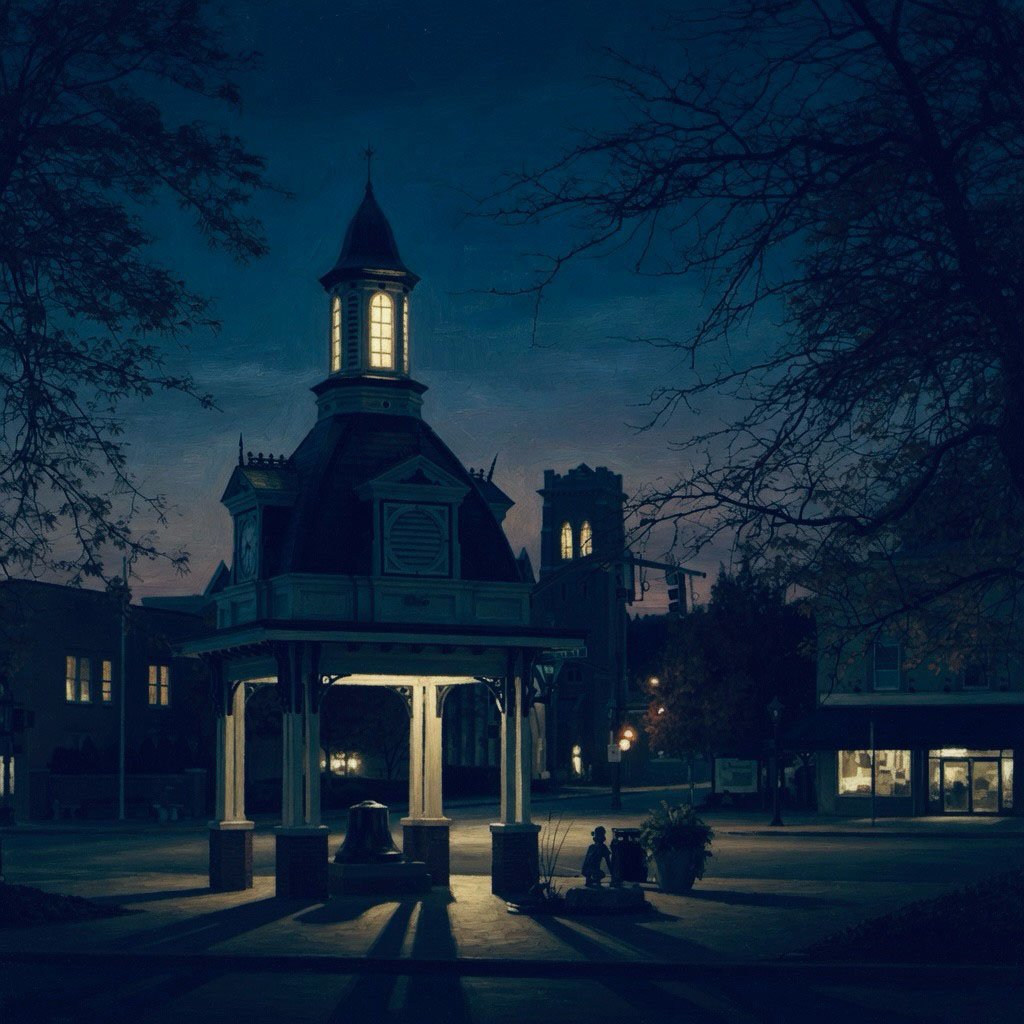
If Beaver has a main stage, it is Third Street.
This is not a grand boulevard designed to impress visiting dignitaries. It is something more useful: a functional, walkable main street that manages to be both practical and appealing without drawing undue attention to itself.
Shops line the street in a way that suggests continuity rather than reinvention. You can run errands, have a meal, and encounter people you know—or people who will soon know you—in the span of a few blocks. It is, in short, a place where daily life occurs with a minimum of fuss.
This may not sound like much until you consider how many communities would like to have exactly that and cannot quite manage it.
Stability as Strategy
Beaver’s economic development strategy, if it can be called that, has been remarkably consistent: remain stable.
The borough has benefited from its role as county seat, which provides a baseline of employment and activity that does not fluctuate with the price of steel or the latest global supply chain disruption. Government offices, courts, and professional services create a kind of economic ballast.
At the same time, Beaver’s location places it within commuting distance of Pittsburgh, Cranberry, and the broader network of jobs that define the region today. Residents can participate in the larger economy without surrendering the smaller-scale environment of the borough.
It’s a model that doesn’t make headlines, which is perhaps why it works.
The Historic District Advantage
Much of Beaver is listed on the National Register of Historic Places, a designation that sounds more ceremonial than practical until you walk the streets and realize what it preserves.
Architecture matters. Not in an abstract, academic sense, but in the daily experience of living somewhere that feels coherent. The homes, churches, and public buildings in Beaver reflect a range of styles, but they share a common thread of quality and proportion.
The result is a town that looks as though it belongs to itself.
This is harder to achieve than it sounds. Many communities have buildings; fewer have identity.
Why People Stay
Ask residents why they choose Beaver, and you’ll hear variations on a few themes.
There is the walkability, which allows for a life that does not depend entirely on a car. There is the sense of community, which manifests in everything from school events to casual conversations on the sidewalk. There is the proximity to larger economic centers, which makes employment practical.
And there is something less easily quantified: the feeling that the town is, in some quiet way, complete.
Beaver does not promise reinvention. It offers continuity.
The Modern Context
In an era when Beaver County is attracting attention for large-scale energy projects, data center proposals, and industrial redevelopment, Beaver Borough occupies an interesting position.
It is close enough to benefit from regional growth, yet distinct enough to avoid being defined by it.
As billions of dollars circulate through the county in the form of infrastructure and investment, Beaver serves as a reminder that not every success story needs to be measured in megawatts or square footage. Some are measured in livability—in the ability of a place to function well over time.
This is not a flashy metric, but it is a durable one.
The Quiet Achievement
It is tempting, in writing about a place like Beaver, to search for a dramatic turning point—a moment when everything changed and the town became what it is today.
The truth is less cinematic.
Beaver did not transform itself in a single act. It accumulated advantages, avoided major mistakes, and maintained a standard of care that persisted across generations. It learned, early on, that looking good and functioning well were not mutually exclusive goals.
In doing so, it achieved something that eludes many communities.
It became a place where people don’t just pass through, or return to, or remember fondly.
They stay.
And in Beaver County, that may be the most impressive outcome of all.