By Rodger Morrow, Editor & Publisher, Beaver County Business
Listen to a podcast discussion about this article.
Beaver County has produced many things over the past two centuries—rails, beams, pipes, fortunes, heartbreak—but above all it has produced people who can remember what it was like when the furnaces were hot and the arguments were hotter.
Bill Koshut is one of those people. He remembers things in detail, with the specificity of a man who has spent a lifetime noticing how systems actually work, whether the system is an electric furnace, a contract, or a roomful of steel executives pretending they know what they’re doing.
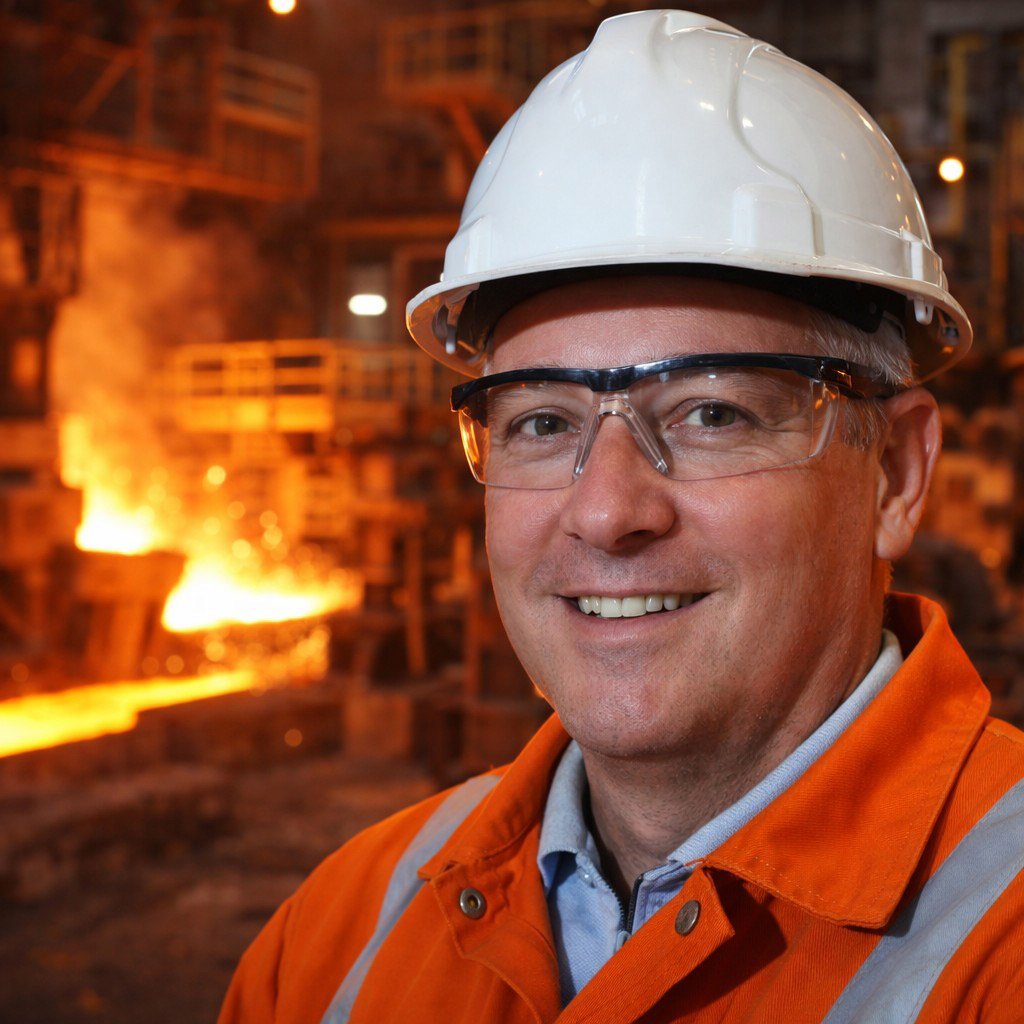
If you want to understand steelmaking in Beaver County, you could do worse than sit down over a coffee with Koshut—who’s worked in coke plants, melt shops, boardrooms, union meetings, and banquet halls where the podium light suddenly goes out just as a CEO’s biography is set to be read aloud.
Koshut didn’t set out to become a walking archive of American steel. He was born and raised in Duquesne, the son of a steelworker—“just a bar strander,” as he puts it, in the modest way that steel families describe jobs that would terrify most of the laptop class. His father believed in education with the quiet intensity of a man who did not want his son working the same punishing jobs he had. So Bill went to Serra Catholic, then Carnegie Mellon, where he studied chemistry on scholarship.
“I didn’t know I was poor until I went to Carnegie Mellon,” he says, which is one of those lines that tells you everything you need to know about America in the second half of the twentieth century. He studied constantly, collected minors the way his fellow CMU students collected girlfriends, and emerged with a degree, a work ethic, and an unshakable respect for people who actually make things.
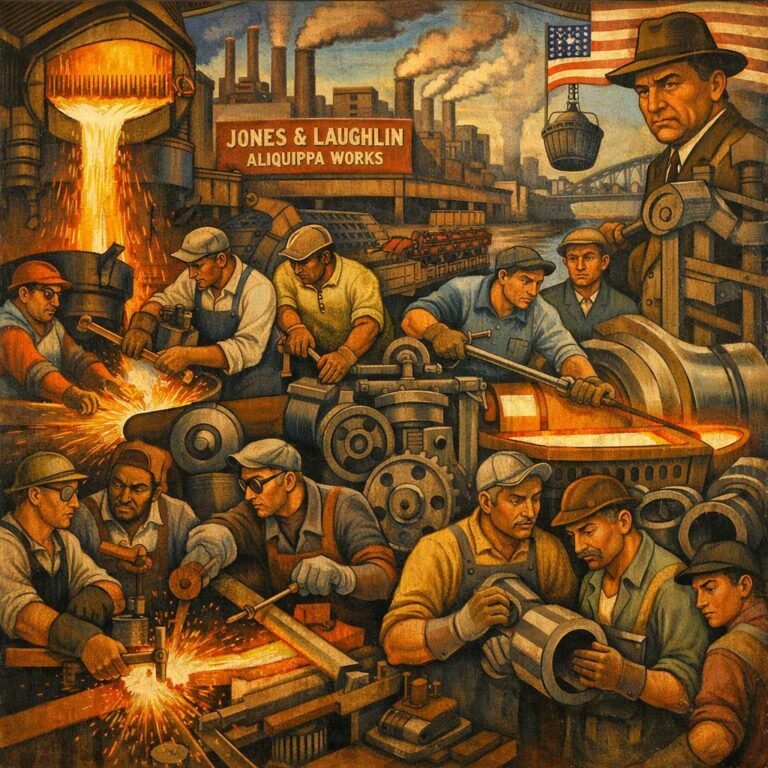
At J&L Steel in Hazelwood, Koshut started in the coke plant that was under an environmental consent decree, where the task was to keep productivity up while capturing emissions that had previously escaped into the night air. He worked on systems that raised capture rates into the 90-percent range and kept the politicians of Allegheny County satisfied and the coke plant operating.
From there, he moved to the South Side Works and projects involving some of the largest electric furnaces ever installed—machines so powerful they reportedly drew more electricity than the entire county when running at night.
Those furnaces created a problem no one anticipated: sound. On clear nights, the neighborhood heard nothing. On cloudy or rainy nights, the noise bounced off the clouds and rained back down onto the hillside above Pittsburgh. It took walkie-talkies, midnight stakeouts, and eventually tens of millions of dollars in insulation to solve the mystery. The furnaces themselves ran for less than a year. They were too big for a just-in-time world that no longer wanted ten truckloads of the same steel arriving all at once.
Then there was Aliquippa.
If Hazelwood was collegial, Aliquippa was operatic. Koshut’s first meeting featured general foremen screaming at each other, noses inches apart, while the assistant superintendent calmly smoked a cigarette and placed bets with his bookie. When it was over, he took a somewhat shaken Bill aside to explain: they loved each other. They’d be drinking together by five o’clock.
That collection of seeming lunatics turned out to be the best management team Koshut ever worked with—brilliant, demanding, and entirely committed to the craft. Aliquippa, meanwhile, became the birthplace of something almost unheard of in steel: labor-management participation teams.
Union leaders with real courage sat down with management to save money, improve safety, and redesign processes. Ideas were shared. Savings were calculated. Workers were paid for innovations. The industry noticed.
Koshut fell in love with operations—the real work of making steel. He admired men like Ken Tamburrino and Bill Martinek, operators of immense integrity, who understood continuous casting and basic oxygen furnaces not as theory but as responsibility. He watched Aliquippa sit at the edge of new technology even as politics and global economic forces closed in.
From there came Republic Steel Bar Mills in Canton/Massillon, Ohio. Then J&L Specialty Steel in Midland, spending years learning the plant’s process of making stainless steel could lead to lean operations, low absenteeism, profit sharing, people working hard because the place made sense. He worked extraordinary hours, made extraordinary money, and paid the usual price in time away from family.
Along the way, Koshut became something else: a historian.
Today, he serves as historian of the Electric Metal Makers Guild, one of the oldest guilds in North America, representing the superintendents and operators who run electric furnaces across two-thirds of the steel industry. He archives materials at Rivers of Steel. He presides as Toastmaster at dinners. He explains, patiently and repeatedly, that American steel plants are clean, safety-focused, and environmentally responsible—cleaner, in fact, than almost anywhere else on Earth.
And he tells stories.
Like the night the podium light failed during an awards dinner. Faced with a choice between stopping the program or trusting his memory, Koshut delivered a CEO’s biography nearly verbatim in the dark.
When the CEO, Dan DiMicco of Nucor, later found himself delivering his own speech in the dark, he asked if Koshut had a photographic memory—and offered him a job on the spot: vice president of communications for one of the most successful steel companies in America. Koshut declined. He was, as he put it, “a Pittsburgh guy.”
That may be the truest thing he says.
Bill Koshut’s career crosses history and steel, labor and management, theory and practice. But it always returns to Beaver County and the river valleys that taught America how to make things at scale.
He remembers a world where arguments were loud, work was hard, and pride mattered. He remembers it not with nostalgia, but with precision.
Which, in the steel business, has always been the difference between success and slag.