Listen to a podcast discussion about this article.
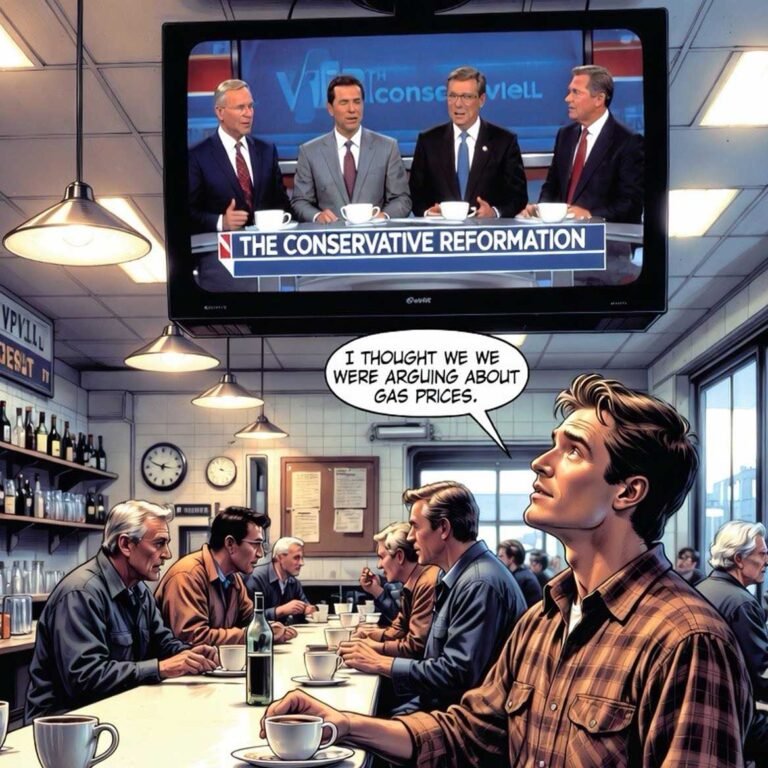
If you grew up in Beaver County, your understanding of the Middle East probably arrived the same way most of our foreign policy does: in tidy, two-minute segments between a car commercial and the weather.
Bomb explodes. Anchor looks grave. Map appears. We’re told someone ancient hates someone even more ancient. Cut to pharmaceuticals.
But as one veteran observer of the region recently put it, “many Americans have a very simplistic understanding of the Middle East, one that is seen through the prism of American broadcast news. It’s way more complex than that.”
That may be the understatement of the millennium.
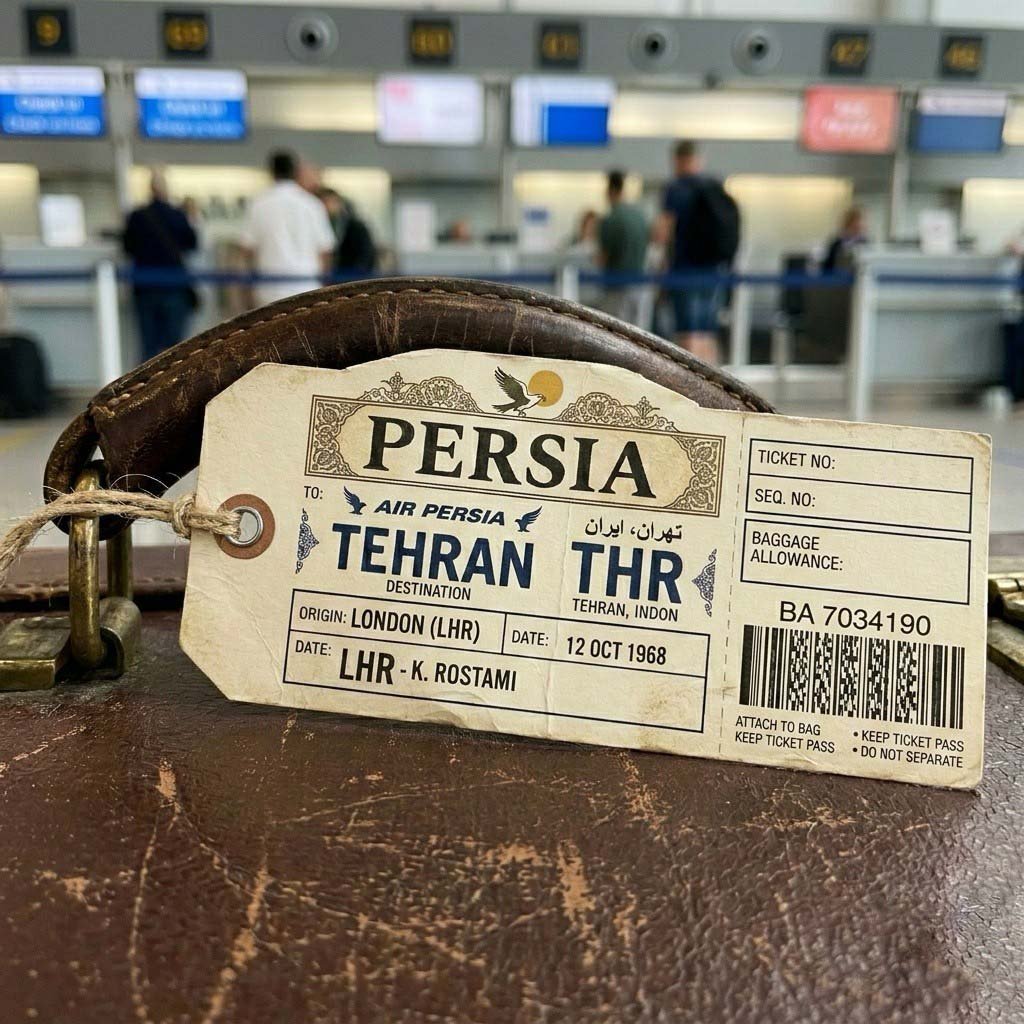
Let’s begin with a distinction that rarely makes it into the crawl at the bottom of the screen: Iranians are not Arabs. They are Persian. The difference is not cosmetic. Persia—modern Iran—is heir to one of the world’s oldest continuous civilizations, stretching back to Cyrus the Great in the 6th century B.C. Long before there was a Parliament in London or a borough council in New Brighton, there was Persepolis.
Religiously, most Iranians practice Shia Islam; most Gulf Arab states are Sunni. “Think of it like the difference between Catholics and Protestants,” our source notes. “Except with RPGs, 1960s Northern Ireland style.” That sectarian divide has shaped regional rivalries for centuries. It also explains why the small, oil-rich monarchies ringing the Persian Gulf tend to lose sleep not over Israel, but over Tehran.
During the uneasy years between the Gulf Wars, Kuwaiti officials reportedly spoke in hushed tones: “We’re not really scared of Saddam attacking again. We’re scared of Iran.” That anxiety wasn’t theatrical. Since the 1979 Islamic Revolution toppled the Shah, Iran’s ruling clerical regime has pursued influence through proxies—most notably Hezbollah in Lebanon and Hamas in Gaza.
The U.S. State Department has long designated Iran as a state sponsor of terrorism. Remove Tehran’s funding, training, and ideological backing, and the architecture of several anti-Israel militias begins to wobble. Without the Iranian mullahs, as our source bluntly puts it, “there would be no Hezbollah and no Hamas.” Whether that’s entirely literal or somewhat aspirational, the financial and logistical pipelines undeniably run eastward to Tehran.
And that matters because the Israeli-Palestinian conflict is not an isolated family feud. It is the emotional accelerant that prevents the broader Arab world from formalizing peace with Israel. The Abraham Accords—brokered in 2020 between Israel, the United Arab Emirates, Bahrain, Morocco, and Sudan—demonstrated that pragmatic cooperation is possible. Gulf leaders understand that technology, trade, and security partnerships with Israel promise wealth and stability. But they also know that as long as Gaza is aflame, normalization remains politically delicate.
Here is where Iran’s internal character becomes decisive.
Americans sometimes caricature the region as a wasteland of “violent, illiterate goat herders.” That caricature dissolves the moment you meet Persian-American physicians, engineers, attorneys, and entrepreneurs. Iranian immigrants in the United States are among the most highly educated groups in the country. They build practices, companies, and lives. They are, by and large, patriotic Americans.
Which raises an uncomfortable question: do the ruling clerics in Tehran truly represent the aspirations of the Iranian people?
History suggests otherwise. In 2009, during the Green Movement protests, millions of Iranians took to the streets contesting a disputed election. In 2022, the death of Mahsa Amini ignited nationwide demonstrations led by women and students. The regime survived by force, not by consensus.
So when advocates argue that decisive military pressure against the regime could catalyze internal change, they are not picturing a nation of zealots suddenly discovering Starbucks.
They are picturing a country with a deep cultural memory of poetry, science, architecture, and commerce—Persia rediscovering itself after four decades of clerical absolutism.
“Do the math,” our source concludes. “With the mullahs taken out, Iran can become Persia again—an educated, advanced member of the family of nations. The funding for terror groups dries up, and suddenly peace between Israel and the Palestinians becomes possible.”
It sounds almost algebraic: subtract theocrats, divide by militias, multiply by trade.
Of course, Middle Eastern history has a habit of punishing tidy equations. The 2003 Iraq War was sold with similar optimism about rapid democratization. Regime change is not a Home Depot project. You cannot simply remove the old fixtures and expect the plumbing of civil society to function.
Yet there are differences worth noting. Iran is not an artificial state stitched together after World War I; it is a coherent civilization with strong national identity. Its middle class is substantial. Its diaspora is influential. Its youth are connected digitally to the wider world. If there is a society in the region capable of reconstituting itself after the fall of an authoritarian religious elite, Iran may be it.
For Beaver County readers, this may seem remote from the price of natural gas or the fate of a proposed data center. It isn’t. Energy markets, global supply chains, and even the stability of allies all hinge on whether the Persian Gulf remains a powder keg or evolves into a corridor of commerce.
Durable peace in the Middle East will not arrive by wishful thinking or hashtag diplomacy. It will require the neutralization of actors who profit from perpetual conflict. If the current military action succeeds in dismantling the regime infrastructure that finances and directs regional terror networks—while creating space for Iranians themselves to reclaim their country—then what looks today like escalation could, in hindsight, be remembered as the long-overdue prelude to stabilization.
Peace, in that scenario, would not be imposed by foreigners. It would be enabled by removing those who have systematically prevented it.
And perhaps, one day, the news segment will run differently.
No urgent music. No flashing maps.
Just a quiet headline: “Persia Rejoins the Family of Nations.”
In Beaver County, we might even watch the whole two minutes.