By Rodger Morrow, Editor & Publisher, Beaver County Business
Listen to a podcast discussion about this article.
This writer is old enough to remember a time when “power generation” wasn’t something discussed at energy conferences by people with sustainability titles—it was a fact of life, humming away behind the chain-link fences of Bruce Mansfield and Shippingport. Back then, “dispatchable energy” meant the lights stayed on, “grid resilience” meant you paid your Duquesne Light bill on time, and “carbon capture” referred to the soot on your windowsill after a strong east wind.
So imagine my nostalgic delight when I read that Core Natural Resources—the heir to Consol Energy—has revived an idea most of us assumed had gone the way of the slide rule: a brand-new coal-fired power plant. Yes, coal—the same black rock that once kept Beaver County’s coffee pots percolating and its paychecks steady—is back in the conversation, and not as a historical footnote.
According to The Pittsburgh Business Times, Core is wrapping up a four-year, federally funded study on what it calls “the coal-fired power plant of the future.” Initially, the project aimed to turn waste coal and biomass into net-negative carbon electricity—something between a science experiment and a confession of guilt. But somewhere along the way, the engineers rediscovered reality. The “fuel of the future,” it turns out, might look a lot like the fuel of the past: pulverized, combusted, and reliable.

Back to the Future (of Power)
Jacqueline Fidler, Core’s vice president of environmental and sustainability, told a room full of energy experts at Washington & Jefferson College that the project’s focus has shifted from theoretical decarbonization to the practical business of keeping America’s lights on. “Everyone’s talking about data centers and AI and the electrical demand that it’s going to require,” she said. “Being in the coal business, we see this as an opportunity.”
Translation: you can’t run ChatGPT—or anything else ending in “.com”—on wishful thinking and windmills. Somebody, somewhere, still has to shovel something into a furnace.
The Beaver County Argument
Now, Core says its proposed site is somewhere in Greene County. That’s fine, as far as it goes—but let’s be honest: Beaver County is the natural home for this project. We’ve got the grid infrastructure, the transmission lines, the rail access, and the institutional memory. This county once knew how to turn black dust into golden paychecks. We still do.
Bruce Mansfield may have gone cold, but its spirit (and most of its wiring) remain. A 300-megawatt plant, even in its downsized form, would fit perfectly into our industrial landscape—especially if paired with carbon capture technology and the sort of pragmatic engineering that made Western Pennsylvania famous. We could build one again, and probably faster than Washington could finish its next environmental impact statement.
From Net-Negative to Net-Realistic
Core’s researchers discovered what Beaver County has known for generations: you can’t power a civilization on slogans. The company proved, on paper, that a net-negative carbon plant using waste coal and biomass could work—but not at a price anyone would pay. So they did the sensible thing. They went back to pulverized coal and practical economics.
There’s something almost rebellious about that. In an age when “energy transition” is treated like gospel, Core’s quiet pivot to reliability feels downright patriotic. It’s not an abandonment of progress—it’s a recognition that progress must be powered by something firmer than policy papers.
Why It Matters
A modern coal plant with carbon storage could anchor the next phase of Beaver County’s comeback—the same way the old ones powered its rise. It could stabilize the grid, feed the region’s new data centers, and remind the world that Beaver County never stopped producing energy; we just diversified. The skills that once ran turbines and boilers now run code and control panels.
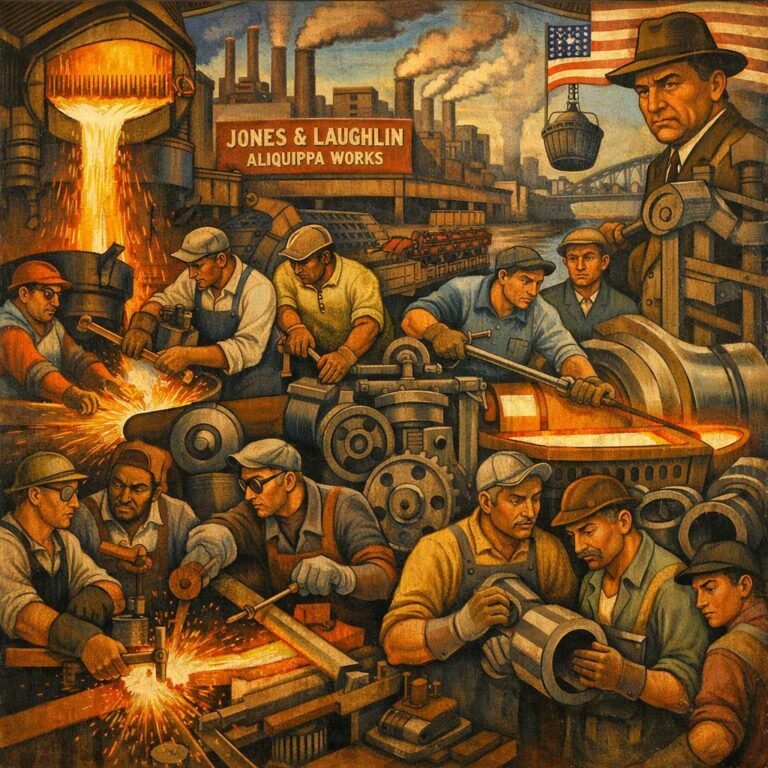
And let’s face it: if anyone knows how to build something that lasts, it’s the people who once turned seven miles of steel in Aliquippa into the backbone of a nation.
A Modest Proposal
So here’s a thought: when Core releases its study in December, maybe someone should slip a note under their door that says, “Have you considered Beaver County?” We’re open for business, we know our way around a power plant, and we could use a few good paychecks that don’t depend on grant cycles or buzzwords.
Because in the end, it’s not nostalgia that fuels Beaver County—it’s know-how. And if the future of American energy looks anything like its past, we’re already standing on the right coal seam.
Editor’s Note: Core Natural Resources’ Department of Energy–funded study on next-generation coal technology is expected in December. Beaver County Business will be watching closely—and quietly rooting for a home-field advantage.