Listen to a podcast discussion about this article.
Listen, kid, I’m not saying I’ve solved all of life’s problems. If I had, I’d be charging admission down at the Brighton Hot Dog Shoppe and handing out wisdom with the chili sauce. But I will tell you this: when the blues come calling—and they will, usually around the same time as the electric bill—you’ve got two choices. Sit there and think about it, or get up and do something that makes thinking difficult.
Now, before you accuse me of offering advice best left to men who’ve never had a bad afternoon, consider Winston Churchill, who spent years wrestling what he called the “Black Dog.” This wasn’t mild gloom. This was the sort that settles in like February along the Ohio River and refuses to leave.
Churchill’s solution? He laid bricks.
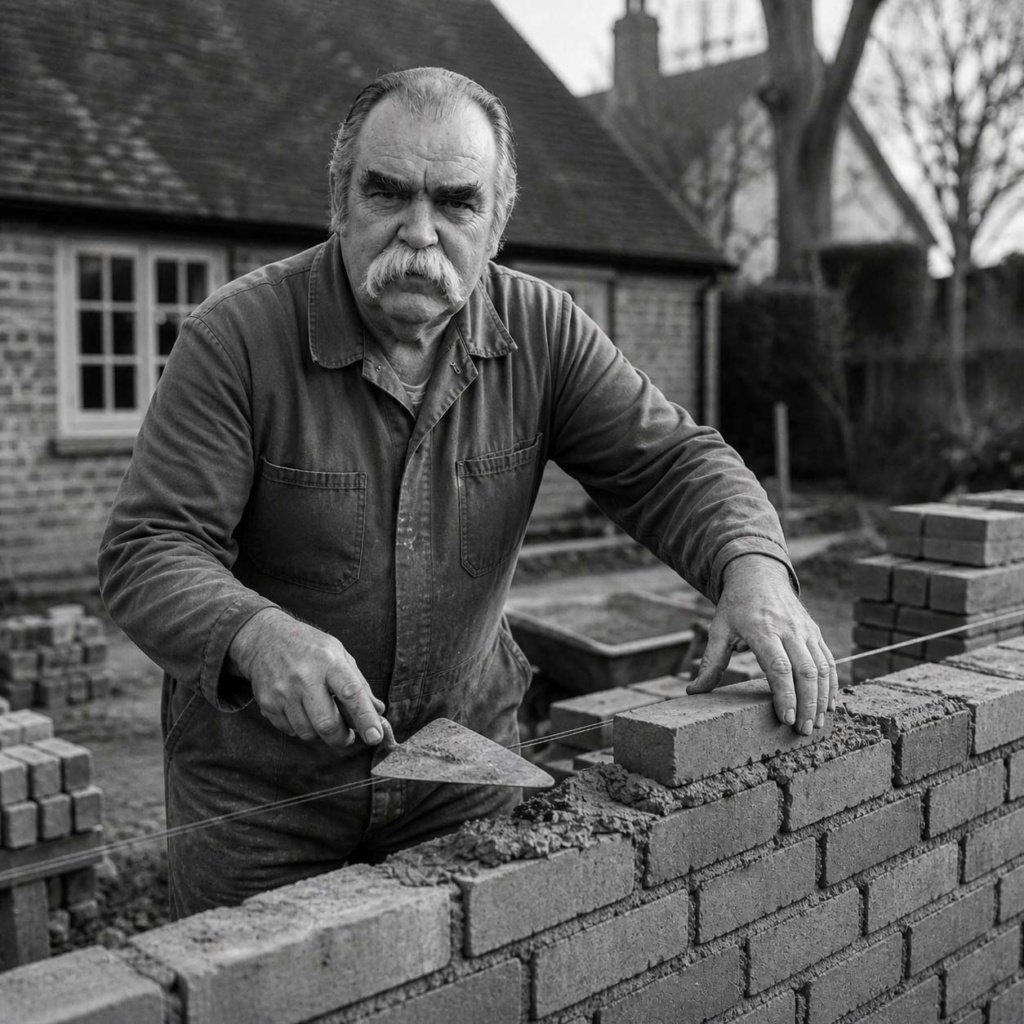
Not metaphorical ones. Real bricks, mortar, level, the whole operation. Out at his place in Kent, he’d spend hours building walls that didn’t care about his mood but responded nicely to being kept straight. He even joined the bricklayers’ union, which is more commitment than most of us show to exercise.
And here’s the part that would annoy anyone looking for something complicated: it worked.
Churchill figured out what psychology took decades to formalize. When your brain is worn out from thinking, you don’t fix it by thinking harder. You fix it by doing something that uses a different part of you—the part that moves your hands and insists that crooked bricks get corrected.
Today, the experts call this “behavioral activation,” which sounds like something requiring a grant proposal. What it means is simpler: don’t wait to feel better. Act first, and let the feeling catch up later.
Depression sets a trap. You feel bad, so you stop doing things. Then, because you’re doing nothing, you feel worse. Before long, you’re stuck in a loop tighter than the parking lot at the Beaver Super on a Saturday.
The way out isn’t philosophical. It’s practical. You pick something—anything—that requires your hands and a modest degree of attention, and you do it whether you feel like it or not. Especially when you don’t feel like it.
Churchill chose bricks. You might choose cleaning out the garage, fixing a wobbly chair, planting tomatoes, or finally organizing the drawer where batteries go to die. The activity matters less than the structure: it has a beginning, a middle, and an end.
Because when you’re done, you’ve got something to show for it.
That’s the secret. After an hour of laying bricks, Churchill could look back and say, “There’s a wall that wasn’t there before.” Try that with worry. All you get is more worry and the suspicion you should’ve been doing something else.
Researchers have since put numbers to it. In one major study, people with serious depression who followed this “act first” approach did as well as those on medication—and better than those who relied only on talk therapy. Not a fashionable conclusion in every circle, but a useful one.
There’s something else, too. Physical work crowds out rumination—the mental chewing that turns small problems into lifelong companions. You can’t spend much time brooding about existence while trying to keep a row of bricks level. The work demands your attention and gives immediate feedback. The brick is either straight or it isn’t. No debate required.
I’ve seen this principle in action right here in Beaver County. A fellow I know once tried to think his way out of a bad stretch. Sat around, drank coffee, stared out the window like inspiration might arrive by mail. Nothing happened. Then one day he got tired of himself, went outside, and fixed the sagging fence in his yard.
Two days later, the fence was straight—and so was he.
Now, I’m not promising miracles. If a few bricks solved everything, we’d replace half the pharmacy aisle with a pallet of mortar and call it progress. But I am saying this: motion beats brooding. Action beats analysis. And a small, visible accomplishment is worth a dozen well-articulated worries.
So when the blues show up—and they will, like relatives with poor timing—don’t sit down and negotiate. Go do something that requires both hands and a little patience.
Sweep the floor. Fix the hinge. Plant the garden. Stack the wood. Build your own wall, one brick at a time.
Somewhere between the first brick and the last, you may notice the Black Dog has wandered off.