Listen to a podcast discussion about this article.
There are towns that spend fortunes trying to invent a personality. They hire consultants, commission logos with swooshes, and hang banners declaring themselves “A Great Place To Live, Work, and Innovate,” which usually means there’s a vape shop where the hardware store used to be.
Then there’s Baden.
Baden never had to invent anything. History did the heavy lifting. Long before real estate agents discovered the phrase “river-view property,” before Route 65 became a four-lane commuter chute, and before the housing market decided Baden was hotter than parts of Florida and California, the place had already hosted Native diplomacy, imperial rivalry, military reform, industrial expansion, and enough frontier drama to keep a history department employed until retirement.
The latest surprise arrived courtesy of The Business Journals, which ranked Baden as the hottest housing market in the Pittsburgh metro area during the first quarter of 2026 — and third hottest in the nation. That placed it behind West Palm Beach, Florida, and Tahoe City, California, which is a little like discovering your cousin from Economy suddenly got invited to sit with movie stars at the Academy Awards.
Baden posted 28 new listings, 18 sales, and an average sale price of $534,046. This is the sort of number that makes longtime residents stare at their split-levels with fresh affection.
Of course, Baden has been surprising outsiders for nearly 300 years.
Before there was Baden, there was Logstown.
Logstown sat near present-day Baden along the Ohio River and was one of the most important Native American settlements in the Ohio Country. Shawnee, Lenape, and Iroquois leaders gathered there. Traders passed through. Diplomats exchanged wampum belts while the British and French circled each other like two fellows in a bar who both claimed the same stool.
In 1752, the Treaty of Logstown was signed there, one of those agreements that seemed perfectly clear until everybody began interpreting it. The British believed it strengthened their claims to the Ohio Valley. The French took a different view, and in the eighteenth century a different view usually meant somebody would soon be marching through the woods with muskets.
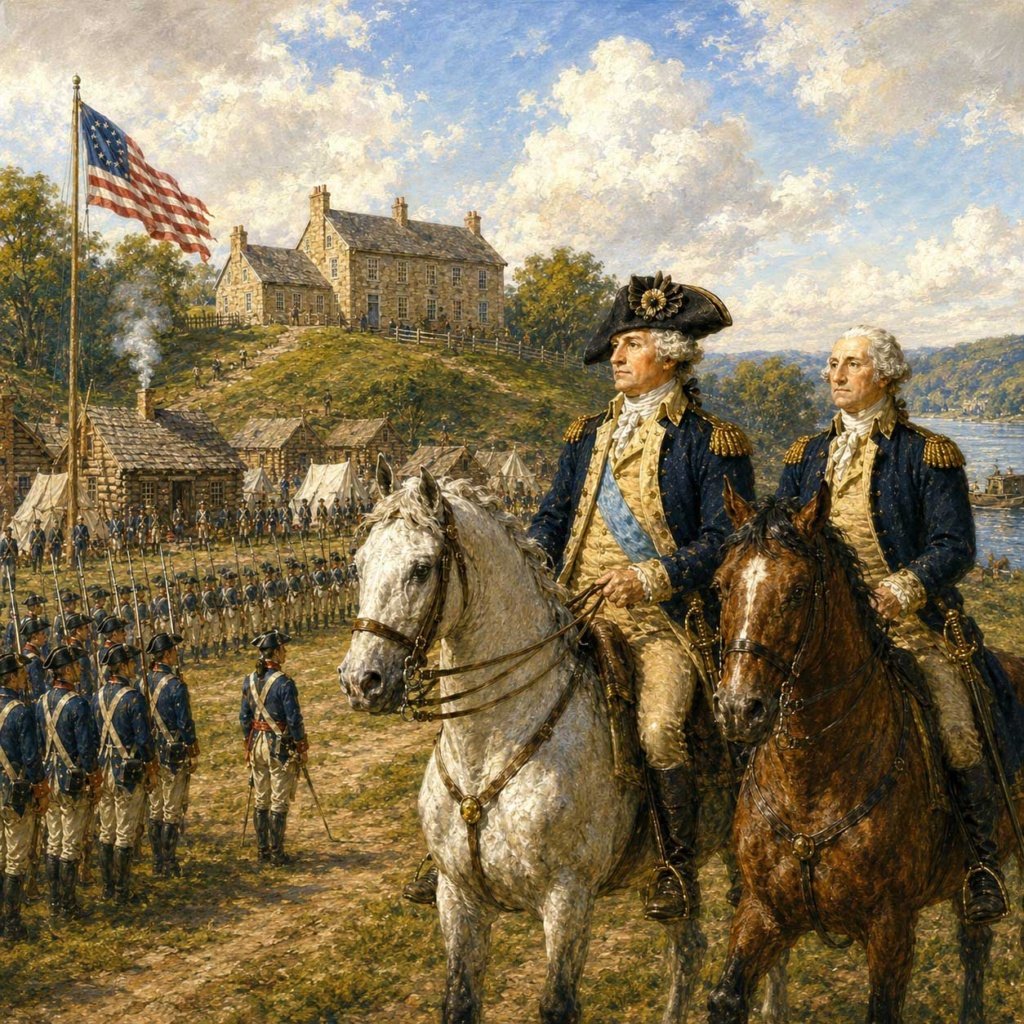
A year later, a young George Washington came through the region to warn the French away from British claims. It did not go especially well. The French and Indian War soon followed, eventually expanding into the Seven Years’ War and dragging half the civilized world into the argument.
So if Baden seems quiet today, remember: world history once had business there.
Then came “Mad” Anthony Wayne.
Wayne earned his nickname through battlefield courage, aggressive tactics, and a personality that suggested caution was something invented by timid men with clean uniforms. During the Revolution, he led daring assaults and became a hero. But one of his greatest contributions came near Baden.
In 1792, after disastrous American defeats in the Northwest Territory, President George Washington called on Wayne to rebuild the army. Wayne established Legionville along the Ohio near present-day Baden and Ambridge. It became the nation’s first formal military training camp.
Before Legionville, American military preparation often consisted of handing farmers muskets and hoping Providence had a favorable opinion of the Republic. Wayne preferred drill. Bayonet practice. Marksmanship. Forced marches. Mock battles. Discipline severe enough to make a modern human resources director swallow his lanyard.
At its height, Legionville temporarily had more people than Pittsburgh.
The troops trained there later fought at the Battle of Fallen Timbers in 1794, a victory that opened much of the Northwest Territory to American settlement. Ohio, Indiana, Illinois, and the Midwest followed. In a very real sense, the road west ran through Baden.
Then history changed costumes.
The frontier gave way to farms, river trades, railroads, quarries, mills, churches, schools, and modest homes climbing the hillside. Baden was laid out in 1838 and 1839 by Christian Burkhardt, who named it after Baden-Baden, the elegant German spa town near the Black Forest.
This was optimistic naming. Baden-Baden had mineral baths and European society. Beaver County’s Baden had boatyards, stone houses, livestock roads, and eventually enough industrial grit to put iron in a man’s handshake.
But the name stuck, and so did the town.
The railroad arrived in 1853. The borough incorporated in the nineteenth century and grew into a residential and small-industrial community. Boat captains settled there. Workers headed to mills, mines, rail yards, and later the sprawling industrial valley around Conway and Aliquippa.
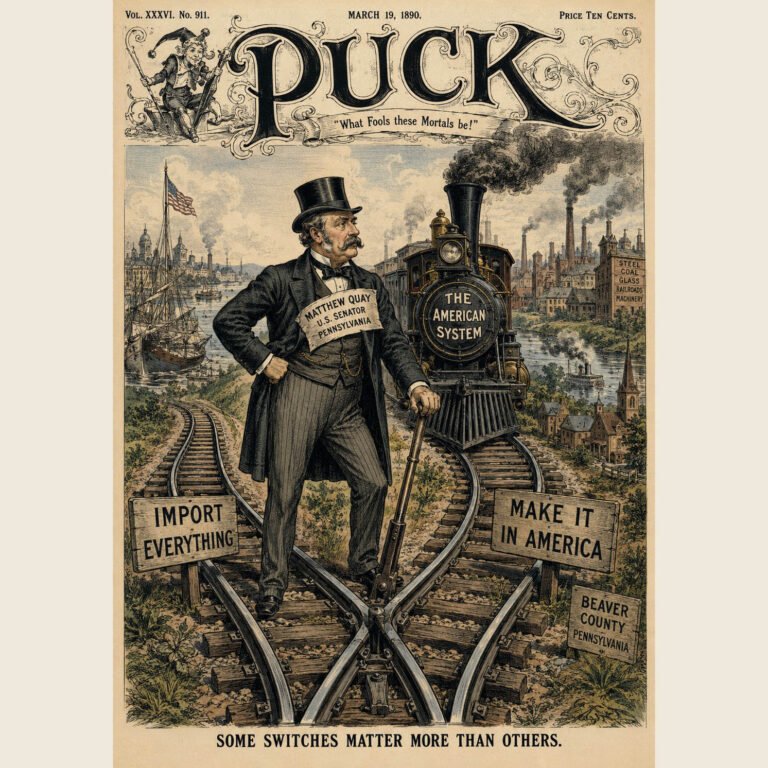
Like much of Beaver County, Baden reached its population peak around 1960, then endured the long industrial unwinding. The mills slowed. Jobs disappeared. Young people left. The old certainties went the way of passenger rail and affordable porch furniture.
Yet Baden kept its shape.
That may be why people are noticing it now. Baden has something increasingly rare in modern America: coherence. It still feels like a place rather than a real estate product. It has hills, porches, churches, old houses, river views, local memory, and enough surviving civic muscle to remind people that community is not built by a branding firm.
The housing market may have discovered Baden in the first quarter of 2026. But Baden was there all along — under the smoke, under the headlines, under the assumptions of people driving Route 65 too fast to look up.
The smoke cleared. The town remained.