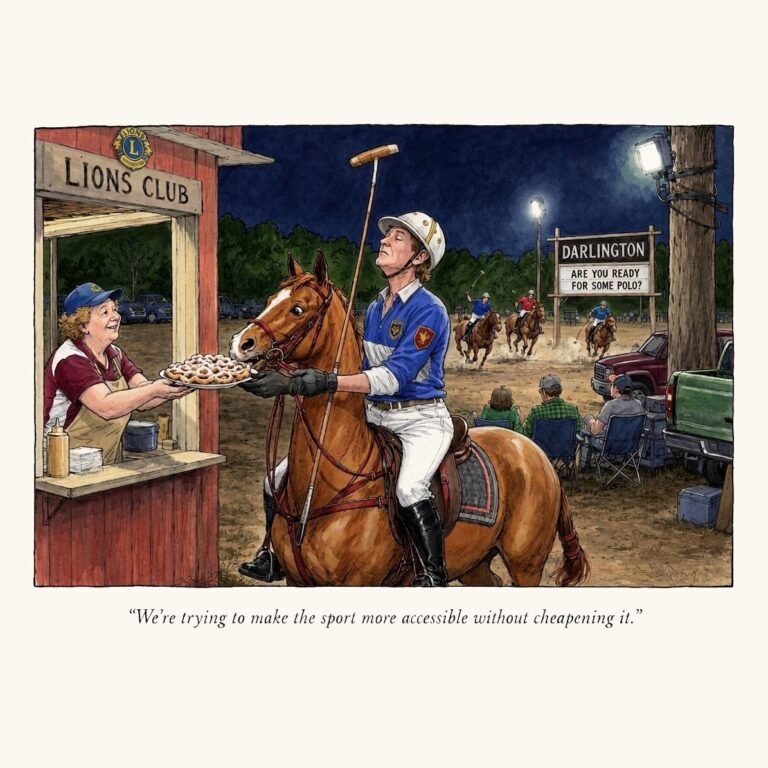
The Sport of Kings, With Funnel Cake
Darlington Polo Club brings the sport of kings to Beaver County with night matches, dirt fields, family tradition, pickup trucks and funnel cake.

The Hookstown Fair is among my earliest memories, which means it has been mixed up in my mind ever since with childhood, late August and the smell of onions frying somewhere just beyond the livestock barn. It was a Morrow family tradition. My Uncle Dick had a farm in Hookstown and exhibited at the fair, where he was also a feared competitor in the tractor pull. In those days, a man’s standing in the community could be measured by his cattle, his corn and whether his tractor stopped moving before somebody else’s did.
The fair was also—and remains—a favored platform for politicians hoping to harvest the generally conservative farm vote. They arrive in pressed shirts and clean shoes, shake hands beside the cattle barn and try to look as if they know which end of a Holstein produces the milk. Rural voters are polite people. They will listen patiently to almost any speech, provided it does not delay the tractor pull or allow somebody else to get the last sausage sandwich.
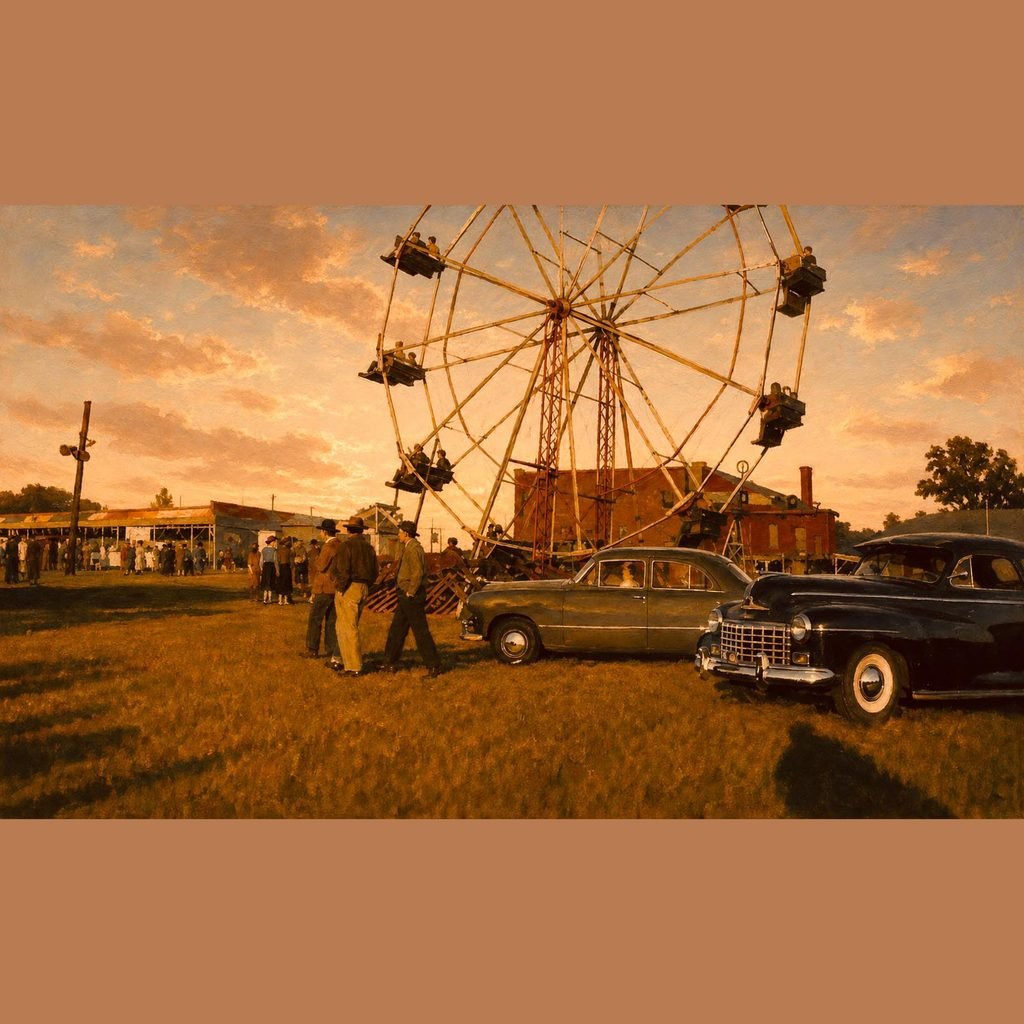
Food at an agricultural fair is not merely refreshment. It is a branch of agriculture that has achieved its final and most persuasive form. The cow becomes a cheeseburger. The hog becomes pulled pork. The potato becomes a ribbon of deep-fried architecture. Even the apple, after generations of wholesome service, is dipped in caramel and mounted on a stick.
Agricultural fairs have been part of Beaver County life almost as long as the county has had agriculture worth judging. The Beaver County Agricultural Society was formed in 1853, when the first county fair was held in Beaver near what are now Leopard Lane, Otter Lane, Sharon Road and Fair Avenue. Organizers built seven frame buildings, a racetrack, grandstand and judges’ boxes.
The fair displayed livestock and produce, offered harness racing and gave farmers the annual satisfaction of learning that a neighbor’s squash had been judged superior to their own. There were undoubtedly meals involved. No civic institution in 19th-century America could survive long unless several women appeared with pies.
After nearly half a century in Beaver, the fair moved first to Morado Park and then to Junction Park between Rochester and New Brighton. There agriculture learned the enduring lesson that livestock alone cannot compete with machinery traveling dangerously fast. Auto racing replaced horse racing as the chief attraction, beauty pageants appeared, vendors multiplied and the fair became a regional spectacle. In 1920, more than 40,000 paying customers attended over three days, presumably consuming enough lemonade to float a barge down the Beaver River.
Then came the Depression. After losing money in 1929 and 1930, the Beaver County Fair disappeared.
The countryside, however, did not.
The Granges stepped into the vacancy. These organizations had served farm families since the 19th century, providing education, fellowship, mutual assistance and the occasional political opinion. They also understood that fellowship proceeds more smoothly when accompanied by gravy.
The Big Knob Grange, organized in New Sewickley Township in 1936, held an indoor “circus fair” the next year and its first outdoor fair in 1938. That event earned $252.20, which may not sound like much until one considers that many modern civic enterprises spend more than that discussing what color to paint the sign.
Big Knob remains the more compact and neighborly of the county’s two fairs, known for free admission, livestock, marching bands, tractor pulls, demolition derbies and homemade dinners. Stuffed pork chop night is an institution in itself. Few advertising agencies have ever devised a slogan as effective as “stuffed pork chop,” particularly when followed by “pie.”
Hookstown’s agricultural lineage reaches still further back. Local farmers staged stock shows near Mill Creek Cemetery in the 1880s, complete with livestock, dinners, debates, speeches and music by the Hookstown Band. An earlier Hookstown fair collapsed after three days of rain in 1910, proving that even farmers, who spend the year asking heaven for rain, would prefer it not fall directly into the soup.
The modern Hookstown Fair began in 1946 or 1947. Organizers bought 1¼ acres along Route 168, drilled a well and erected tents and temporary livestock pens. The first major fair drew an estimated 20,000 people. Permanent buildings followed, along with livestock facilities, rides, home arts, 4-H programs, truck and tractor pulls, demolition derbies and the South Side Historical Village.
And food. French fries in paper trays. Sausage sandwiches that require the eater to lean forward in self-defense. Funnel cakes buried beneath enough powdered sugar to conceal minor structural defects. Pie, ice cream, cotton candy and lemonade served in vessels large enough to water livestock. One does not leave an agricultural fair hungry unless one has confused the midway with a fasting retreat.
Hookstown grew into the larger and more widely recognized of Beaver County’s two fairs, helped by its location near Ohio and West Virginia and by generations of farm families who continued to exhibit, organize and volunteer. Big Knob and Hookstown are not rivals. They are two cousins living on opposite sides of the county, spending consecutive weeks in late August demonstrating that the family can still raise a steer, pull a tractor and feed several thousand people without consulting a hospitality conglomerate.
The politicians still come, smiling bravely through the dust and trying not to drip mustard on their shirts.
They know what my Uncle Dick knew: At the fair, you pull as hard as you can, hope the machinery holds together and try not to stop before the finish line.
Although it never hurts to know where they keep the pie.
Darlington Polo Club brings the sport of kings to Beaver County with night matches, dirt fields, family tradition, pickup trucks and funnel cake.
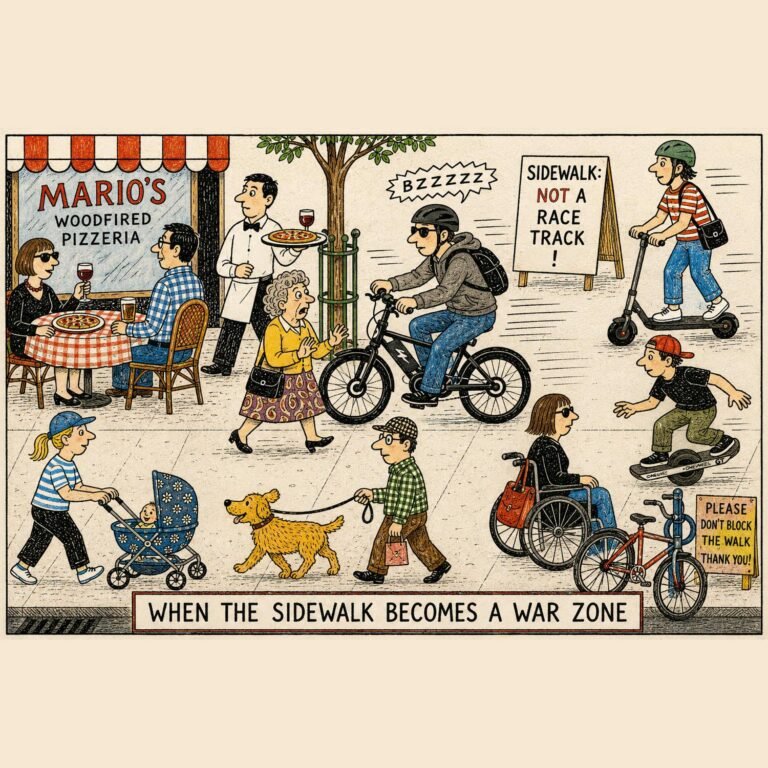
Electric bikes, scooters and other micromobility devices are transforming sidewalks, raising questions about pedestrian safety, rules and infrastructure.