Listen to a podcast discussion about this article.
History remembers Anthony Wayne as “Mad Anthony.”
That’s a little like remembering Albert Einstein as “That Guy With the Hair.”
The nickname has survived because it’s colorful. It also happens to miss the point.
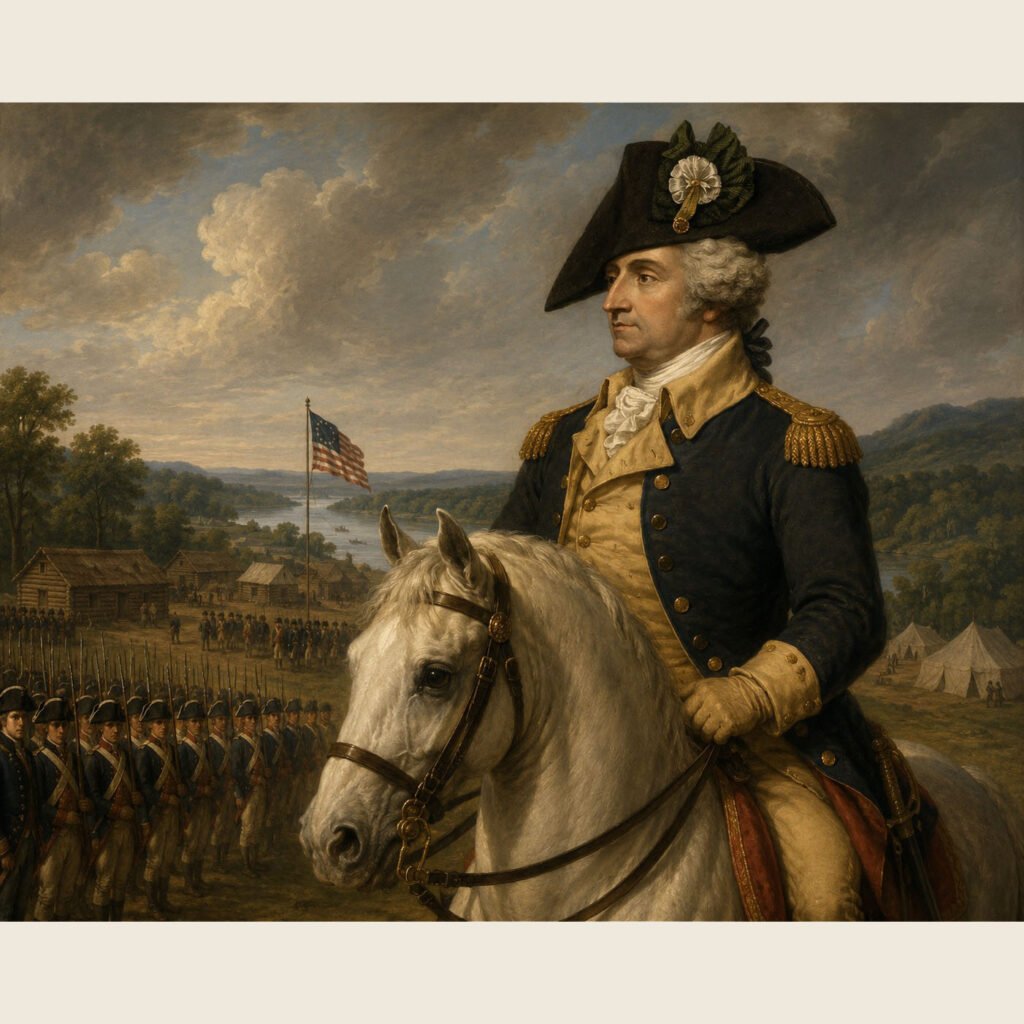
Wayne was certainly brave—sometimes spectacularly so. He collected battle wounds the way some people collect commemorative spoons. At one point he kept leading an assault after being shot in the head. That sort of behavior naturally convinces people that either you’re fearless or your judgment occasionally takes a coffee break.
But what ultimately made Anthony Wayne one of America’s indispensable founders wasn’t madness.
It was discipline.
And oddly enough, the place where he proved it wasn’t Valley Forge, Yorktown, or the Ohio wilderness.
It was Beaver County.
Wayne entered the world on New Year’s Day, 1745, in Chester County, Pennsylvania. Before becoming a soldier, he was a surveyor, tanner, businessman, and politician—the sort of practical Pennsylvanian the eighteenth century seemed to produce in generous quantities. When revolution came, he raised a regiment, impressed George Washington almost immediately, and rose rapidly through the ranks.
His reputation for audacity became legend during the 1779 assault on the British fortifications at Stony Point. Leading a nighttime bayonet attack with unloaded muskets, Wayne captured one of Britain’s strongest positions on the Hudson River. Congress rewarded him with a gold medal, and “Mad Anthony” became part of American folklore.
Had he died after Yorktown, history would’ve remembered him as another colorful Revolutionary War hero.
Instead, his greatest contribution came afterward.
The United States had won its independence, but it hadn’t secured its future. Beyond the Ohio River stretched the vast Northwest Territory, claimed by the young republic but fiercely defended by a confederation of Native nations determined to protect their ancestral homelands. British officials, still clinging to frontier forts despite the Treaty of Paris, quietly encouraged that resistance, hoping to slow American expansion and preserve the lucrative fur trade.
The United States responded badly.
General Josiah Harmar failed.
General Arthur St. Clair failed even more spectacularly. His 1791 defeat remains one of the worst military disasters in American history.
George Washington finally recognized that the republic’s problem couldn’t be solved simply by finding another brave general.
America needed something it’d never really had.
A professional army.
Washington turned to Wayne.
Wayne quickly recognized another problem. Pittsburgh, then a rough frontier settlement, boasted an energetic collection of taverns whose educational curriculum emphasized drinking, gambling, and forgetting tomorrow morning’s parade schedule. Wayne reportedly considered the place far too distracting for turning recruits into soldiers.
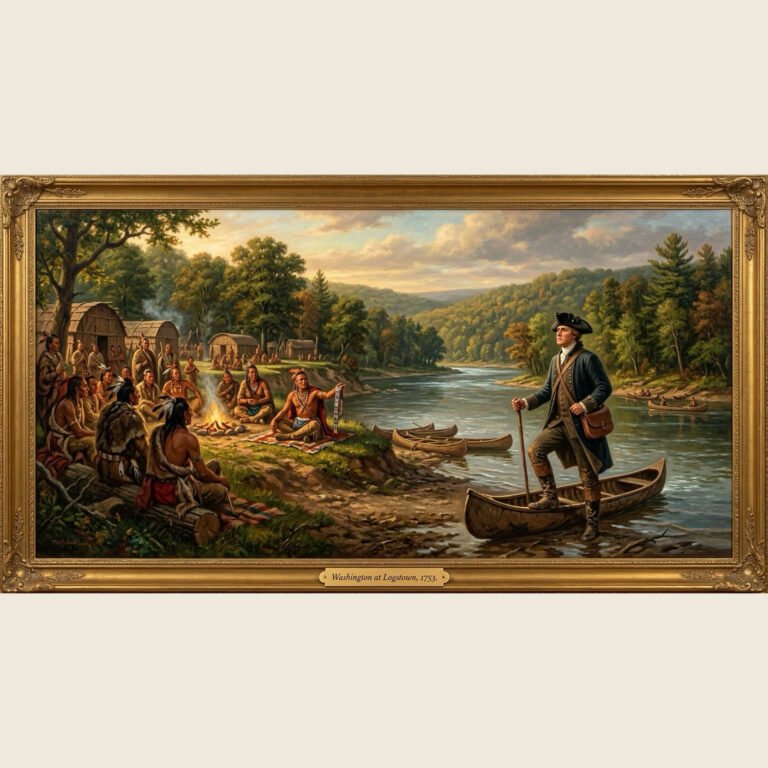
So he floated his army twenty-two miles down the Ohio River to a quiet bluff near the old Native settlement of Logstown, in what’s now Harmony Township.
There he built Legionville.
Today, Legionville doesn’t receive nearly the attention it deserves. Yet between November 1792 and April 1793, roughly 2,500 soldiers built barracks, rifle ranges, artillery positions, parade grounds, and defensive works. More importantly, they trained—day after day, week after week—until raw recruits began behaving like professionals.
Military historians generally regard Legionville as America’s first formal basic training camp for the regular U.S. Army.
Which means every drill instructor who’s ever barked at recruits owes at least a small debt to Beaver County.
Wayne drilled his men relentlessly.
They marched.
They fired until they became marksmen.
They practiced bayonet charges until movement became instinct.
They learned to build fortifications.
They learned to trust one another.
The discipline could be severe, even brutal by modern standards. But Wayne understood something earlier commanders hadn’t. Courage without discipline is simply enthusiasm carrying a loaded musket.
Among the young officers absorbing those lessons were William Henry Harrison, who’d become president of the United States; William Clark, who’d later explore the continent with Meriwether Lewis; and Zebulon Pike, whose name still crowns one of Colorado’s best-known mountains.
You begin to realize Legionville wasn’t merely boot camp.
It was graduate school for the American republic.
The final exam came on August 20, 1794.
Near the Maumee River in present-day Ohio, Native warriors chose an excellent defensive position amid a massive tangle of trees toppled by a tornado—a place history remembers as Fallen Timbers.
Previous American armies probably would’ve dissolved into confusion.
Wayne’s didn’t.
He restored order almost immediately and famously ordered his men to fix bayonets and charge. The disciplined advance broke the Native confederacy in roughly an hour. When surviving warriors retreated toward nearby British-held Fort Miami, the British declined to intervene. They’d decided this wasn’t a fight worth having.
The victory did far more than win a battle.
It led directly to the Treaty of Greenville, opening most of present-day Ohio to American settlement and establishing federal authority throughout the Northwest Territory. Combined with Jay’s Treaty, which persuaded Britain to abandon its remaining frontier forts, Fallen Timbers secured the young republic’s western frontier.
From the perspective of the United States, it was a nation-saving victory.
From the perspective of many Native nations, it marked the beginning of profound dispossession and the loss of ancestral lands.
History’s got room for both truths.
Wayne himself didn’t enjoy his triumph for long. He died near Presque Isle—modern Erie—in December 1796 while returning from an inspection tour of frontier forts. He was only fifty-one.
His legacy remains complicated. He owned enslaved people. His campaigns accelerated America’s westward expansion at enormous cost to Native communities. Yet he also built the disciplined military institution that helped the United States survive its uncertain infancy.
That complexity doesn’t diminish his importance.
It explains it.
Visitors driving through Harmony Township today might notice a historical marker or hear someone mention Legionville without realizing they’re passing one of the most consequential military sites in American history. Here, on a bluff overlooking the Ohio River, a gifted, stubborn, deeply flawed Pennsylvanian transformed frightened recruits into the nation’s first professional fighting force.
The battle that secured America’s western frontier was fought in Ohio.
But in an important sense, it was won months earlier in Beaver County.
Mad?
Maybe.
Prepared?
Without question.
And in the end, preparation mattered a whole lot more than madness.