By Rodger Morrow, Editor & Publisher, Beaver County Business
Listen to a podcast discussion about this article.
January in Beaver County arrives the way a bill collector does in the night: uninvited, persistent, and unimpressed by your excuses. It does not ease itself in with pleasantries. It kicks the door open, dumps a drift in the living room, and settles in with the clear intention of staying until morale improves—or until March, whichever comes later.
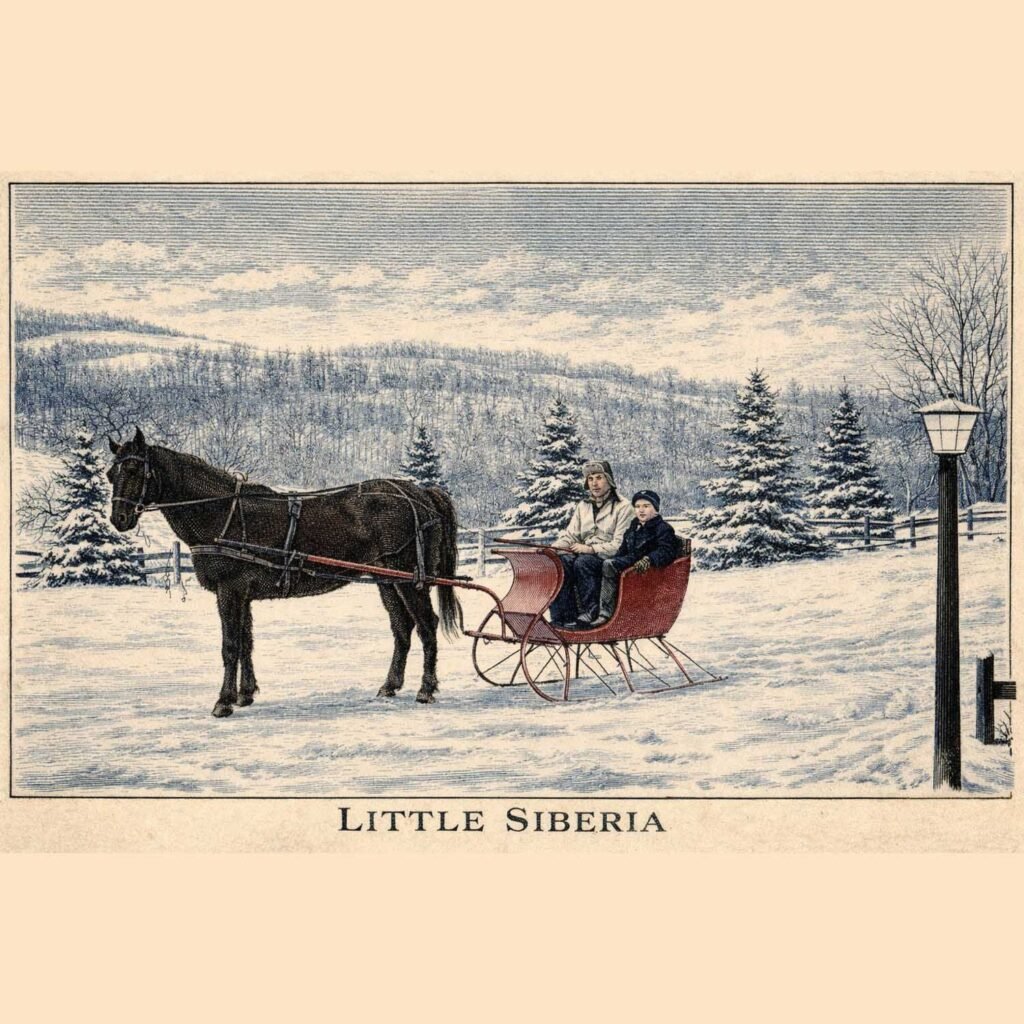
I grew up on Morrow Road in Chippewa, in a stretch of geography my mother, with her usual gift for understatement, called Little Siberia. This was not a metaphor. It was a meteorological classification. Weather maps might show Beaver County in a respectable shade of winter blue, but our end of Morrow Road existed in a darker, more punitive color, one known only to Canadians and the damned. Snow found us the way debt finds a spendthrift. Wind came straight down from Lake Erie with no intervening mercy.
We owned a Willy’s Jeep, which was less a vehicle than a declaration of intent. In January, ordinary cars surrendered. The Jeep, however, took snowdrifts as a personal challenge. When the road vanished entirely, we were snowed in with the calm resignation of pioneers, which is to say we assumed this was how things were meant to be and got on with it. If you needed to go somewhere urgently, you did not. If you needed milk, you discovered you did not need milk as badly as you thought.
Behind the house were sloped hills perfectly engineered for childhood recklessness. We had a toboggan—long, wooden, and aerodynamically indifferent—that could reach speeds just shy of regret. We flew down those hills with the confidence of people who had not yet learned about spinal injuries. Snowmen appeared in the yard like short-lived tenants. Snow angels were made with great ceremony, arms and legs flailing until your coat filled with snow and your face turned the color of a boiled lobster. Windburn was worn proudly, as proof that you had been outside long enough to earn it.
Going outside, however, required a preparation process comparable to a moon landing. First came the long underwear, followed by two pairs of socks, then galoshes that smelled faintly of rubber and despair. Coats were zipped, scarves wrapped, hats pulled down until you could no longer hear, which was considered a feature. By the time you were fully bundled, you moved with the grace of a sofa being pushed uphill. The reward for this labor was ten minutes of freedom before your fingers went numb and you had to decide whether pride outweighed circulation.
Winter also brought sleigh rides, which were romantic in theory and frigid in practice. The novelty lasted until you realized your feet had ceased to exist. Salvation came indoors, before a crackling fire where Ovaltine awaited, steaming and medicinal, promising warmth and the vague sense that you were being fortified against something unspeakable.
Meals were hearty, designed less for enjoyment than survival. Chili simmered with a seriousness that suggested it was aware of its responsibilities. Boiled New England dinner appeared with the regularity of a liturgical season, cabbage and beef surrendering together in a pot. There were animals to feed—horses and cattle in the hay barn—tasks that did not pause for weather. You learned early that hay bales are heavier in January and that breath hangs in the air like punctuation.
Occasionally, storms knocked out the power, and we ate dinner by candlelight, which made everything taste slightly more heroic. Shadows danced on the walls, and for a brief moment you could imagine you were living in an earlier century, until someone asked where the flashlight was.
Saturday nights brought television, that glowing hearth of modern civilization. Gunsmoke taught us that problems could be solved with moral clarity and a firm hand. Paladin arrived with a calling card and left with your faith in professionalism restored. Perry Mason demonstrated that justice required persistence, impeccable suits, and a dramatic confession in the final five minutes. These programs were accompanied by popcorn or homemade fudge, which functioned as both dessert and emotional insulation.
January, then, was a colossal struggle between wild adventure and stupefying boredom. One moment you were racing down a hill at reckless speed; the next you were staring out a frost- laced window, counting hours like a prisoner marking days on a wall. It taught patience, endurance, and the valuable skill of finding amusement where none was readily available.
Even now, when January arrives in Beaver County, I feel a familiar tightening in the air. I think of Little Siberia, of the Jeep, the toboggan, the candlelit dinners. January did not coddle us. It tested us, froze us, bored us senseless—and somehow, without asking our permission, made us.