Listen to a podcast discussion about this article.
By the time I was a boy in Beaver County, coffee wasn’t just a beverage. It was a public utility. The mills ran on it. Railroad men ran on it. Half the fathers in Aliquippa, Ambridge, and Beaver Falls probably had more Maxwell House in their veins than plasma. Around four-thirty every morning, lights blinked on across the valley, lunch pails were packed, and somebody brewed a pot strong enough to put hair on a church bulletin.
Today coffee arrives with tasting notes. You’re expected to detect “hints of blueberry” and a “floral finish,” as though the object were to judge perfume instead of locating your car keys before work. Some people won’t drink a cup unless the bean comes with a name, passport, and emotional backstory from the mountains of Guatemala.
That’s fine. A man’s entitled to his hobbies.
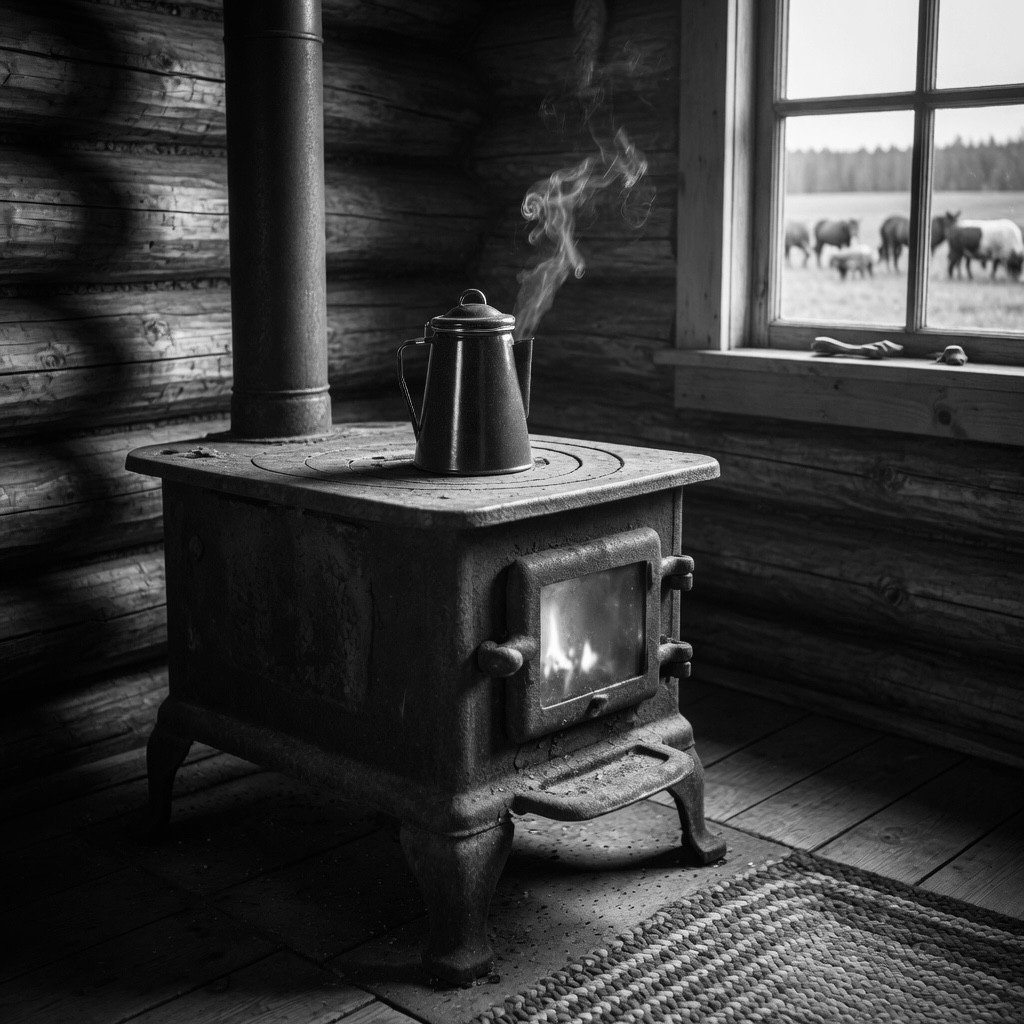
But if you want coffee that quietly does its job without delivering a TED Talk, Grandpa Jim’s method still works.
Start with a proper pot—the sort your grandfather kept near the stove while listening to Rege Cordic and worrying whether the Pirates had enough pitching to survive another summer. Skip the chrome contraptions with enough buttons to launch a submarine.
Fill the pot with water up to the bottom of the spout. No guesswork. Put it on the heat and let it warm. You don’t need a thermometer. The fellows who built Shippingport Atomic Power Station split atoms without standing over their coffee water every thirty seconds with a digital probe.
For the coffee itself, use roughly a quarter cup of grounds per quart of water. If you’re making a large pot—say icy roads have driven half the neighborhood to your kitchen after Mass at St. Cecilia’s—use three good handfuls. Not pinches. Handfuls. If your hand no longer remembers this measurement, you’ve been ordering too much food through apps.
Use coarse grounds if you can. Medium roast is perfectly respectable. Personally, I’ve never cared for coffee roasted so dark it tastes like it was filtered through an old tire fire over in Rochester. But that’s between you and your conscience.
Once the water is hot, add the grounds and bring the whole business to a proper rolling boil—the kind that looks capable of running for county commissioner. Let it boil about four minutes.
This is the step modern coffee people skip because somebody convinced them boiling ruins the flavor. Nonsense. Boiling knocks down the bitterness and leaves the coffee smooth instead of sitting in your stomach like an unresolved grievance from the old Jones & Laughlin mill. Skip this step and you’ll spend the morning wondering why your digestive system feels like Route 51 construction.
After four minutes, remove the pot from the heat and let it sit two more minutes. This is where modern civilization falls apart. Nobody can leave anything alone anymore. Phones buzz. Apps chirp. People poke at everything as though life were an injured squirrel needing constant supervision. Sometimes the best thing you can do—for coffee and for life—is stop fussing with it.
Now comes the step your barista with the waxed mustache and philosophy degree won’t mention. Pour about a cup of cold water down the spout and around the edges of the pot. This shocks the grounds and sends them straight to the bottom where the Lord intended them to remain. You want coffee in your cup, not crunching between your molars.
If a few grounds cling to the rim, wipe them off with a damp paper towel. No sense carrying yesterday’s mistakes into today.
Pour slow and steady. Don’t slosh it around like you’re baptizing a raccoon in the Ohio River.
As for cleaning the pot, never wash the inside with soap. Treat it like cast iron. Over time it develops seasoning, and the flavor lives in there. Soap strips all that away and leaves your coffee tasting faintly of regret and Palmolive.
The outside of the pot, especially if it’s been sitting over a campfire near Brady’s Run, will eventually blacken with soot. Rub a little vegetable oil on the bottom beforehand and cleanup becomes easier. That isn’t sophistication. That’s experience.
If there’s leftover coffee, pour it into a Mason jar and refrigerate it. It’ll keep four or five days. Reheat gently and strain it if necessary. Like people in Beaver County, coffee often improves once it settles down a little.
Now certainly, you may drive someplace where a young man named Skyler serves you a nine-dollar beverage with a title longer than a Norfolk Southern freight train. That’s his business.
Mine is simpler.
Coffee ought to wake you up, treat you honestly, and ask very little in return. It shouldn’t require a glossary, a passport, or a small bank loan.
You can keep the foam art.
I’ll keep the coffee.