Listen to a podcast discussion about this article.
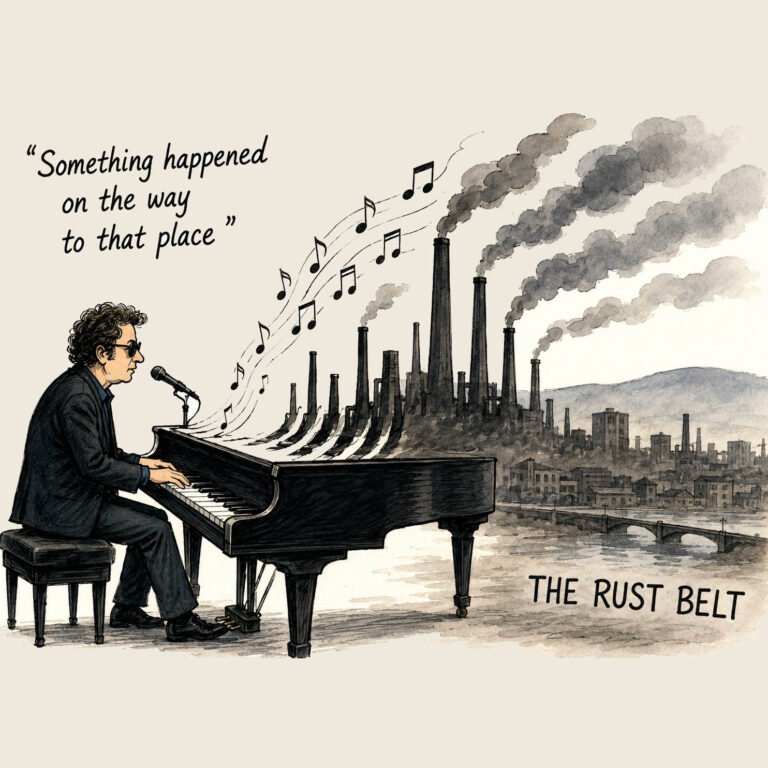
If you live long enough in western Pennsylvania, you learn that steel mills don’t entirely die. They just sulk for a few decades and then reappear with new investors and better public relations.
Last week, United States Steel Corporation announced it had secured the permit it needed from the Allegheny County Health Department to begin work on a $100 million slag recycling facility at the Edgar Thomson Works in Braddock.
The slag recycler is the first Mon Valley Works project to receive regulatory approval since Nippon Steel completed its $14.1 billion acquisition of U.S. Steel last June. It’s separate from the planned $1 billion hot strip mill that’ll eventually replace operations at Irvin Works. But symbolically, it’s the opening act in an $11 billion-plus reinvestment campaign.
Around here, when someone spends $100 million on blast furnace leftovers, we pay attention.
The Byproduct That Wouldn’t Die
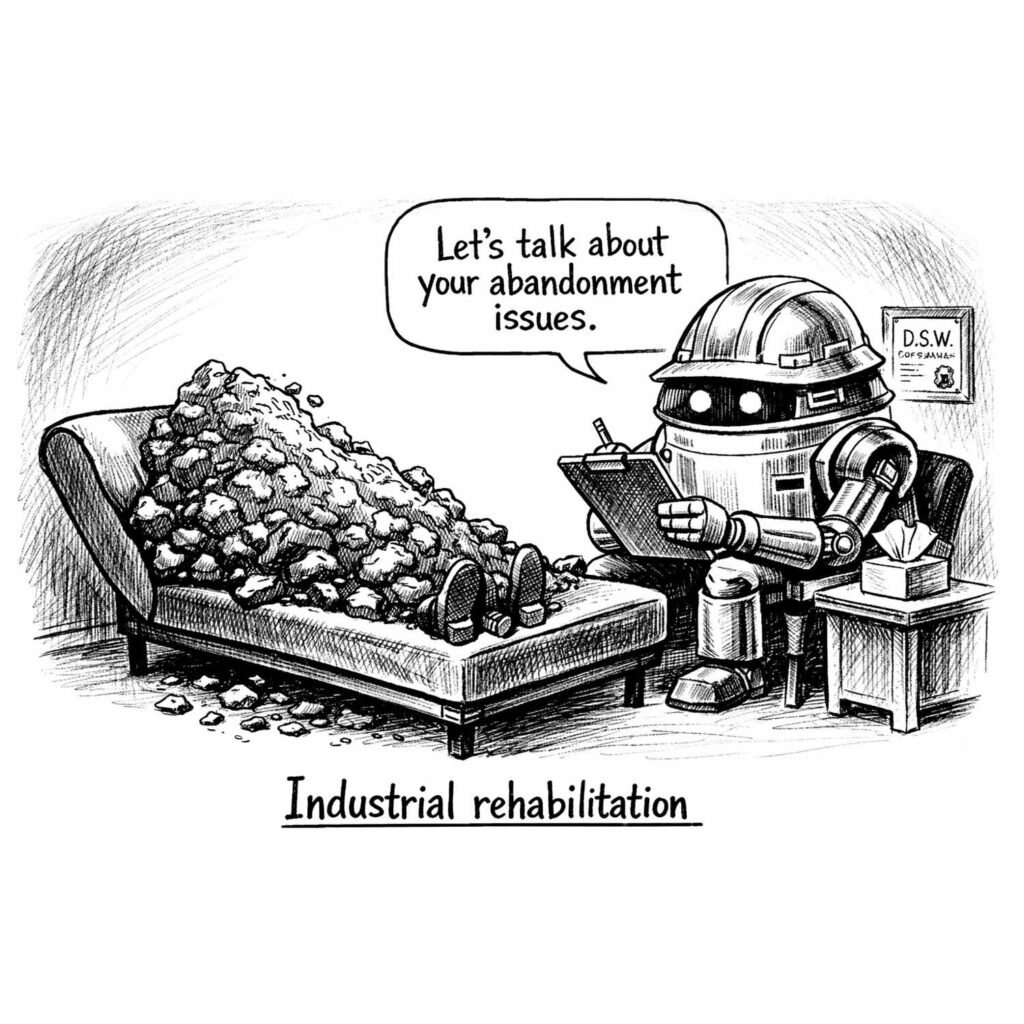
Slag, for those who didn’t grow up sledding down it, is the rocky byproduct created during the blast furnace process. For decades, it was stored in open pits or piled into accidental mountains that nobody quite knew what to do with.
Now U.S. Steel says the new recycler will operate as a closed system, eliminating open-air storage, reducing emissions, and turning slag into a marketable ingredient for cement and aggregates.
The language is modern — sustainability, emissions reduction, efficiency. But the story’s ancient. Steel produces byproducts. Those byproducts either become liabilities or assets. Nippon’s investment suggests it’s betting on the latter.
The Edgar Thomson Works anchors the Mon Valley Works complex, which employs more than 3,000 people across Braddock, Irvin Works, and Clairton Coke Works. A modernization project there isn’t cosmetic. It’s a signal that steelmaking in western Pennsylvania still has institutional backing and global capital behind it.
And that signal travels.
Regional Ripples
Beaver County doesn’t host this slag recycler. The construction crews won’t be ordering lunch in Aliquippa. But economic gravity doesn’t stop at the county line.
Our industrial history’s braided with that of the Mon Valley. When mills boomed in Braddock and Duquesne, Beaver County thrived. When they shut down, we felt it in payrolls, storefronts, and Little League sponsorships.
A $100 million investment downriver reinforces the idea that the regional steel ecosystem’s still alive. Contractors, equipment suppliers, maintenance crews — many of them live here even if they clock in there. When activity ticks up in the Mon Valley, it tends to echo west along the Ohio.
Just as important, it shifts perception.
Capital goes where confidence lives. Nippon’s willingness to commit billions tells investors that western Pennsylvania steel isn’t just a sepia-toned memory. It’s an operating platform.
And operating platforms attract companies.
The Slag Question
Here in Beaver County, slag isn’t theoretical. It’s part of the topography — especially on the former J&L Aliquippa Works site now overseen by Bet-Tech International.
Bet-Tech and its affiliates have spent years reclaiming, processing, and selling slag from legacy stockpiles. What used to be industrial debris is now construction material. In a county that’s made a habit of turning scrap into second chances, that’s almost poetic.
The new recycler at Edgar Thomson changes the math.
Instead of decades-old piles being processed slowly, the Mon Valley will now generate freshly handled, efficiently processed slag in a closed system. It’ll likely be uniform, environmentally compliant, and marketed under the banner of sustainability.
Slag’s heavy. Transportation’s expensive. That makes regional supply matter. An increase in high-quality production could put pressure on pricing for reclaimed material nearby.
On the other hand, infrastructure spending has a bottomless appetite for aggregate. Roads, bridges, foundations — they’ll consume slag without asking many questions. If demand expands, there may be room for both new and reclaimed sources.
For Bet-Tech, that means competition — but not catastrophe. The company’s diversified into land development, industrial leasing, and emerging ventures beyond slag alone. Competition doesn’t mean extinction. It means adaptation.
Environmental Expectations
There’s also the optics.
U.S. Steel’s emphasizing that the recycler will eliminate open pits and reduce emissions. In a region that’s had its share of air-quality headlines, that messaging isn’t accidental.
When a major producer modernizes its byproduct handling, regulators notice. So do community groups. So do neighboring operators with legacy facilities.
Beaver County’s remaining slag sites — some already under federal oversight — may face higher expectations. The era of “that’s how we’ve always done it” is fading fast.
But that’s not necessarily bad news.
Cleaner slag handling improves air and water quality along the Ohio corridor. Modern practices can strengthen public support for keeping heavy industry in the region. If steel’s going to remain part of our identity, it has to look like it belongs in 2026, not 1956.
Renovation, Not Resurrection
It’s tempting to call this a resurrection — the old mills rising heroically from the grave.
But what’s happening isn’t sentimental. It’s practical.
The 20th-century steel complex that built Aliquippa and Braddock ran on brute force. It created jobs, pensions, and entire neighborhoods — and it created enormous waste.
The 21st-century version has to run leaner, cleaner, and smarter. It has to turn byproducts into revenue streams. It has to close loops.
That’s not nostalgia. That’s survival.
For Beaver County, the impact of the Edgar Thomson slag recycler is indirect but real. It reinforces the idea that western Pennsylvania steel isn’t evaporating. It’s evolving. It introduces competition in the slag market but also validates slag as something worth engineering rather than burying.
Most of all, it reminds us that industrial landscapes don’t stand still.
The mills that once defined this region haven’t returned in their smoke-belching form. Instead, they’re being retrofitted with emissions controls, digital monitoring, and foreign capital.
In western Pennsylvania, we’ve learned to live with steel’s ghosts — the piles, the brownfields, the memories.
Now it seems some of those ghosts have put on hard hats.
And around here, that’s about as close to rebirth as it gets.