Listen to a podcast discussion about this article.
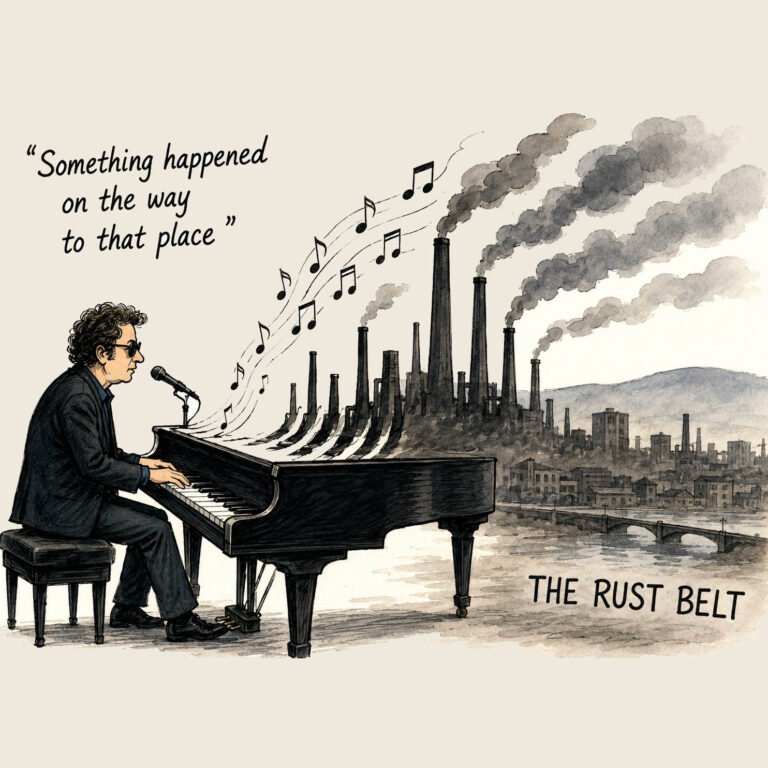
If you grew up in Beaver County, World War II came with a dependable script.
Your grandfather was either in uniform or in a mill. He didn’t say much about it. When he did, it involved mud in Europe, a ship in the Pacific, or twelve-hour shifts in Aliquippa rolling steel so bright it could light the Ohio River.
What he didn’t mention — probably because he didn’t know — was what was happening in certain boardrooms while he was riveting armor plate.
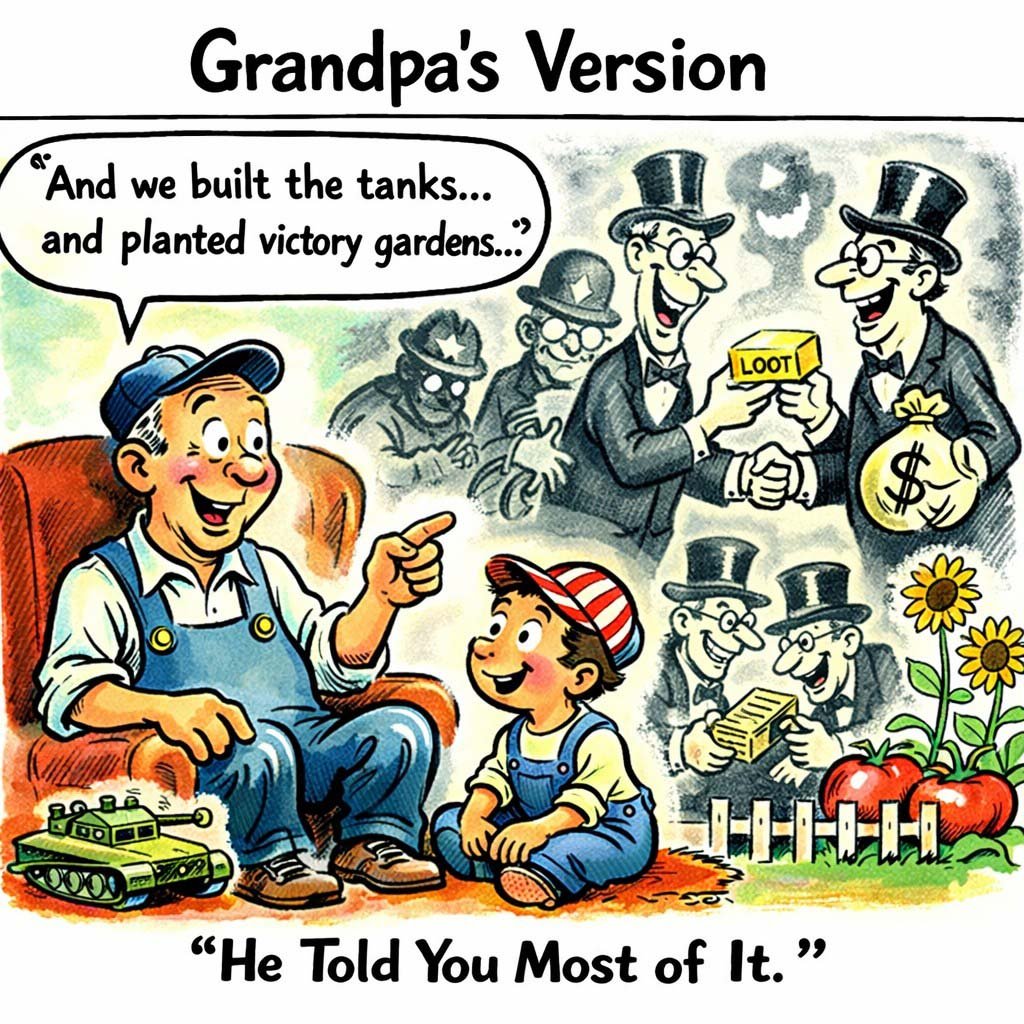
The version of the war we inherited here is one of moral clarity. And to be fair, our part in it deserves pride. The Jones & Laughlin mill in Aliquippa once employed more than 10,000 workers. Under the War Production Board, it thundered. Beaver County steel went into Liberty ships, tanks, guns, and the industrial avalanche that helped defeat the Axis.
Aliquippa earned Navy “E” awards for excellence. Men worked double shifts. Families planted victory gardens. If evil had a face, it was across the ocean.
And yet.
In Switzerland, the Bank for International Settlements — the so-called central bank of central banks — continued operating throughout the war. Allied and Axis representatives met there under President Thomas McKittrick. Gold moved through its vaults, including assets looted from occupied nations and, historians argue, from concentration camp victims.
Apparently, even global conflict couldn’t interrupt banking hours.
In occupied Paris, the French branch of Chase National Bank reportedly stayed open. Internal records later described “enthusiastic cooperation” with German authorities, including the freezing of Jewish-owned accounts. The system, as they say, remained stable.
Back in New York, the Union Banking Corporation — managed by Prescott Bush — served as a clearinghouse for German industrialist Fritz Thyssen, an early financial backer of Hitler. Thyssen’s steel empire supplied a hefty share of Germany’s steel and explosives. In 1942, U.S. authorities seized Union Banking’s assets under the Trading with the Enemy Act.
Prescott Bush later went to the U.S. Senate.
Thomas McKittrick later became a vice president at Chase.
The BIS was never liquidated despite calls at Bretton Woods. It still operates today.
Meanwhile, in Aliquippa, your grandfather kept pouring steel.
Chemistry played its part as well. The German conglomerate IG Farben became central to the Nazi war machine. It produced synthetic rubber, aviation fuel, explosives, and Zyklon B. At Monowitz, near Auschwitz, it built facilities using forced labor.
IG Farben had cartel arrangements with Standard Oil of New Jersey, involving patent-sharing agreements on synthetic rubber and fuel technologies. A 1942 Senate investigation raised uncomfortable questions about technology transfers and corporate priorities.
The fine levied?
$50,000.
That might cover a decent corporate luncheon today.
To understand how this happened, you have to rewind to the 1920s.
Under the Dawes and Young Plans, American loans flowed into Germany. Germany paid reparations to Britain and France. Britain and France repaid their debts to Wall Street. A tidy financial loop emerged — one that blurred lines between former enemies and future ones.
For many bankers and executives, capital was neutral. Their obligation was to the “health of the system.” Politics was messy; balance sheets were clean.
Your grandfather’s obligation was simpler: win the war.
Beaver County’s steel legacy stands in stark contrast to Thyssen’s empire. While German furnaces roared for the Reich, Aliquippa’s roared against it. Local workers didn’t debate patent law. They debated overtime and ration coupons. Their labor helped crush the regime that other, quieter institutions had once accommodated.
History, however, does not move in straight lines.
A short drive from South Heights sits the North American headquarters of Covestro in Robinson Township. Covestro was spun off in 2015 from Bayer MaterialScience, itself part of Bayer AG. Bayer had been one of the founding companies of the German conglomerate, IG Farben.
After the war, IG Farben was dissolved. Executives were tried; some served limited sentences. Successor firms resumed operations. Today, Covestro invests in research, polymers, and sustainability initiatives that employ skilled workers in our broader region.
The past lingers. It also evolves.
Then there’s energy.
In Potter Township, Shell plc operates the now-familiar ethane cracker, opened in 2022 with considerable public subsidy and even more public expectation. It was billed as the second coming of industrial Beaver County — hard hats, prosperity, maybe even a few fresh coats of paint along the river.
The results have been, depending on your optimism, mixed.
Shell’s history, like that of many global energy giants, is not tidy. During World War II, Royal Dutch Shell — now Shell plc — supplied oil and fuel to Nazi Germany through its German subsidiary, Rhenania-Ossag, and through operations in places like Romania, which were neutral or Axis-aligned at various points in the conflict. At the same time, Shell also supplied the Allied war effort.
In other words, it managed to conduct business on both sides of history’s most morally uncomplicated war.
This wasn’t unusual in multinational commerce at the time. Oil, like capital, tends to flow toward contracts. But it does complicate the comforting notion that industry naturally lines up with righteousness. Corporations tend to line up with continuity.
None of this suggests that the Potter Township cracker is secretly fueling some modern equivalent of geopolitical villainy. It does suggest that multinational firms operate according to incentives that transcend national narratives. They answer to markets first, governments second, and hometown sentiment somewhere much further down the list.
Beaver County knows something about that hierarchy.
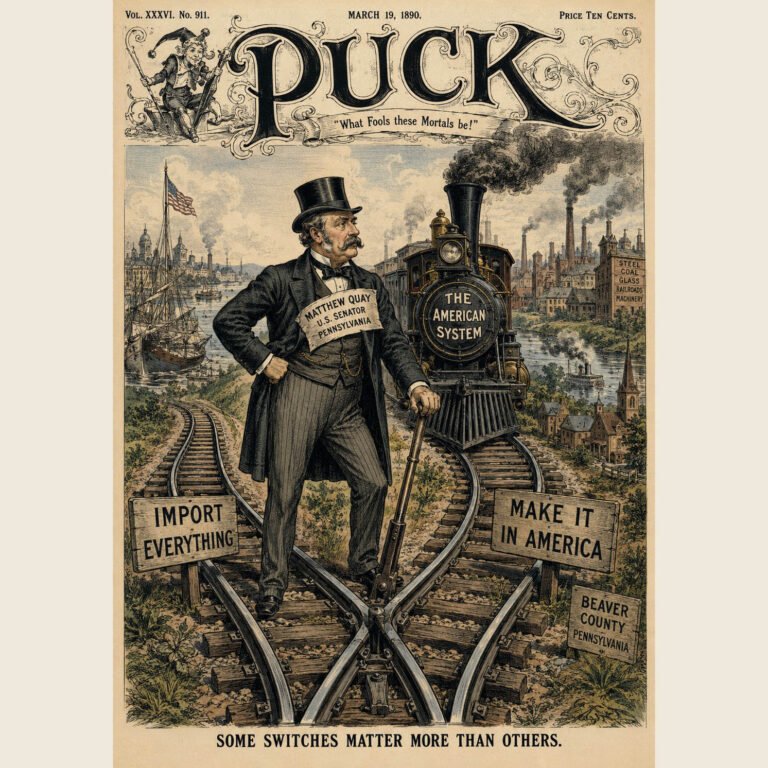
We’ve hosted steel conglomerates, chemical firms, and now energy multinationals. We’ve cheered ribbon cuttings and endured layoffs. We’ve learned that when executives speak of “the system,” they rarely mean Aliquippa’s tax base or Center Township’s Little League schedule.
The point isn’t to indict our multinational neighbors for decisions made in 1942. It’s to recognize a pattern: global corporations are designed to survive wars, elections, recessions, and moral reckonings. Communities, by contrast, live with the consequences.
Your grandfather likely saw World War II as a contest between good and evil.
For him, it was.
For the institutions that supplied credit, technology, and fuel to both sides, it was also a matter of finance, licensing, and supply chains.
That tension — between moral clarity on the ground and commercial ambiguity at altitude — isn’t ancient history.
It’s modern industrial life.
And in Beaver County, we’ve had a front-row seat for a very long time.