Listen to a podcast discussion about this article.
There’s a particular tone in Washington when something long declared “impossible” gets done in about the time it takes to misplace a briefing memo. It’s the sound of professionals discovering the emergency exit was never locked—just labeled Do Not Touch.
For nearly a decade we were told the resistance to Donald Trump was about temperament, decorum, and the proper folding of napkins at NATO dinners. Yet his critics often behaved less like etiquette coaches and more like homeowners worried a building inspector might notice the foundation resting on damp cardboard.
We were assured borders in the modern age were metaphysical concepts—suggestions, really, like speed limits in Rome. Then, awkwardly, it turned out a border can be secured with the same tools used to secure anything else: policy, enforcement, and the faint expectation that laws mean what they say.
The surprise wasn’t that it could be done.
The surprise was that it apparently could’ve been done all along.
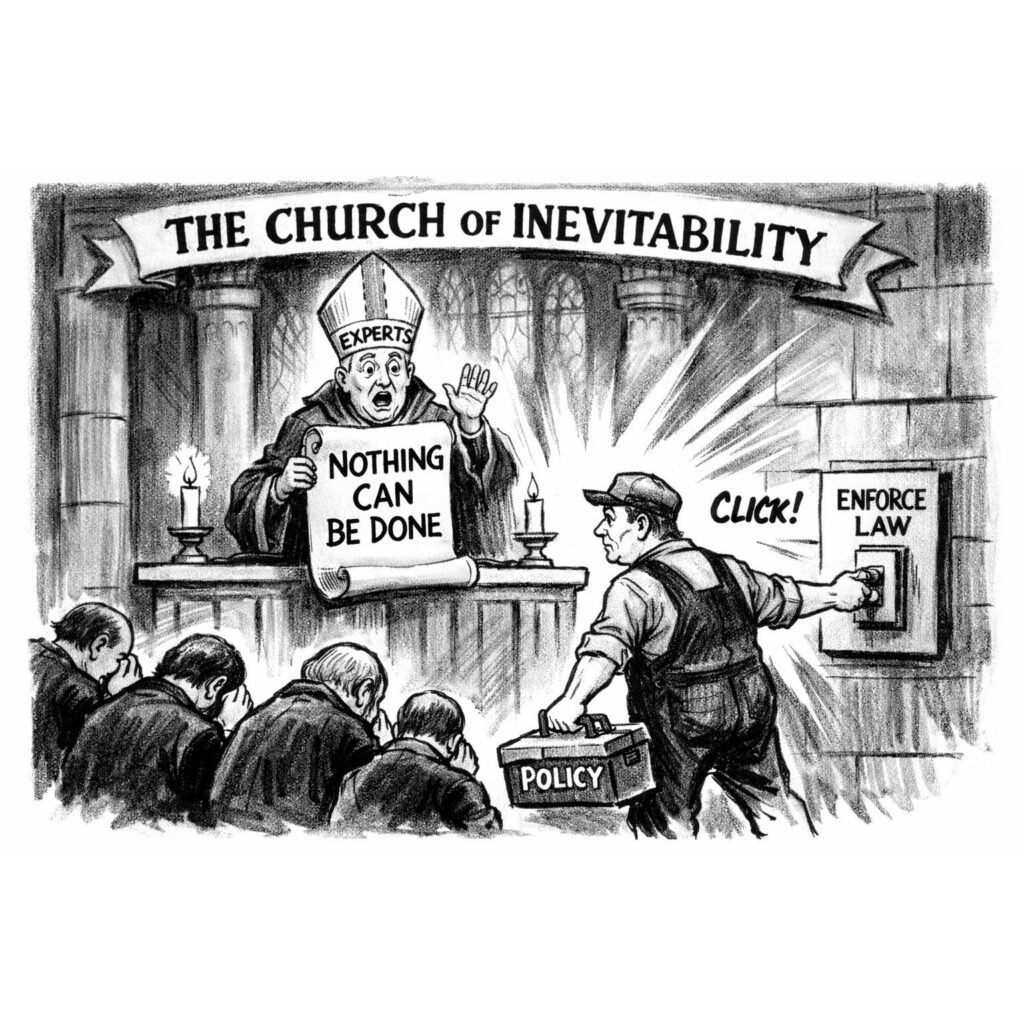
We were told deportation was a logistical unicorn. Turns out it’s paperwork and buses. The republic didn’t collapse. It carried on, noisily, as republics tend to do.
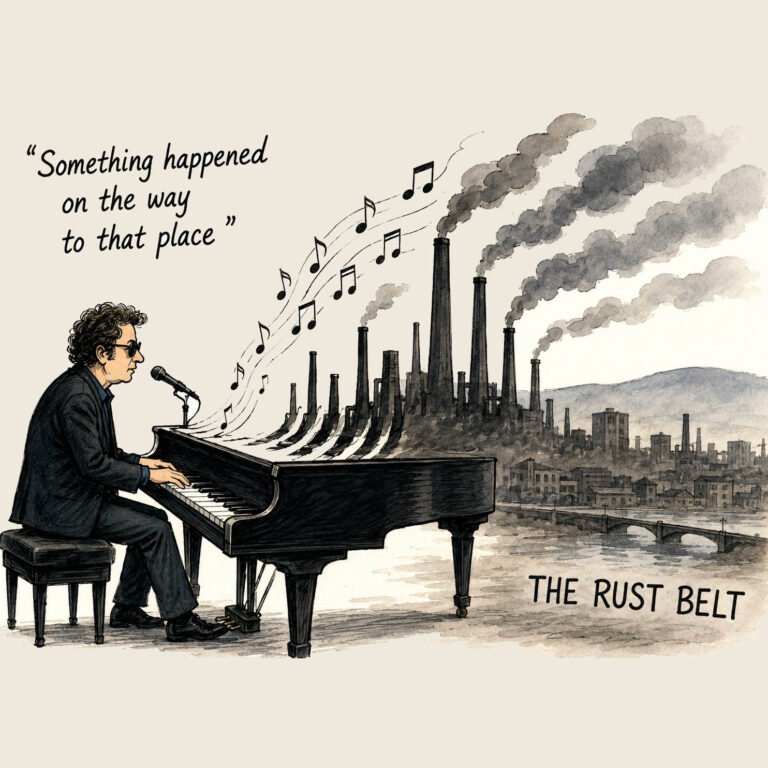
For years, Americans in what’s politely called “flyover country”—a charming phrase meaning where the stuff used to be made—were advised to learn to code while their factories learned to rust. Global efficiency required it. Comparative advantage demanded it. The invisible hand had spoken, and it preferred assembly lines elsewhere.
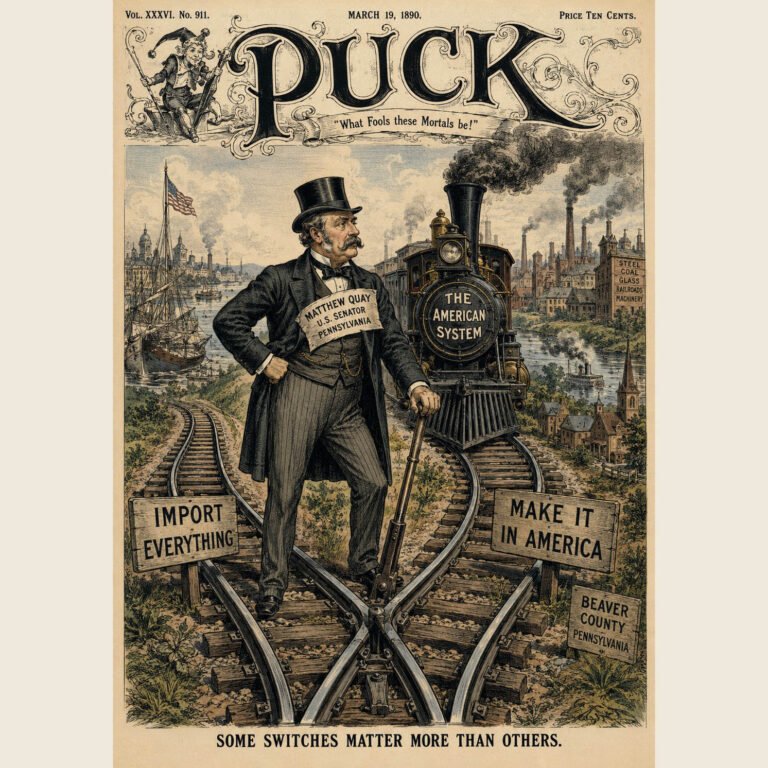
Around here that argument lands a little oddly. Two centuries ago Beaver County was mostly farms, ferry crossings, and river towns where the loudest industry involved a blacksmith and an impatient mule. Had the priesthood of inevitability been active then, they’d have explained—very patiently—that serious manufacturing belonged in England, perhaps New England if one insisted, but certainly not in a muddy bend of the Ohio Valley.
Fortunately, nobody asked them. Someone noticed the coal, the rivers, and the stubborn practicality of Western Pennsylvanians. Furnaces rose. Mills followed. By the time the Jones & Laughlin works in Aliquippa roared through the war years—steel pouring day and night for ships, tanks, and the industrial avalanche that defeated the Axis—the idea that industry “inevitably” belonged somewhere else would’ve sounded like a practical joke.
Then came the indecorous suggestion that maybe we could manufacture our own goods if we wanted to. That perhaps we don’t have to subsidize the world’s pharmaceutical research while apologizing for the price of aspirin. That energy abundance might be a strategic asset rather than a moral failing.
It was as if someone had proposed that the family who owns the farm might also eat from it.
That’s what unsettled the establishment. Not the tweets. Not the rallies.
The exposure.
The possibility that many of our “unfixable problems” weren’t acts of God but acts of preference.
Crime? We were told it’s a sociological weather pattern—best observed, never interrupted. Yet the heretical notion that laws might be enforced without an accompanying dissertation has crept back into polite conversation.
Trade? We were warned that objecting to lopsided arrangements would plunge us into darkness. Instead, agreements were renegotiated and the sky—though frequently declared falling—stubbornly remained aloft.
Energy? We were instructed to feel sheepish about having it. Now we’re told it’s reckless not to use it.
Even in the cultural trenches—where acronyms bloom like spring tulips—there’s been a reconsideration of whether every institution must genuflect before DEI in order to function. The idea that a military might prioritize lethality over seminars startled those who’d grown fond of PowerPoint as a weapons system.
To hear critics tell it, this is authoritarianism in sensible shoes.
To hear supporters tell it, it’s governance with the audacity to say no.
None of this means every initiative is wise or every executive order artful. Governments are run by human beings, which means they’re run by creatures prone to vanity and the occasional rhetorical detour.
But the deeper anxiety among the global set isn’t really about style.
It’s about revelation.
If voters conclude mass migration was a policy choice rather than destiny, that hollowed-out towns were collateral damage rather than inevitability, and that trade imbalances and bureaucratic bloat were adjustable dials rather than fixed laws of physics, a great many experts will have to explain why the dials were never touched.
That’s why the opposition sometimes feels operatic. This isn’t merely a disagreement over tax rates.
It’s a struggle over who gets to declare what’s possible.
If the public concludes that what it was told must be endured could, in fact, have been altered, something far more destabilizing than a tweet has occurred.
The most subversive act in modern politics isn’t revolution.
It’s flipping the switch and discovering the lights work.
And when that happens, the only people truly endangered aren’t citizens.
They’re the members of the priesthood of inevitability, who spent years explaining that the switch was purely decorative—and that anyone reaching for it clearly didn’t understand how the system works.