Listen to a podcast discussion about this article.
Every so often a man appears in public life whose biography reads like the sort of thing a novelist would reject for being implausible.
Fr. Robert Sirico is one of those men.
He is a Roman Catholic priest. He is the founder of the Acton Institute in Grand Rapids, an outfit devoted to exploring the moral foundations of a free society. And—just to keep things interesting—his older brother is Tony Sirico, the late actor who played the mobster Paulie Walnuts on The Sopranos.
If you were casting a movie about the intellectual defense of free markets, you would probably not begin by hiring a priest from Brooklyn with a gangster brother and a youthful past that included marching with farm-labor organizer Cesar Chavez and hanging around the Hollywood protest circuit with the likes of Jane Fonda.
But that is precisely the path that produced Sirico—and, eventually, his thoughtful little book The Economics of the Parables.
A Socialist with Questions
Like many young idealists in the 1970s, Sirico began his intellectual life on the political left.
He protested injustice. He marched in demonstrations. He believed—quite sincerely—that economic equality could be achieved if only society were reorganized along socialist lines.
Then a conservative friend committed the unforgivable act of asking questions.
The questions were simple ones: How are prices set? Why do shortages occur? Why do centrally planned economies always seem to run out of things people need?
To answer them, Sirico began reading economists such as Friedrich Hayek, Milton Friedman, and Frédéric Bastiat.
The effect was something like discovering that gravity continues to operate even during political rallies.
Sirico eventually returned to the Catholic faith and entered the priesthood, bringing with him a conviction that economics and moral philosophy are not enemies but cousins who occasionally borrow each other’s tools.
That conviction eventually led to his founding of the Acton Institute and, more recently, to his book.
Jesus the Economist
Now before anyone writes an angry letter to the editor, Sirico is careful to explain that Jesus did not deliver lectures on supply and demand.
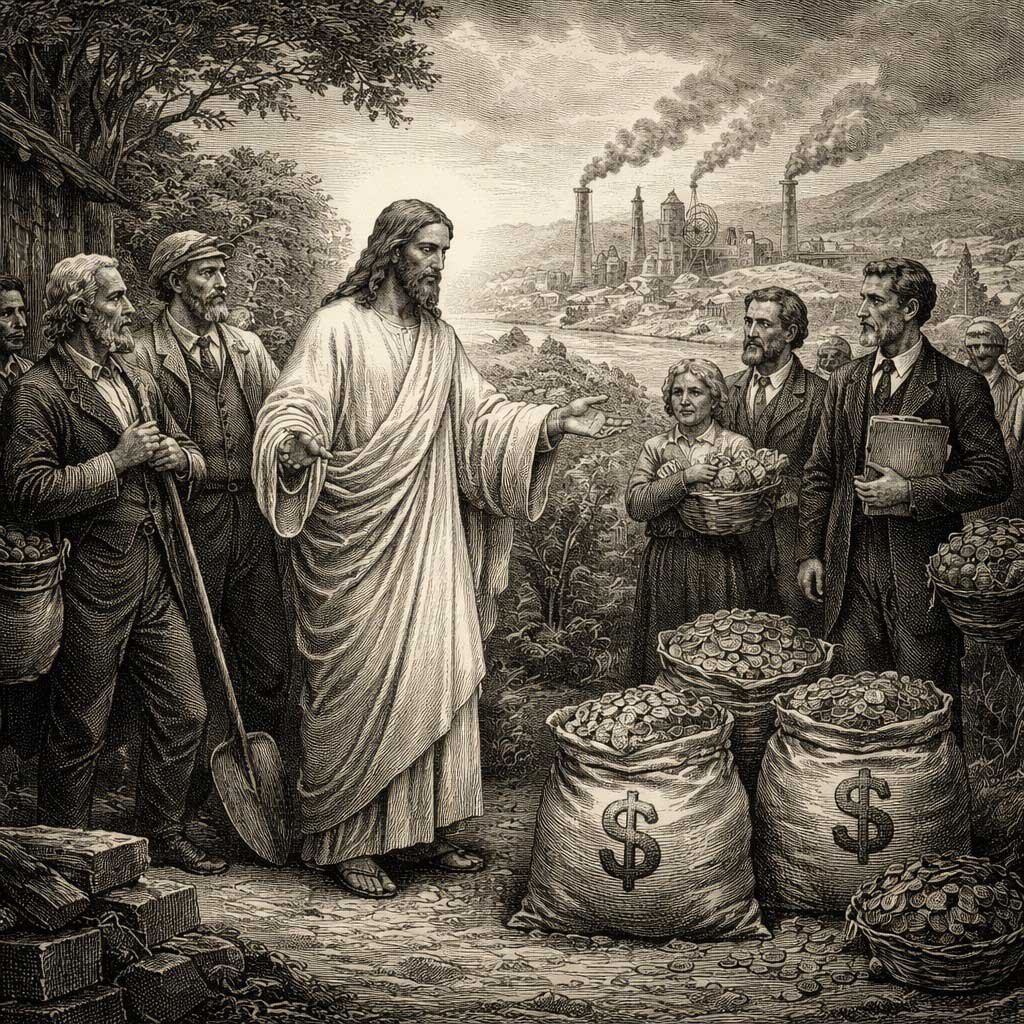
What he did do was tell stories—parables—set squarely in the economic life of ordinary people.
Farmers planting crops.
Merchants buying pearls.
Landowners hiring laborers.
Householders managing property.
In other words, the same messy economic world we inhabit today.
Sirico’s central point is that these stories assume certain basic economic realities: scarcity, risk, trade, ownership, and human decision-making.
Economists call this human action.
Jesus simply called it life.
The Merchant and the Pearl
Take the famous parable of the Pearl of Great Price.
A merchant discovers a pearl so beautiful that he sells everything he owns to buy it.
To some modern readers, that story might sound suspiciously like consumerism. But Sirico notes something more subtle: the merchant recognizes value that others overlook.
He risks everything for it.
In modern language, the man is an entrepreneur.
The Servants and the Talents
Another parable—the story of the talents—concerns servants entrusted with money by their master.
Two invest the money and increase it.
One buries it in the ground.
The cautious servant expects praise for avoiding risk. Instead, he receives a stern lecture.
The moral, Sirico suggests, is that gifts are meant to be used, not hidden.
Entrepreneurship, in other words, is not merely an economic activity. It can be a moral vocation.
The Good Samaritan vs. the Welfare Office
Perhaps Sirico’s most provocative interpretation concerns the parable of the Good Samaritan.
The Samaritan does not create a government program. He does not form a committee.
He stops.
He bandages wounds.
He pays the innkeeper from his own purse.
The charity is immediate, personal, and voluntary.
Sirico argues that the story illustrates a principle often lost in modern debates: genuine compassion begins with individuals and communities, not bureaucracies.
Lessons for Beaver County
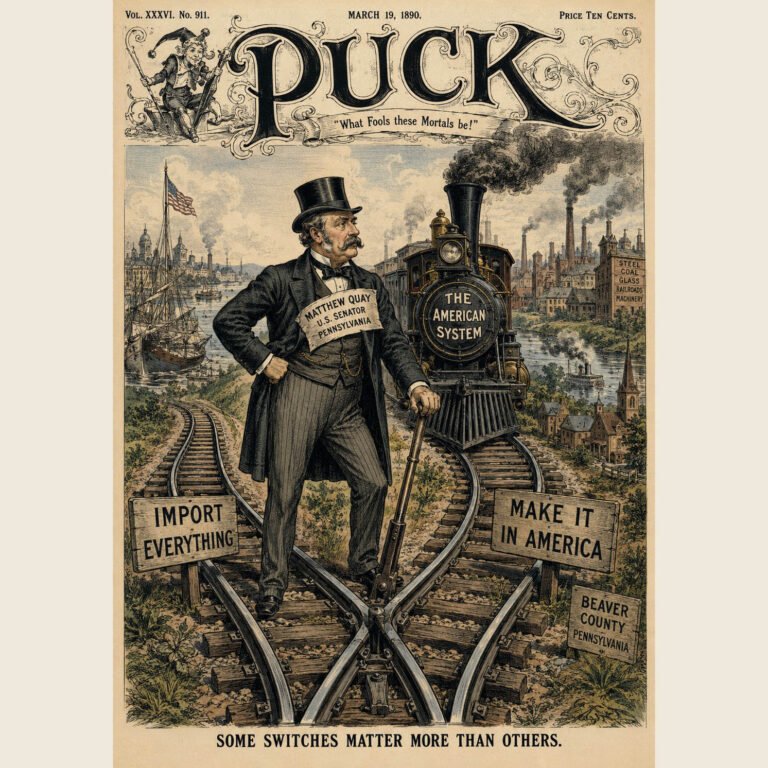
Which brings us, inevitably, to Beaver County.
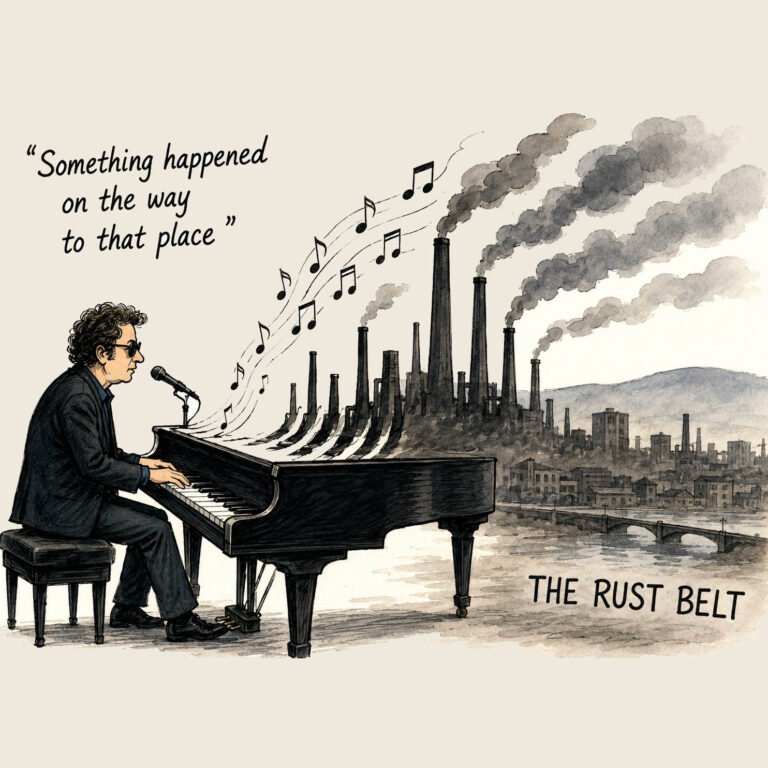
For half a century we have been trying to reinvent ourselves after the collapse of the old steel economy. Entire towns once organized around blast furnaces and rolling mills have had to rediscover what they are good at.
It is not always a graceful process.
Some days it resembles the Prodigal Son’s return home—minus the fatted calf and with considerably more zoning meetings.
Yet Sirico’s parables carry a message that feels strangely relevant here.
They remind us that prosperity rarely arrives through grand national schemes designed in distant capitals.
It grows from thousands of local decisions: a machinist opening a small shop, a family launching a restaurant, an engineer designing a new technology, an entrepreneur risking savings on an idea that might fail.
In short, the same kind of human action that once built the steel mills in the first place.
The Antidote to Envy
Sirico also spends a good deal of time discussing envy, which he regards as the most underrated economic force in politics.
Envy appears in the parable of the Laborers in the Vineyard, where workers complain that others received the same wage for less work.
The landowner’s reply is blunt.
The wage was agreed upon. The generosity toward others is his own affair.
It is a reminder that fairness and equality are not identical twins.
That lesson might come in handy during election season.
Truth in a Messy World
Sirico likes to say that truth eventually wins, though often with the stubborn persistence of a weed pushing through sidewalk cracks.
His book suggests that the economic wisdom embedded in ancient stories still applies to modern societies wrestling with prosperity, inequality, and human dignity.
For a county like ours—trying to climb back from decades of decline—that message carries a certain quiet encouragement.
After all, the parables were not told to kings or central planners.
They were told to ordinary people.
The same sort of people who once built blast furnaces along the Ohio River and who, with a little luck and a lot of human action, may yet build the next chapter of Beaver County’s economy.