Listen to a podcast discussion about this article.
As America celebrates its 250th birthday, communities across the country are dusting off monuments, polishing historical markers, and reminding visitors that something important once happened there.
Butler County hardly needs the help.
For reasons that remain somewhat mysterious, this corner of western Pennsylvania has spent the last two and a half centuries wandering in and out of the American story like a character who wasn’t supposed to be in the script but keeps stealing scenes anyway.
The habit began before there was a Butler County.
In 1753, a young Virginia militia officer named George Washington passed through the region on a diplomatic mission to the French forts. Somewhere near present-day Evans City, according to local tradition, a Native American allied with the French pointed a musket at Washington and fired.
The shot missed.
History occasionally turns on grand ideas, stirring speeches, and noble principles. Just as often, it turns on lousy marksmanship.
Had that bullet found its target, there might never have been a President Washington, a Constitutional Convention, or a nation called the United States. Butler County’s first contribution to American history may have been helping preserve the life of the one man who would become indispensable to it.
The county itself was later named for General Richard Butler, one of the most respected officers of the Revolutionary War. He and his brothers were among George Washington’s most trusted soldiers. According to local lore, Washington once remarked, “When I want something done, I ask a Butler to do it.”
That’s the sort of endorsement most modern management consultants would happily charge six figures to provide.
When Butler County was established in 1800, settlers honored the fallen general by naming both the county and its seat after him. The land on which the original courthouse was built was donated by two of his fellow soldier-brothers, John and Samuel Cunningham. More than two centuries later, that courthouse still stands, quietly reminding passersby that America’s founders often thought less about personal branding and more about building communities that might outlive them.
Then history came calling again.
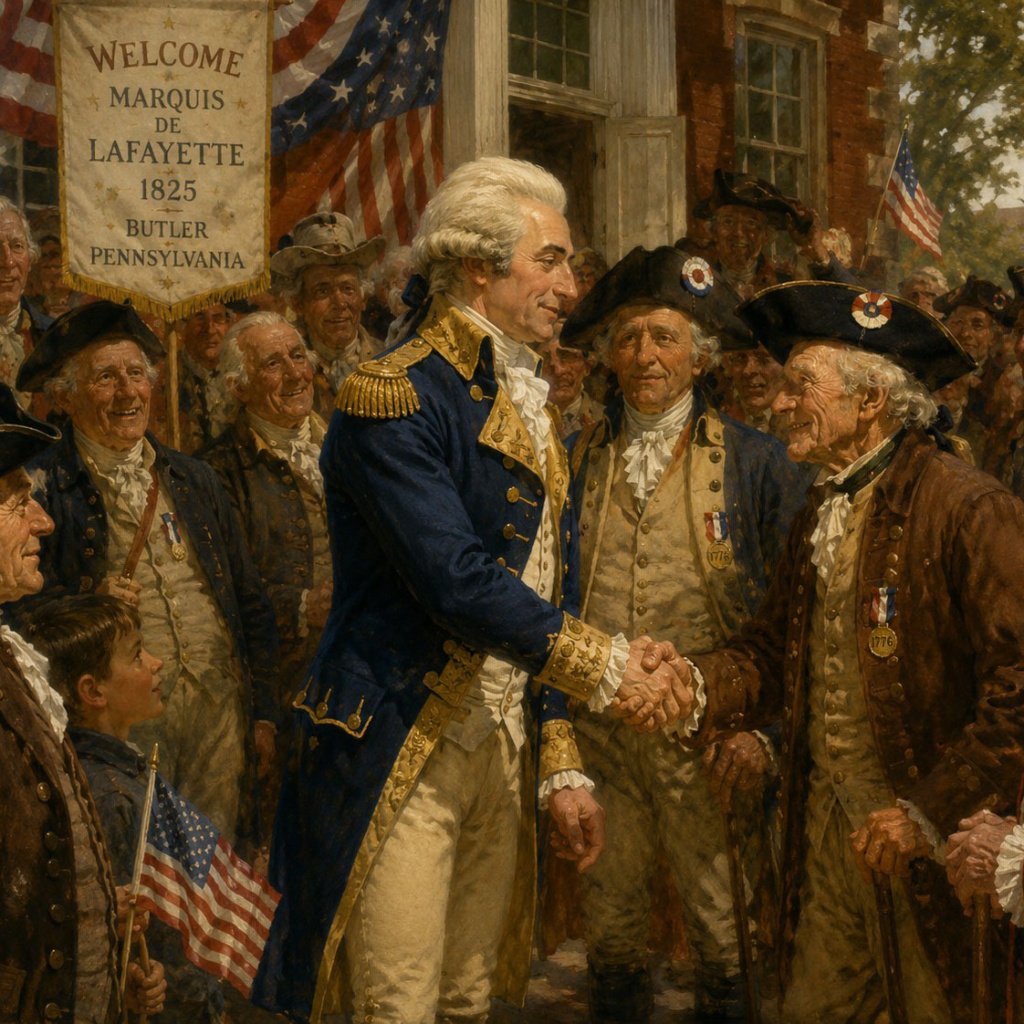
In 1825, the Marquis de Lafayette—the last surviving major general of the American Revolution—visited Butler during his celebrated tour of the United States. After dining at the Mansion House, he stepped outside to greet some 400 Revolutionary War veterans who had gathered to shake his hand.
Think about that for a moment.
The Revolution had ended nearly half a century earlier. The young republic was growing westward. Yet here, in what had recently been frontier country, stood hundreds of aging veterans waiting to greet the French nobleman who had crossed an ocean to help secure their freedom.
If Norman Rockwell had painted the scene, we’d probably still be putting it on postage stamps.
Butler County’s connection to freedom didn’t end there.
One of the most consequential residents ever to live there was U.S. Senator Walter Lowrie. Today his name is largely forgotten outside local history circles, but his role in the life of Frederick Douglass deserves wider recognition. After Douglass escaped slavery and traveled abroad, Lowrie helped negotiate the purchase of his freedom. For $711.66—a sum that seems absurdly small measured against the value of a human life—Douglass received the legal documents guaranteeing his liberty.
When he returned to America, he did so as a free man.
Not many counties can claim a direct role in one of the most important stories of human freedom in American history.
Then came oil.
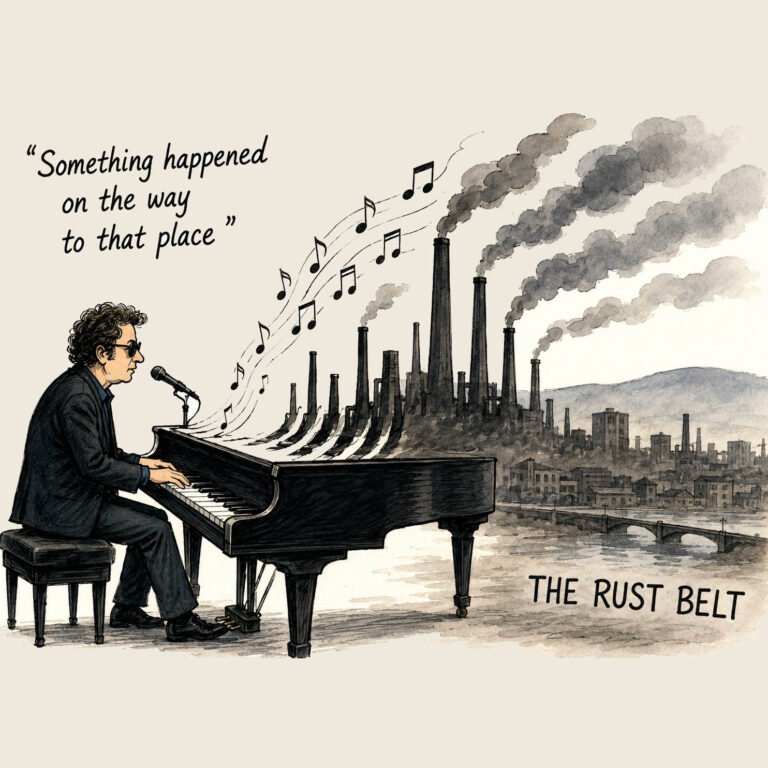
The modern world runs on petroleum. It fuels cars, airplanes, tractors, cargo ships, and more geopolitical arguments than any substance since gold. Butler County played an important role in that story too. A mural honoring William “Uncle Billy” Smith commemorates the driller whose techniques helped create the world’s first commercial oil well at nearby Titusville.
The Industrial Age didn’t simply arrive in western Pennsylvania. In many ways, western Pennsylvania helped build it.
The county’s talent for stumbling into history continued into the twentieth century.
When America needed a rugged military vehicle capable of traversing mud, mountains, and battlefields during World War II, the American Bantam Car Company in Butler developed the original Jeep prototype. Larger manufacturers eventually received the contracts, proving that even in wartime America had already perfected the art of letting somebody else take credit for your homework.
Still, the Jeep’s birthplace remains Butler County, and that’s not a bad legacy.
Neither is Amelia Earhart.
Before becoming the first woman to fly solo across the Atlantic, Earhart spent months receiving instrument training at the Butler-Pittsburgh Airport. Her aircraft was modified there with additional fuel tanks for the historic flight. The hangar still stands today, one more reminder that world-changing events often begin in places most people have never heard of.
Of course, Butler County’s story isn’t merely a collection of famous visitors and historical footnotes.
It’s also the story of the people who built communities here.
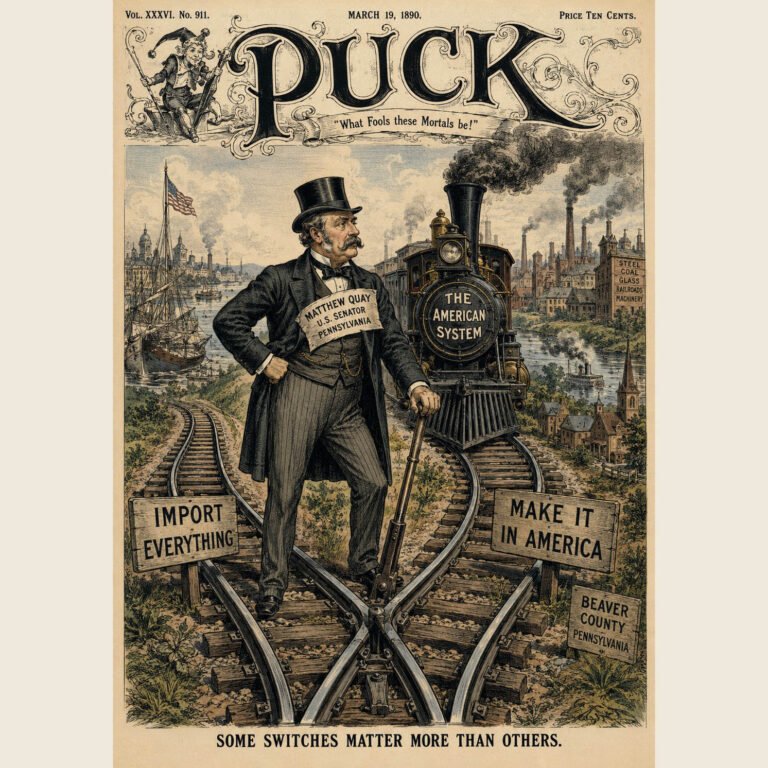
The Native American trails that crossed the county long before European settlement. The Scotch-Irish farmers who cleared the land. The German immigrants who founded Harmony, Zelienople, and Saxonburg. The visionaries of the Harmony Society. The engineers like John Roebling, who would go on to revolutionize bridge construction. The waves of Eastern European immigrants who filled the steel mills, railcar factories, glass plants, and workshops that transformed the county into an industrial powerhouse.
Together they created something uniquely American.
Not perfect. Not always prosperous. Not always harmonious.
But resilient.
That’s really the thread connecting 250 years of Butler County history.
It has always been a place where people built things—farms, businesses, factories, roads, railroads, bridges, communities, and occasionally pieces of history itself.
America wasn’t built solely in Philadelphia, New York, Boston, or Washington. It was built in places like Butler County, where ordinary people repeatedly found themselves doing extraordinary things without always realizing it.
Which may be the most American story of all.
And it all might have started with a missed shot in the woods.