Listen to a podcast discussion about this article.
There are economists who can explain deindustrialization with graphs. There are historians who can explain it with trade agreements, interest rates, and the rise of global markets. There are politicians who can explain it by blaming the other party.
Billy Joel explained it in four minutes at the piano.
Curiously enough, he almost called the song Levittown.
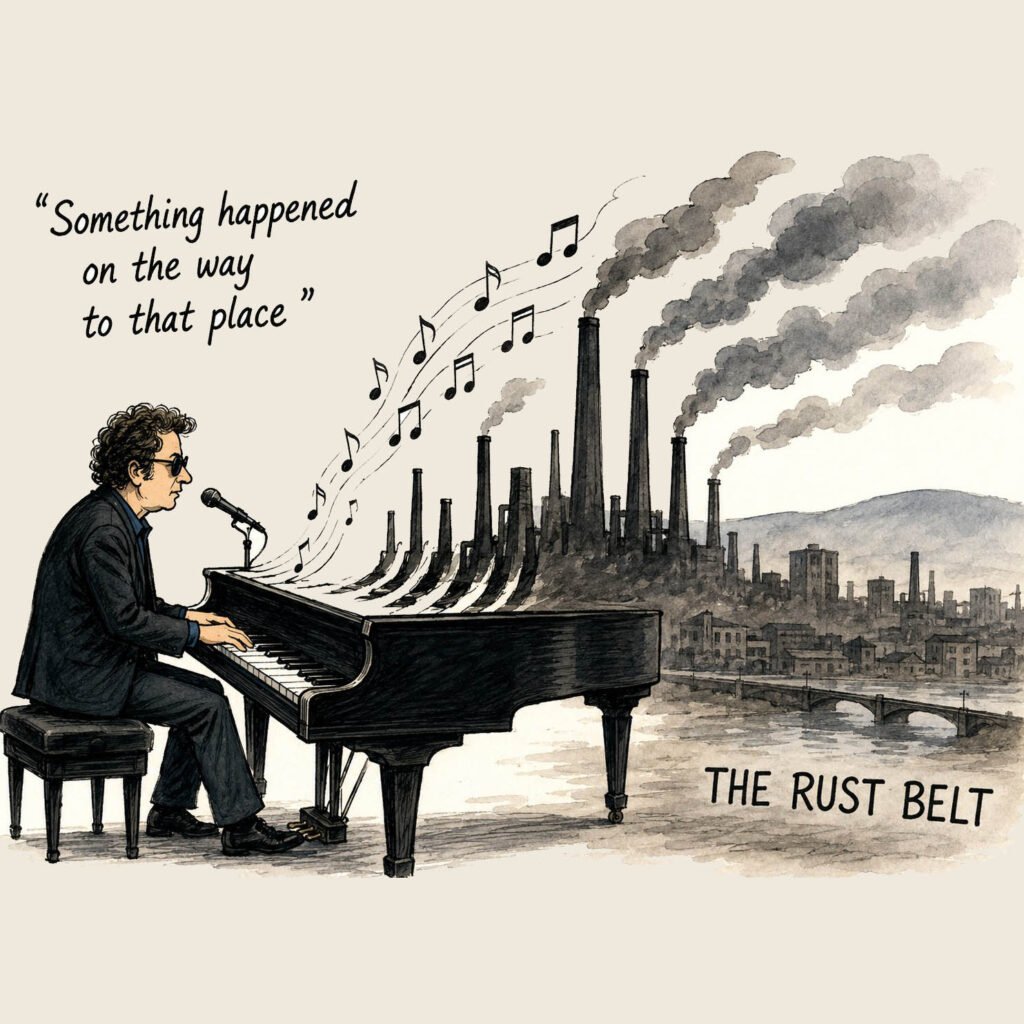
In a recent YouTube interview with Rick Beato, Joel revealed that the melody for what became Allentown sat around for years wearing a set of placeholder lyrics about the Long Island suburb where he grew up. “Well we’re living here in Levittown…” he sang with a grin, recalling the nonsense words that kept the tune alive while he searched for something worth saying.
Then he played a concert in Pennsylvania.
Looking out over the Lehigh Valley, he saw something he hadn’t expected. Bethlehem Steel—the industrial giant that had once helped build America—was dying. Fathers who had spent their lives in the mills were watching their sons inherit not jobs, but uncertainty.
Suddenly the melody found its story.
Joel later admitted he wondered whether he had any business writing about steelworkers. “Who was I to write about unemployment and the steel mills? I’m just a stupid piano player.”
Sometimes that’s exactly who you need.
Songwriters have a peculiar gift. They translate statistics into heartbeats. They take experiences millions of people share but cannot quite explain and hand them back wrapped in melody. As Joel has often observed, a good song gives people words for feelings they already had but couldn’t express.
That was Allentown.
The timing could not have been more perfect—or more terrible.
By 1982, Americans could no longer pretend that the decline of heavy industry was merely another recession. Something far larger was underway. The Federal Reserve’s war against inflation had driven interest rates above 20 percent. Automobile sales collapsed. Construction slowed. Imports surged. Steel companies that had survived two world wars suddenly found themselves fighting competitors with newer mills, lower costs, and governments that had rebuilt their industries after 1945 while ours slowly grew old.
Washington hadn’t caused the collapse with one dramatic vote. It had happened by accumulation.
Tariffs came down. Trade expanded. Capital discovered there were higher returns overseas than in modernizing aging American mills. Environmental regulations demanded expensive upgrades that many older plants could scarcely afford. Wall Street increasingly rewarded quarterly earnings instead of long-term industrial investment. By the time Ronald Reagan entered the White House, the tide had already been flowing for years. He inherited the explosion, but not the fuse.
Economists still argue over which decision mattered most.
Families didn’t have that luxury.
In Aliquippa, Ambridge, Midland, Homestead, Youngstown, Weirton, and Johnstown, the debate wasn’t about macroeconomics. It was about whether Dad still had a job on Monday morning.
The layoffs arrived one envelope at a time.
If you grew up in Beaver County, Allentown never sounded like it belonged only to Allentown. We knew perfectly well Billy Joel was singing about us. He simply borrowed another town’s name because, as he later explained, the vowel sounds fit the melody better. Bethlehem remained in the lyrics because that’s where the mills stood. But he might just as easily have written, “They’re closing all the factories down in Aliquippa.”
Or Midland.
The town names changed. The story didn’t.
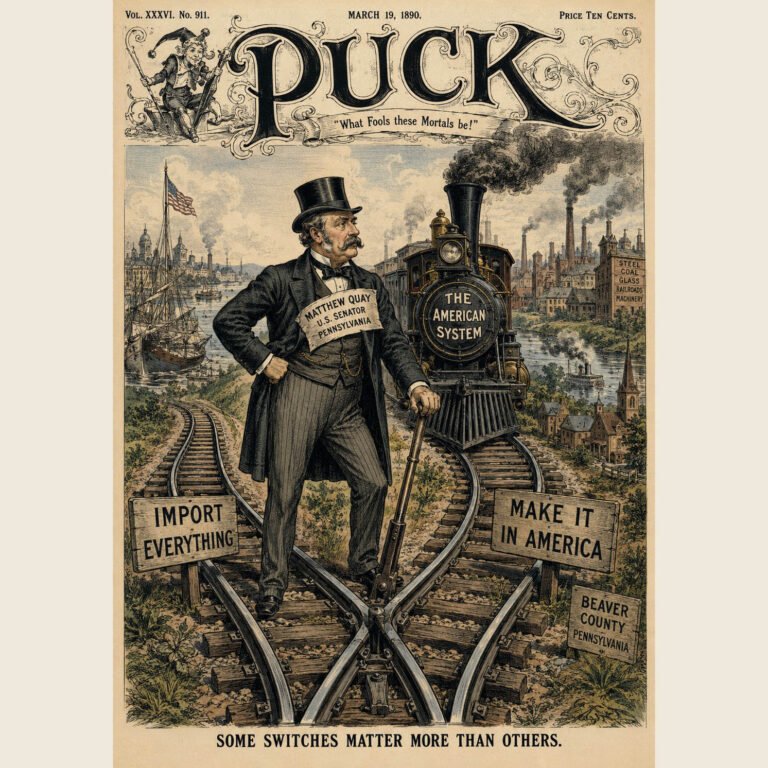
For nearly two centuries, America had followed the industrial philosophy of Alexander Hamilton, Henry Clay, and Pennsylvania’s own Matthew Quay: encourage manufacturing, protect domestic industry, and build the nation’s productive capacity. After World War II, Washington gradually embraced a different vision—one built around freer trade, global efficiency, and multinational production. That new system brought undeniable benefits. Consumers enjoyed lower prices. Former enemies became prosperous allies. Hundreds of millions around the world escaped poverty.
But every policy creates winners and losers.
The winners often held press conferences.
The losers held garage sales.
Perhaps that is why Allentown still resonates more than forty years later. Billy Joel never tried to settle the argument over tariffs or monetary policy. He simply gave voice to the bewilderment of ordinary people who had kept their end of the bargain and discovered the bargain itself had changed.
“Something happened on the way to that place.”
Indeed it did.
The place wasn’t really Allentown.
It was every American town where the mill whistle fell silent, where fathers stopped saying, “Someday this job will be yours,” and where an entire generation learned that history sometimes changes key without warning.
Billy Joel heard the modulation before the rest of us did.