Listen to a podcast discussion about this article.
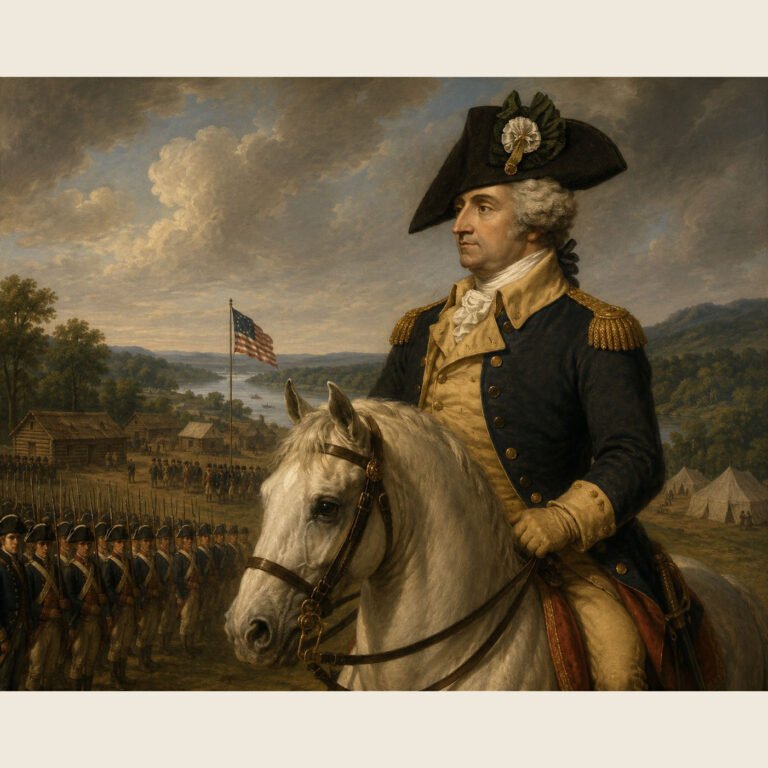
History has an unfortunate habit of treating great men like granite monuments. They emerge from the mists of time fully formed, marble-chinned and permanently mounted on horseback.
Young Washington performs the useful service of reminding us that George Washington was once merely a young fellow making spectacular mistakes.
That turns out to be considerably more interesting.
The screenplay, it must be admitted, is something of a leaden affair. Characters occasionally speak as though they know future historians will be taking notes. Conversations sometimes resemble excerpts from a particularly earnest eighth-grade civics textbook.
Fortunately, the cast refuses to let the material sink under its own historical importance.
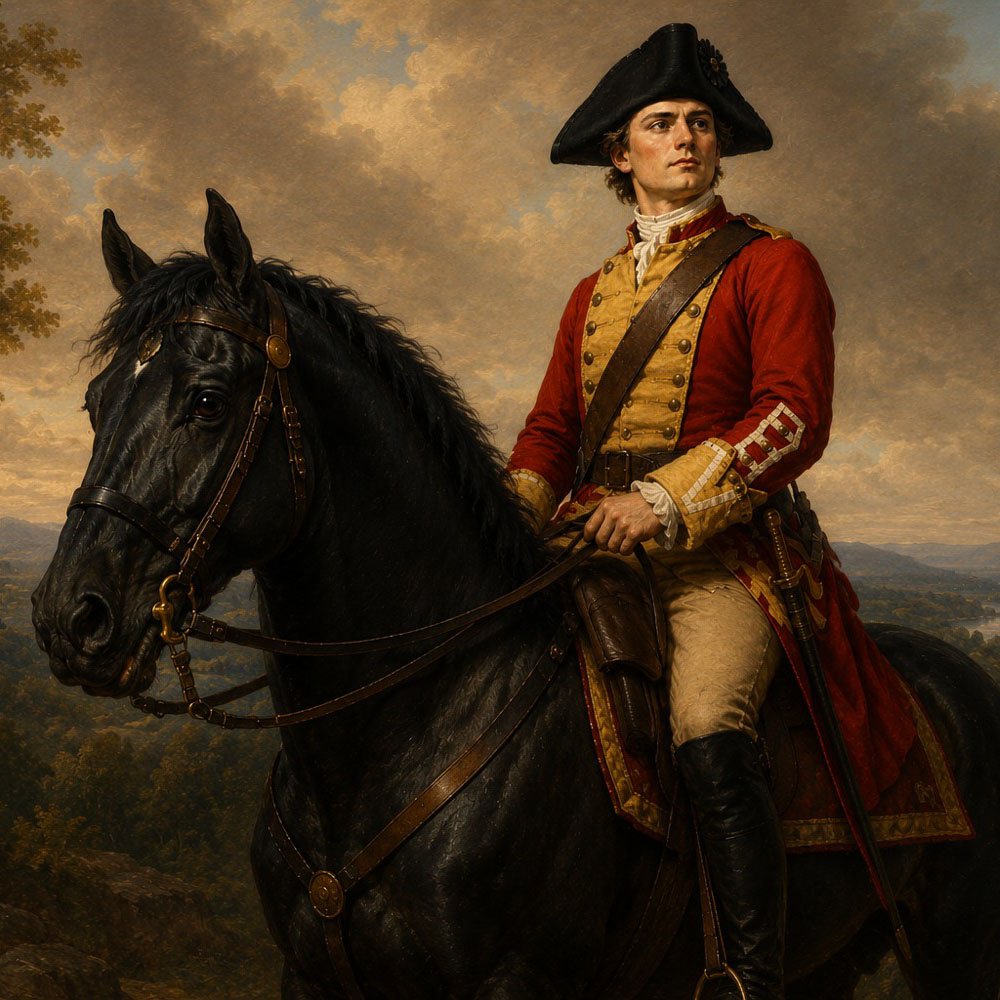
William Franklyn-Miller gives a star-making performance as the young Washington. Tall, handsome, and possessed of the quiet moral gravity that once made Gregory Peck such a compelling screen presence, he wisely avoids portraying Washington as either a plaster saint or a swaggering action hero. Instead, he gives us an ambitious young man whose confidence is continually tempered by disappointment, failure, and hard-won wisdom. It is an unusually mature performance. William Franklyn-Miller is a name worth remembering.
He is surrounded by exceptional talent. Mary-Louise Parker gives Washington’s formidable mother uncommon depth, making her the film’s emotional and moral center. Her insistence that failure is life’s greatest teacher becomes the story’s governing idea. Sir Ben Kingsley lends quiet authority to Lord Fairfax, the aristocrat who recognizes promise where others see only an ambitious provincial. Andy Serkis once again proves himself one of cinema’s finest character actors, while Kelsey Grammer brings understated strength and dignity to every scene he occupies.
Washington himself emerges as refreshingly human.
He is ambitious, insecure, proud, impatient, occasionally wrong, and determined to earn the respect that birth has denied him. He longs to become a British officer only to discover that pedigree matters more than ability. He learns surveying because education is cheaper than inherited privilege. He ventures into the Ohio Country believing opportunity lies on the frontier rather than in London’s drawing rooms.
That journey gives the film particular resonance for audiences in Beaver County and throughout Western Pennsylvania.
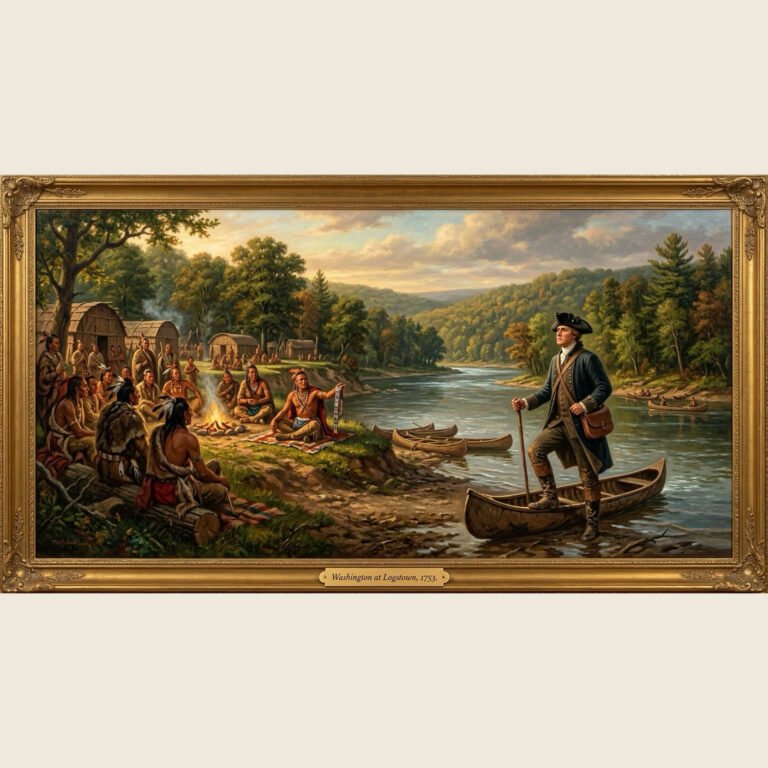
Much of Washington’s early career unfolded in what we casually call our backyard. Long before steel mills, interstate highways, and river terminals, this region was an immense and often hostile wilderness. The Ohio Valley appears here as it must have looked in the 1750s: towering forests, swollen rivers, endless mud, and uncertainty.
The scenery is breathtaking.
It is also intimidating.
Watching Washington and his companions struggle through dense woods and mountain passes reminds us that our ancestors were not simply settling empty land. They were entering a landscape that resisted every mile of progress. Every journey demanded endurance. Every military decision carried consequences measured in lives.
Those scenes quietly restore perspective to places many of us now drive through without a second thought. Fort Le Boeuf, the Ohio Country, Fort Necessity, and the Monongahela cease to be names in history books and become the landscapes where a young officer learned the painful difference between confidence and competence.
The film wisely refuses to make Washington infallible.
His disastrous command at Fort Necessity forms the emotional center of the story. He chooses poor ground, underestimates his enemy, signs surrender terms he scarcely understands, and returns home convinced he is unfit to lead.
Many historical dramas would hurry past such humiliation.
Young Washington lingers there.
It understands something essential about leadership: the leaders worth following are usually forged by failure rather than protected from it.
That lesson reaches its climax during General Braddock’s disastrous defeat on the Monongahela. Washington’s warnings about European battlefield tactics are ignored, and catastrophe follows. Amid the chaos, he rallies retreating soldiers, rescues trapped Virginians, and somehow survives with bullet holes through his coat but not his body.
Legend begins replacing reputation.
More importantly, wisdom begins replacing ambition.
By the film’s conclusion, Washington no longer dreams of becoming a British gentleman. He understands instead that he is a Virginian, destined to become the leader of a people who have not yet fully realized they are Americans.
The script occasionally labors under the weight of its own importance. Yet great acting repeatedly lifts it onto firmer ground. Franklyn-Miller anchors the film with uncommon grace, while Parker, Kingsley, Serkis, and Grammer elevate dialogue that might otherwise have landed with all the grace of a tax assessment.
In the end, Young Washington never loses sight of its real subject.
This is not simply the story of the French and Indian War.
It is the story of the slow, often painful forging of a leader whose combination of character, restraint, perseverance, and humility has never truly been equaled in American history.
Monuments commemorate the finished product.
This film reminds us how much hammering it took to get there.