Listen to a podcast discussion about this article.
There comes a point in every man’s life when he realizes he’s spent three solid hours worrying about something over which he has roughly the same control as a squirrel trying to direct traffic on Route 65.
I reached this realization in my late fifties. Some men inherit wisdom from their fathers. I inherited acid reflux and the habit of lying awake at 2 a.m. wondering if I should have bought tires six months earlier.
Worry is one of America’s favorite indoor sports. We fret about the economy, the weather, cholesterol, China, inflation, teenagers, retirement, and whether the cashier at Beaver Super secretly judged us for buying generic soup. By the time you finish worrying about one thing, the television has supplied six new disasters before the weather forecast.
And most of it accomplishes exactly nothing.
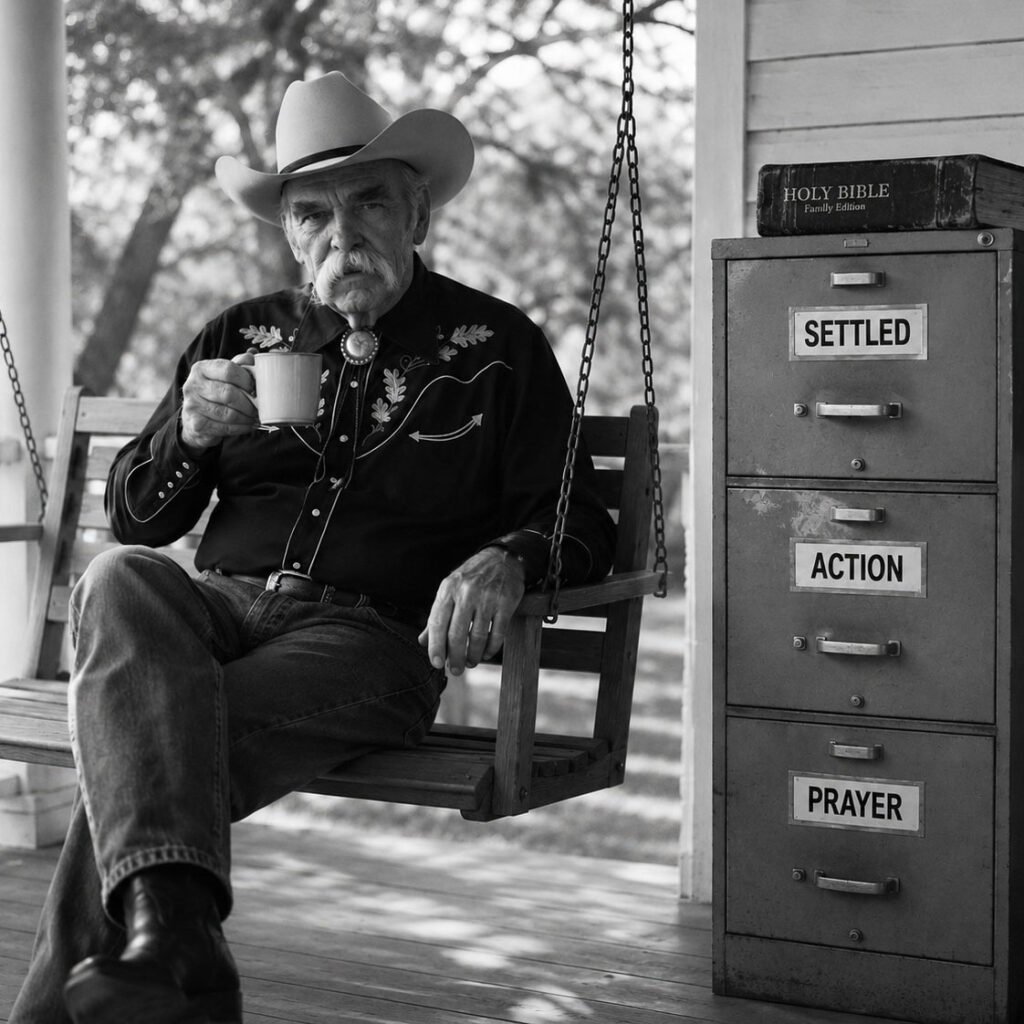
Old Grandpa Jim has developed a simple system for handling worry. It won’t earn a federal grant or justify a $14,000 consultant fee, but it works.
Whenever something gnaws at your peace of mind, ask one question: “What kind of thing am I dealing with?”
Most troubles fall into three categories: settled things, action things, and prayer things.
Settled things are matters already decided—your height, your childhood, your relatives, your past mistakes, your bald spot, and that unfortunate senior yearbook photo that still looks like a parole mugshot.
A surprising number of people spend half their lives arguing with settled things. They replay old conversations, revisit old regrets, and wish they had married someone else, majored in accounting, bought Apple stock, or skipped that third chili dog in 1987.
But the past is like a concrete parking meter. You can kick it all day and only hurt your toe. At some point you must simply say, “Well, that happened.” Life isn’t always fair. Hardship is handed out like prizes at a carnival dart game. Constantly reopening settled matters is like trying to shovel smoke back into a furnace.
The useful question is not “How do I undo the past?” but “What do I do now?”
Action things are matters where you actually have some control, despite modern society’s efforts to convince you otherwise. Your habits, spending, work ethic, tongue, friendships, waistline, and your willingness to get off the couch instead of researching cheeseburgers online.
Most of us already know what we should do. We just hope for a shortcut involving motivational podcasts and cinnamon supplements. There usually isn’t one.
If the problem is actionable, take action. Not endless analysis. Not dramatic sighing. Not staring into the refrigerator. Make the call. Pay the bill. Apologize. Read your Bible instead of doom-scrolling. Start small. A man can transform his life simply by doing the obvious things he’s been avoiding.
Prayer things are matters outside your control but not outside God’s: the economy, other people’s choices, the timing of opportunities, whether your adult children listen to reason, or if interest rates drop before you need a new furnace.
Americans hate admitting helplessness. We prefer the illusion that frantic worrying somehow helps manage the situation. But you cannot grab the steering wheel of providence. Some things must be entrusted to God.
This doesn’t mean doing nothing. You pray, prepare, remain faithful, and do your duty while accepting that the final outcome rests in larger hands.
Much of human misery comes from category confusion. We try to change settled things, pray about action items instead of doing them, and attempt to control prayer things through panic and caffeine. No wonder we’re exhausted.
This framework simplifies life, and life is rarely simple. There are gray areas and overlapping problems. Still, the system works remarkably well.
When worry shows up, sort it:
• If settled, accept it.
* If actionable, do something.
* If it belongs to God, pray and trust Him.
And if none of that helps, there’s one final remedy available to every civilized man: Turn off the cable news, pour a cup of coffee, and sit quietly on the porch for a while.
The republic will stagger on without your supervision for at least one more afternoon.