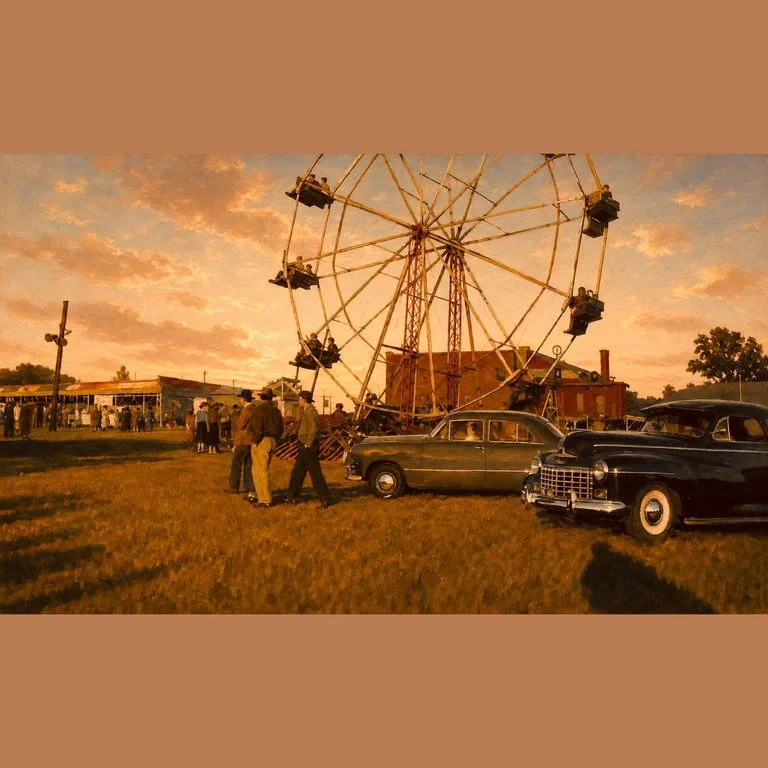
The Fair, the Farm, and the Candidate in Clean Shoes
A look at Beaver County’s fair traditions, from Hookstown and Big Knob to tractor pulls, farm families, fair food and politicians courting rural voters.


Before Americans had automobiles, they had to be persuaded to go somewhere.
This was especially true on Sundays, when respectable people were expected to attend church, eat a large meal and spend the afternoon sitting on the porch discussing the weather. The electric streetcar companies regarded all this repose as a serious business problem. They had cars, tracks and electricity, but very few passengers.
Their solution was one of the happier inventions of American capitalism: the trolley park.
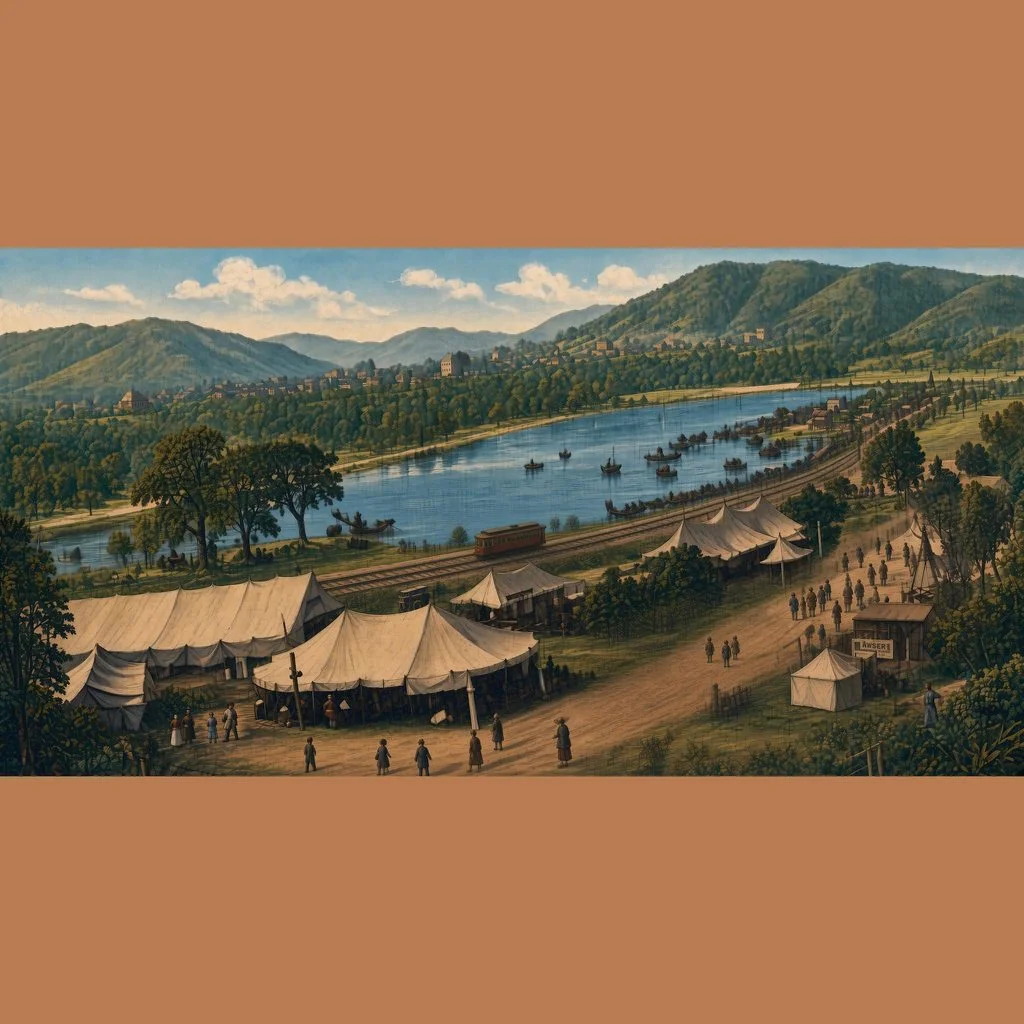
The idea was simple. If people had nowhere to go, the traction company would build somewhere. At the end of the line—or at least along a particularly convenient stretch of it—it created a picnic grove, added a bandstand and dance pavilion, and waited for the nickels to roll in.
Eventually came carousels, swimming pools, baseball diamonds and roller coasters. By the early 20th century, there were perhaps 1,500 or more trolley parks across the United States. Before near-universal automobile ownership, they gave ordinary families access to recreation that previously required money, horses or an accommodating relative with a carriage.
Kennywood began this way. The Monongahela Street Railway Company developed it near Pittsburgh in 1898 as a pleasant destination at the end of its line. Its picnic grounds, pavilions and small artificial lake were intended to put passengers into otherwise empty streetcars. Kennywood prospered, added rides and became one of the rare trolley parks to survive the disappearance of the trolleys themselves.
Beaver County had Junction Park.
The site lay between Rochester and New Brighton, on the flat riverfront ground still called the Junction. Before anyone thought to put amusement rides there, it was known as Marquis Swamp, which suggests that the marketing department had not yet been consulted.
In December 1900, the Beaver Valley Traction Company bought about 25 acres from the Marquis family for $25,000. The location was strategically useful. The company was consolidating local streetcar lines, acquiring the Sharon Bridge and developing its powerhouse, offices and car barns nearby.
But machinery alone does not make people surrender a nickel on Sunday afternoon.
For the park itself, the traction company hired Frank M. Blaisdell, a Boston-born civil engineer and landscape architect who had designed Cascade Park in New Castle. Cascade had demonstrated that a streetcar company could turn scenery into passengers. Its wooded gorge, lake, dance pavilion, picnic groves and electric lights gave Lawrence County residents a reason to board the trolley when they might otherwise have stayed home and inspected the geraniums.
Blaisdell faced a different landscape at the Junction. Cascade Park had waterfalls and wooded hills. Junction Park had mud and a tendency to flood whenever the rivers became emotional.
The swamp was filled and graded. Brick walks, shade trees, picnic grounds, a dance pavilion, restaurant, theater and racetrack were laid out. Junction Park opened June 1, 1901, with a concert by the Pittsburgh Philharmonic Orchestra. Rain fell, but more than 10,000 people came anyway—proof that Beaver Countians were willing to endure almost anything for professional entertainment.
The fare was a nickel from anywhere on the Beaver Valley Traction system. That small detail is essential to understanding what Junction Park meant.
Today, if we want recreation, we climb into a car and drive to Pittsburgh, Erie, Cleveland or wherever the children have found something expensive on the internet. In 1901, most families could not travel freely. Their world was bounded by walking distance, railroad schedules and the kindness of anyone who owned a horse.
The trolley park enlarged that world.
At Junction Park, families could picnic, hear a concert, watch horse racing or attend the Beaver County Fair. There were baseball games, boxing matches, circus performances, company outings and dances. Ringling Brothers brought a major show. Roller coasters arrived around 1906, along with a carousel, swings and a figure-eight toboggan ride. The racetrack infield became home to baseball and football. In 1929, an Olympic-size swimming pool was added.
Junction Park was no Coney Island, with its enormous crowds, extravagant electric towers and determined air of respectable people temporarily misbehaving. It was something more local and perhaps more useful: an affordable pleasure ground belonging, in practice, to everyone connected by the tracks.
The arrangement lasted until Americans discovered that the automobile could take them anywhere, including places where the traction company owned nothing.
Floods also helped. The rivers damaged the park in 1903, 1907 and 1913. The St. Patrick’s Day Flood of 1936 delivered the cruelest blow. Streetcar service ended the following year; the last car departed Junction Park in August 1937. Most rides were gone by 1941. Greystone Gardens, the old dance pavilion, burned in 1945. The swimming pool survived until 1964.
The landscape filled again, this time with roads and commercial buildings. The Rochester YMCA now stands on part of the former grounds. Hank’s Frozen Custard, opened by Henry Grosshans in 1947, remains nearby, preserving at least one important element of the amusement-park tradition: the conviction that an outing is incomplete unless somebody buys ice cream.
A historical marker recalls Junction Park, but the name “the Junction” may be the more fitting memorial. The park belonged to an era when transportation was communal, leisure was local and a nickel could carry a family into a larger world.
The trolley companies built parks to sell rides.
By accident, they also gave whole communities somewhere to go.
A look at Beaver County’s fair traditions, from Hookstown and Big Knob to tractor pulls, farm families, fair food and politicians courting rural voters.
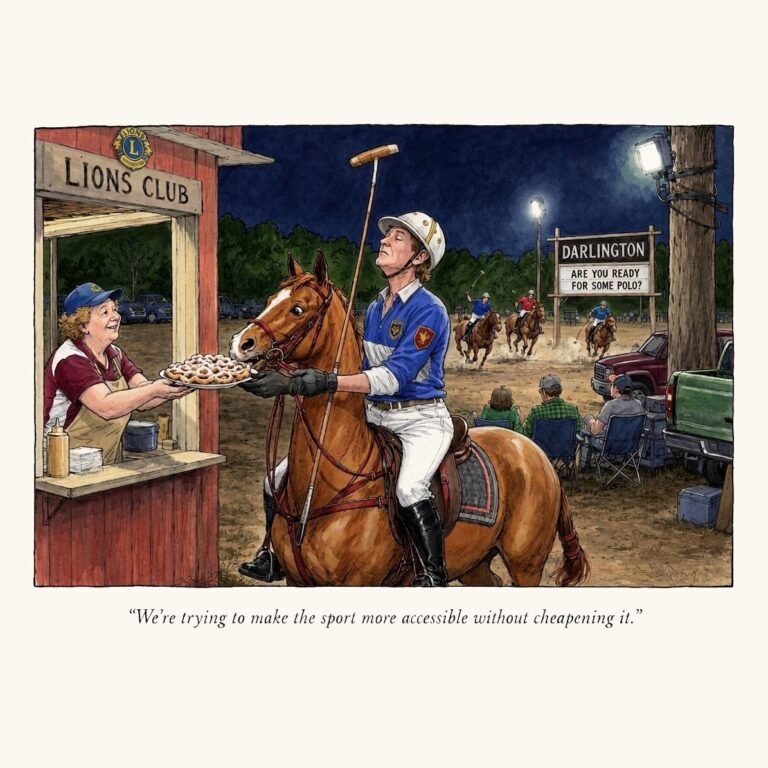
Darlington Polo Club brings the sport of kings to Beaver County with night matches, dirt fields, family tradition, pickup trucks and funnel cake.