The Fair, the Farm, and the Candidate in Clean Shoes
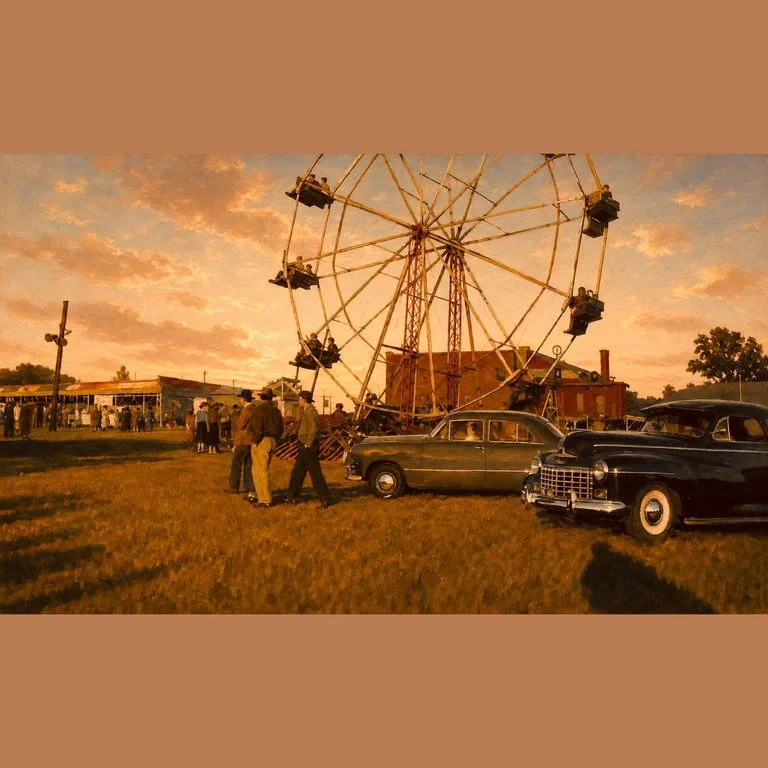
A look at Beaver County’s fair traditions, from Hookstown and Big Knob to tractor pulls, farm families, fair food and politicians courting rural voters.

There are many ways to build a successful community, but George Rapp came up with one rarely found in economic-development manuals: work constantly, own everything in common, drink your own wine, prepare for the imminent return of Jesus Christ, and stop having children.
For nearly a century, it worked.
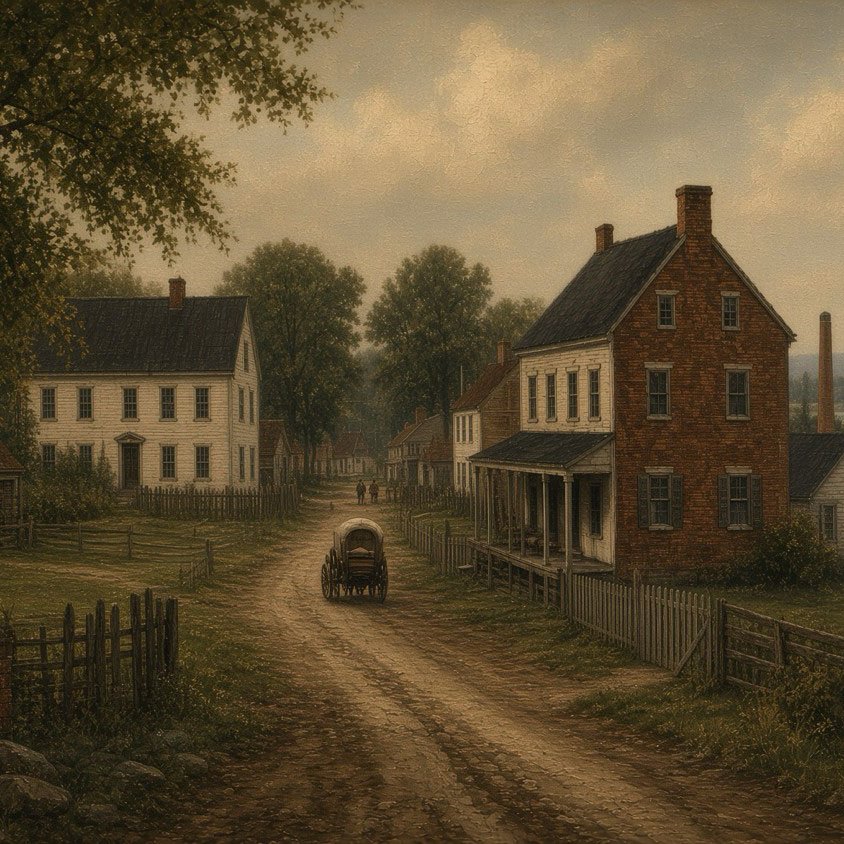
The Harmony Society, whose final and greatest settlement survives as Old Economy Village in Ambridge, was one of the most successful communal experiments in American history. The Harmonists farmed, manufactured cloth, made wine and whiskey, pioneered silk production, invested in railroads, coal and oil, and accumulated a considerable fortune.
They did almost everything necessary to ensure their future except produce the people who would inhabit it.
Their story began with Johann Georg Rapp, born in 1757 in Iptingen, in the German Duchy of Württemberg. A farmer’s son and weaver, Rapp developed the unfortunate habit, at least from the standpoint of the authorities, of thinking seriously about religion.
Influenced by Pietism and Christian mysticism, he concluded that the established Lutheran Church had become rather too established. He began preaching in the 1780s, gathered followers and eventually separated from the official church. His Separatists refused to attend state services and held alarming ideas about Christian purity and the approaching Millennium.
European governments generally regarded religious liberty as an excellent idea provided nobody attempted it.
So Rapp looked toward America.
He crossed the Atlantic in 1803, and hundreds of followers soon followed. In February 1805 they formally organized the Harmony Society in Butler County. Members surrendered their property to a common fund and accepted Rapp—universally known as Father Rapp—as their spiritual leader.
Rapp supplied the theology. His adopted son Frederick supplied something equally useful: business sense.
Their first settlement, Harmony, rose along Connoquenessing Creek. Within a few years the immigrants had farms, mills, textile operations, vineyards, a brewery and a distillery. For people awaiting the end of the world, they showed an impressive concern for cash flow.
Then came the decision that would eventually determine everything.
Around 1807, the Harmonists embraced celibacy. Married couples might continue living together, but henceforth as brother and sister. Sexual abstinence, they believed, represented purification for Christ’s expected return.
From the standpoint of spiritual preparation, perhaps this made sense. From the standpoint of demographics, it was roughly equivalent to closing the maternity ward and wondering why kindergarten enrollment was falling.
Nevertheless, the Society prospered.
In 1814, the Harmonists sold Harmony at a handsome profit and moved west, establishing New Harmony along Indiana’s Wabash River. They acquired thousands of acres, expanded manufacturing and introduced steam power to the region.
After a decade, however, they sold New Harmony to British reformer Robert Owen, who intended to establish his own utopian community there.
It is one of history’s pleasing ironies: one group of utopians sold its town to another group of utopians and returned to Pennsylvania with the proceeds.
In 1824, the Harmonists purchased about 3,000 acres along the Ohio River, 18 miles below Pittsburgh. They called their new home Ökonomie—Economy.
Here, in what is now Ambridge, they created their masterpiece.
They built brick houses, workshops, mills, a church, Rapp’s Great House, a Feast Hall, wine cellars and magnificent gardens. Music flourished. The place was orderly, beautiful and astonishingly productive.
Economy became an industrial powerhouse. The Harmonists manufactured wool and cotton textiles and pioneered American silk production. They produced beer, wine and whiskey and later invested in railroads, coal, oil and other enterprises.
They had discovered one of capitalism’s little secrets while practicing communal ownership: if several hundred disciplined people work extremely hard, consume relatively little and keep reinvesting the profits, money begins accumulating at an alarming rate.
At its height, Economy numbered perhaps 700 or 800 members.
Then, in 1832, trouble arrived wearing the usual costume of trouble: charisma.
Bernhard Müller, styling himself Count de Leon, appeared at Economy claiming spiritual authority. He challenged Rapp, opposed celibacy and attracted roughly a third of the membership—perhaps 250 people, many of them younger.
They departed with a share of the Society’s wealth. Frederick Rapp died two years later.
Father Rapp lived until 1847, reaching 89 without witnessing the Second Coming he had expected during his lifetime.
The Society continued under capable trustees and remained wealthy. But wealth cannot manufacture descendants.
Celibacy was now presenting its invoice.
As the original immigrants aged, there were almost no children to replace them. Labor shortages forced the Society to hire outsiders. New converts became scarce. Membership dwindled from hundreds to dozens and finally to a handful.
It was a strange ending for a society that had solved nearly every economic problem placed before it.
The Harmonists had survived persecution, crossed the Atlantic, built three towns, mastered agriculture and manufacturing, accumulated enormous wealth and participated in America’s transformation into an industrial nation.
They simply couldn’t survive themselves.
In 1905, the Harmony Society formally dissolved. Much of its property passed to the American Bridge Company, whose development helped create modern Ambridge—the name combining “American” and “Bridge.”
But the heart of Economy survived. In 1916, six acres containing 17 buildings passed to Pennsylvania. Today Old Economy Village preserves the church, Great House, Feast Hall, gardens and workshops of one of America’s most extraordinary communal experiments.
Modern Ambridge grew around it. Yet behind those walls remains another world: German immigrants who believed history was almost finished and therefore worked furiously to prepare for eternity.
They were wrong about the timetable.
But they left Beaver County something considerably more durable than their predictions.
They left Economy.
Old Economy Village
270 Sixteenth Street, Ambridge, PA 15003
Historic site entrance: 1401 Church Street
Phone: 724-266-4500
Email: RA-PHOldEconomy@pa.gov
Web: https://www.oldeconomyvillage.org
Hours: The historic village is open seasonally, Friday and Saturday from 10 a.m. to 4 p.m. and Sunday from noon to 4 p.m. The Visitor Center is also open Wednesday and Thursday from 10 a.m. to 4 p.m. The historic village is generally closed January through March. Allow about two hours for a visit.
Admission: Adults, $10; seniors 65 and older, $9; children ages 3–11, $6; children under 3, free. A grounds-only pass is $5. Pennsylvania Heritage members and active-duty military families receive free admission, with additional discounts available.
Free parking is available at the Visitor Center. Because hours and admission may change for holidays and special events, check the current schedule before visiting.
A look at Beaver County’s fair traditions, from Hookstown and Big Knob to tractor pulls, farm families, fair food and politicians courting rural voters.
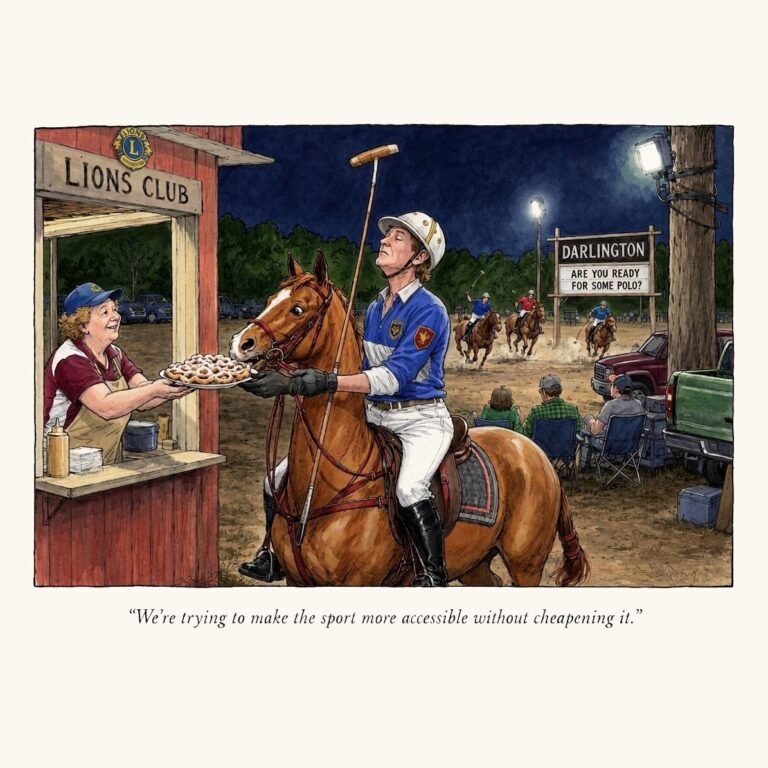
Darlington Polo Club brings the sport of kings to Beaver County with night matches, dirt fields, family tradition, pickup trucks and funnel cake.
1 thought on “The People Who Built Economy — and Forgot to Reproduce”
An obvious question is “Where did all the money go?”