Listen to a podcast discussion about this article.
There was a time, not all that long ago, when a telephone was a humble device whose chief mission in life was to ring at inconvenient moments and cause mild panic.
Then it became a camera, a map, a jukebox, a newspaper, a checkbook, a weather bureau, a flashlight, and, for reasons still not fully understood, a place where people now watch videos of other people reorganizing their refrigerators.
Now Apple seems ready to give the iPhone yet another promotion. It’s expected to use its Worldwide Developers Conference to push the iPhone further into what the tech crowd calls “agentic AI,” which is a grand way of saying your phone may soon stop merely answering questions and start doing chores.
This is the sort of news that ought to make certain people in Beaver County sit up a little straighter in their kitchen chairs.
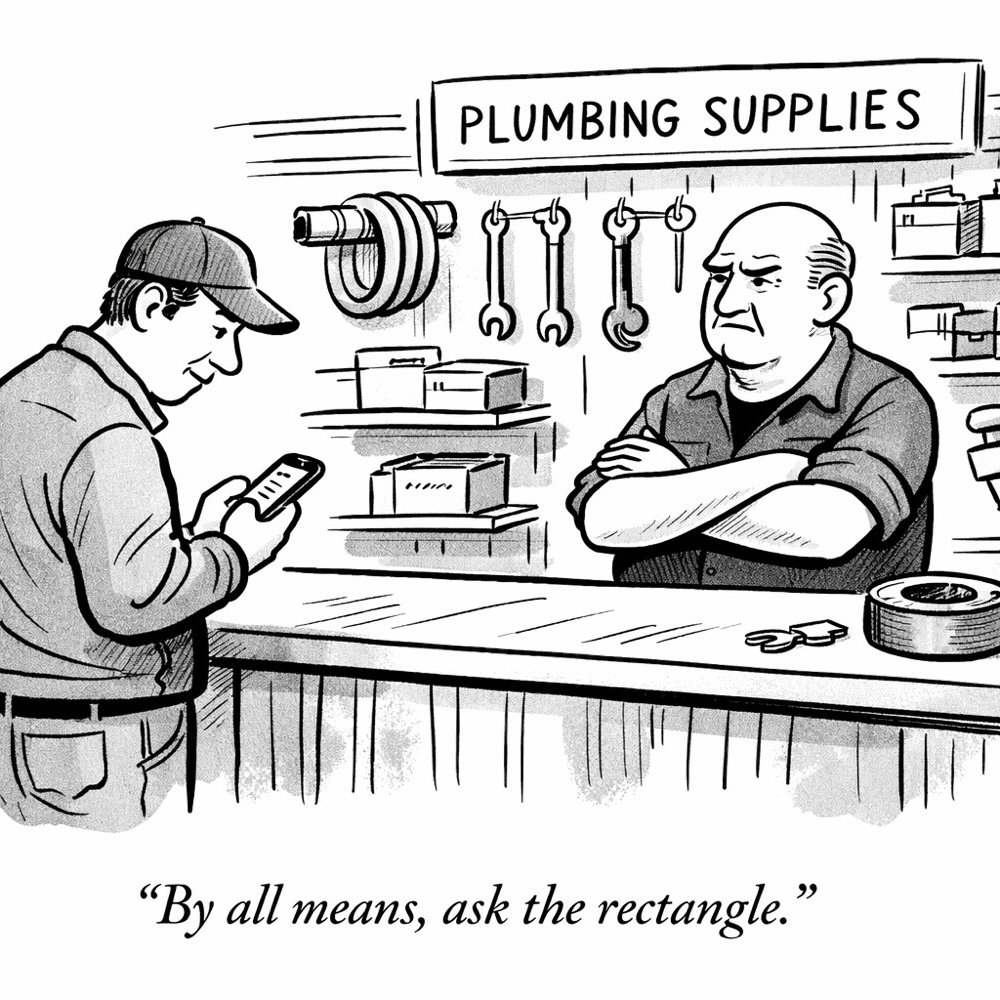
I’m referring to librarians, schoolteachers, auto mechanics, appliance repairmen, and all those local experts who’ve long made an honest living by being the person who knows where the answer is, how the thing works, or which lever to pull first.
Because the iPhone, if the reports are right, is about to become less like a bright but lazy intern and more like a junior employee with ambition.
The old Siri, as we know, was useful in the way a pleasant but slightly dim nephew is useful. You could ask it the weather. You could tell it to set a timer. You could ask it to call your sister, and there was a fair chance it might instead try to contact a roofing contractor in Sarasota.
The new Siri, we’re told, may become more like a conversational AI assistant — closer to ChatGPT in style — but tied into the guts of the iPhone itself. And that matters. Because a chatbot sitting in its own little app is one thing. A chatbot that can work across the whole phone is something else again.
In plain English, that means you may soon be able to say something like: “Find me the cheapest replacement dishwasher filter, compare delivery times, text the result to my daughter, and remind me Saturday to install it.”
And instead of handing you a list of websites and wishing you luck, the phone may actually go off and do the job.
This is where the phrase “App Intents” enters the room wearing a bow tie. It gives developers a way to let Siri perform actions inside their apps. So the future iPhone isn’t just supposed to chat. It’s supposed to move.
At that point, librarians may need to adjust the old reference-desk model. Schoolteachers may discover that the family excuse note has been composed, polished, and fact-checked by a machine before breakfast. Auto mechanics and appliance repairmen may find customers coming in armed not merely with opinions — Lord knows we’ve had enough of those — but with AI-generated diagnoses, part numbers, repair plans, and a serene confidence they don’t deserve.
This shouldn’t cause panic. Beaver County has survived the railroad, the automobile, cable television, the internet, and several decades of men explaining the Steelers draft from bar stools as if Mike Tomlin had personally sought their counsel.
We’ll survive this, too.
What makes Apple’s move especially interesting is that the company appears to be taking the usual Apple route: not necessarily inventing the wildest technology, but packaging it so neatly that half the world mistakes polish for sorcery.
Apple doesn’t seem determined, at least not yet, to build the world’s biggest frontier AI model by itself. The likelier arrangement is a hybrid one: private or simpler tasks handled on the device or through Apple’s own systems, and heavier reasoning farmed out behind the curtain.
Which is sensible enough. Most of us don’t care whether the butler learned etiquette in Cupertino or somewhere else. We simply want him to answer the door, carry the bags, and not set the drapes on fire.
Business people, meanwhile, ought to pay attention. The next digital shift may not be about building yet another app with a cheerful little chatbot in the corner. It may be about building services that an AI agent can navigate for the user. In other words, the customer of the future may not tap through seven screens. He may simply tell his phone, “Handle it.”
That’s marvelous news for busy people and slightly ominous news for institutions that have long depended on the customer’s patience, confusion, or inability to find page three of the website.
So yes, your iPhone is probably about to get a whole lot smarter.
Not wise, mind you. Wisdom would require it to tell us to eat less, spend less, and quit arguing on Facebook.
But smarter? Certainly.
And when that day comes, don’t be surprised if the first people to feel it are the ones who’ve always been the local custodians of practical knowledge: the teacher, the librarian, the mechanic, the fellow who can still revive a dying Maytag with a screwdriver and a prayer.
They won’t disappear.
But they may discover that the shiny rectangle in your pocket has decided to apprentice for the job.