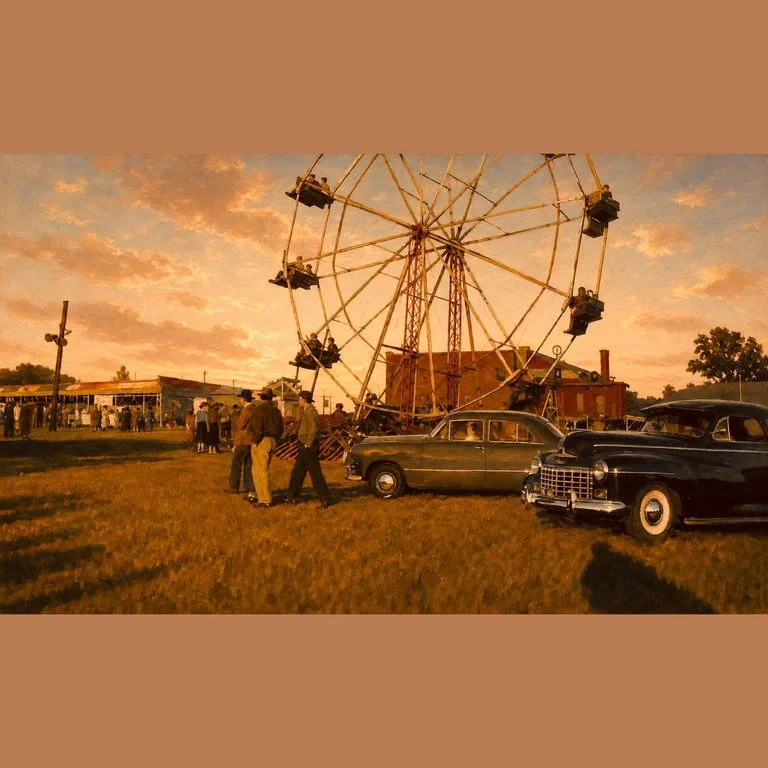
The Fair, the Farm, and the Candidate in Clean Shoes
A look at Beaver County’s fair traditions, from Hookstown and Big Knob to tractor pulls, farm families, fair food and politicians courting rural voters.

There was a time when socialism sounded almost romantic.
It arrived dressed in moral certainty, carrying a copy of Das Kapital under one arm and an expression suggesting it had just discovered that somebody else was eating dessert. To hear its advocates tell it, history was little more than a long conspiracy by wealthy people against everyone else. The poor tilled the fields, worked the factories, built the railroads, and somehow ended up with less than the people who owned the deeds.
You can see why the idea caught on.
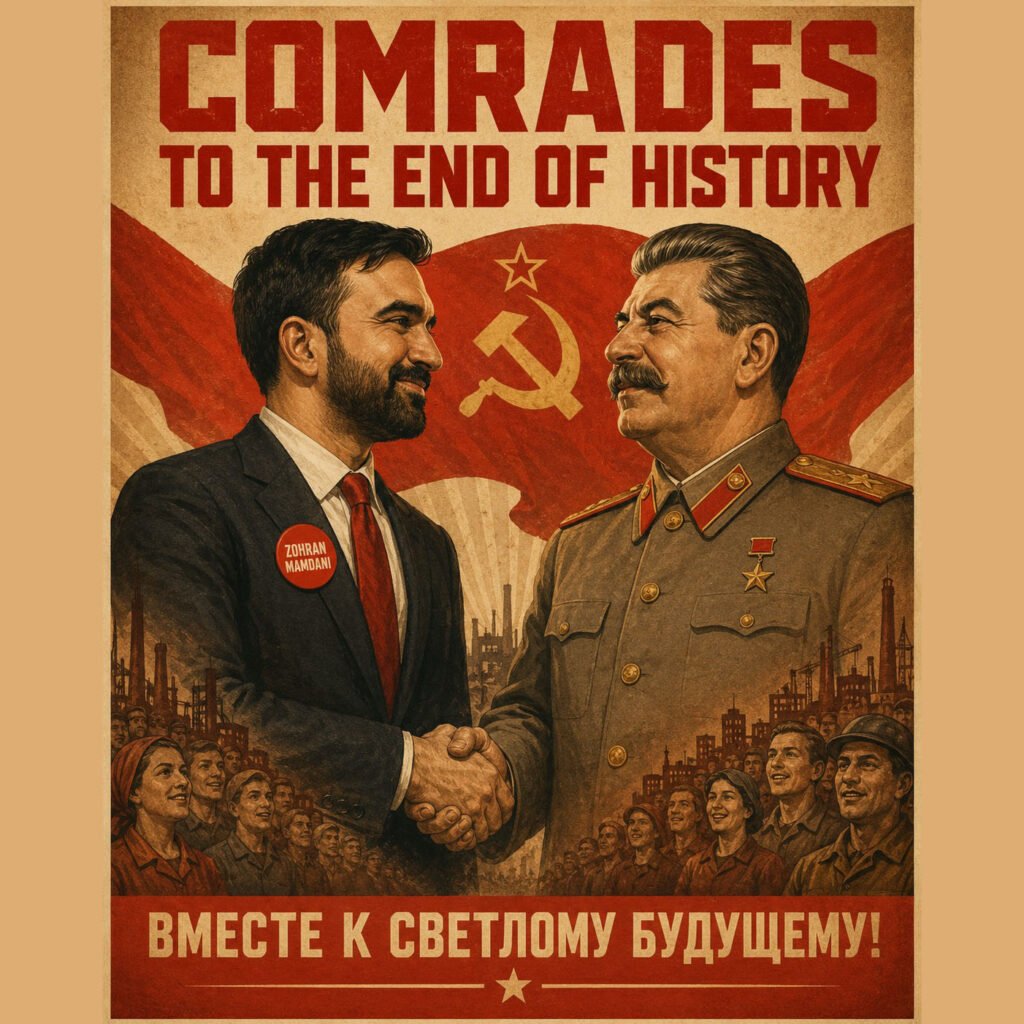
The remarkable thing is not that socialism found believers. The remarkable thing is that capitalism did.
For most of human history, wealth did not come from entrepreneurship. It came from conquest.
If a medieval king wanted your property, he did not launch a hostile takeover. He launched cavalry. Land belonged to whoever possessed the largest collection of armored men willing to ride across somebody else’s wheat field. The local lord promised protection, the peasants promised obedience, and everyone hoped the neighboring duke was having an off week.
Then something unexpected happened.
Kings discovered taxes.
Collecting money proved easier than maintaining thousands of knights. Land slowly ceased being merely a military prize and became an economic asset. It could be bought, sold, mortgaged, inherited, and valued.
Progress, however, has an annoying habit of creating new problems while solving old ones.
England’s enclosure movement fenced off common lands that villagers had shared for centuries. Families who had grazed sheep or gathered firewood suddenly found themselves staring at freshly erected fences and newly printed property deeds. Many drifted toward industrial cities, where factory owners welcomed them with twelve-hour shifts, dangerous machinery, child labor, and wages that suggested compassion had not yet become a management principle.
If you wanted to invent socialism, nineteenth-century Manchester was an excellent laboratory.
Karl Marx looked at this world and concluded that capitalism possessed a fatal flaw. His central argument was simple: profit represented unpaid labor. Workers produced more value than they received in wages, and the surplus flowed to those who owned the factories.
Whether one agrees with Marx or not, it was an incisive critique.
Where things became murkier was the sequel.
Das Kapital devoted thousands of pages explaining what was wrong with capitalism. It spent remarkably little time explaining how Tuesday morning would function under socialism.
Who decides how many shoes to manufacture?
Who determines whether the country needs more bicycles or fewer lawn mowers?
Capitalism answers those questions in an unexpectedly democratic way.
Every purchase is a vote.
When consumers stop buying avocado-colored refrigerators—a blessed development—manufacturers stop making them. Millions of ordinary people constantly send signals through prices. Nobody has to issue a decree announcing that pet rocks have lost their appeal.
The market simply notices.
Socialism attempts something far more ambitious.
Instead of allowing millions of consumers to make countless small decisions, it asks planners to make them in advance.
Imagine trying to organize every church picnic, football game, county fair, wedding reception, and fish fry in Beaver County from a single office in Harrisburg. Someone would inevitably forget the potato salad.
Now imagine doing that for an entire national economy.
History actually tried.
After World War II, Berlin became one of history’s great accidental laboratories. East Berlin embraced state socialism. West Berlin embraced free-market capitalism. Same people. Same culture. Different economic systems.
The differences became increasingly difficult to ignore.
West Berlin stores eventually carried about 15,000 consumer products. East Berlin stores stocked roughly 3,000.
If an East German family wanted a Trabant automobile, they frequently joined a waiting list exceeding ten years.
Ten years.
By then, your children were old enough to borrow the car you still hadn’t received.
The planning system behind this achievement was magnificent in its complexity. The Politburo issued five-year plans. Thousands of planners calculated production targets. Government offices fixed prices and monitored quotas. Reports climbed layer upon layer of bureaucracy until somebody announced that everything was proceeding splendidly.
One begins to appreciate the efficiency of simply asking customers what they want.
Even more telling were the human outcomes. By the late 1980s, West Berliners lived roughly three years longer than East Berliners. Within a decade of reunification, that gap had largely disappeared.
Economic systems, it turns out, eventually show up in hospital statistics.
Before someone points triumphantly to Sweden or Denmark, an important distinction deserves mention.
The Nordic countries are not socialist economies. They are capitalist economies with relatively high taxes that finance generous public benefits. Businesses remain privately owned. Markets still allocate resources. Consumers still decide what succeeds.
That is social democracy.
It is not the same thing as socialism.
Which brings me, somewhat improbably, to Old Economy Village.
Beaver County conducted its own small experiment in communal economics. The Harmony Society pooled property, shared labor, and built one of America’s most successful religious communities.
Visitors often leave wondering whether the Harmonists had discovered the economic secret everyone else missed.
In a way, they had.
Their community was small, voluntary, deeply religious, and united by shared convictions that reached far beyond economics. Members chose the arrangement because they believed they were serving God.
Scaling that model to 330 million Americans with cable television, TikTok, and strong opinions about pickleball presents certain complications.
Old Economy functioned like an extended family.
Washington rarely does.
There is another difficulty with socialism that receives less attention than shortages.
Power.
If government decides what gets produced, who receives scarce resources, and what prices shall be charged, government becomes the nation’s most important economic institution.
Soon everyone begins trying to please bureaucrats instead of customers.
Bad news travels upward reluctantly because nobody wishes to disappoint the people who control promotions, housing, or university admissions. Eventually preserving the system becomes more important than improving it.
To be fair, capitalism has its own temptations. Left entirely alone, markets can become ruthless. Workers can be exploited. Monopolies can form. Civilized societies need laws, honest courts, and a safety net for those who genuinely cannot help themselves.
The real debate has never been between markets and morality.
It has always been about finding the proper balance between economic freedom and public responsibility.
Perhaps that explains why socialism never quite disappears. Every generation rediscovers it after enough time has passed for people to forget standing in line for ordinary necessities while officials congratulated themselves on meeting the national production quota for something nobody actually wanted.
Ideas have long memories.
History has an even longer one.
A look at Beaver County’s fair traditions, from Hookstown and Big Knob to tractor pulls, farm families, fair food and politicians courting rural voters.
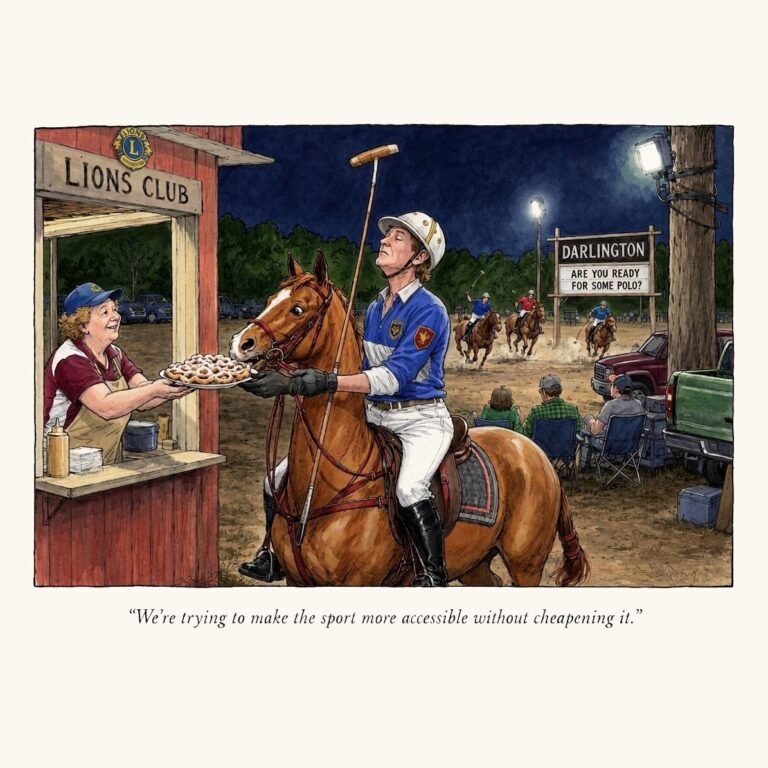
Darlington Polo Club brings the sport of kings to Beaver County with night matches, dirt fields, family tradition, pickup trucks and funnel cake.