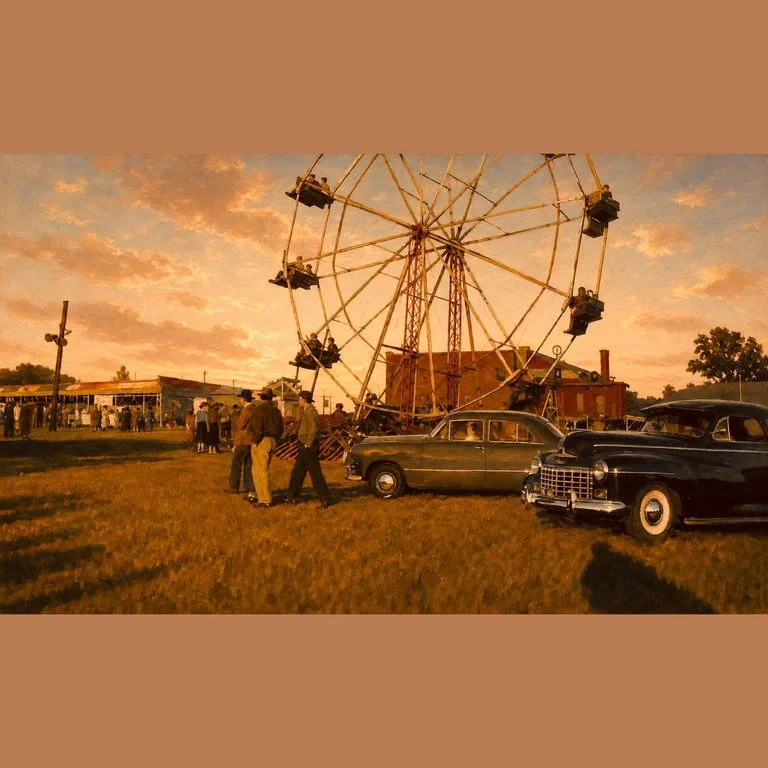
The Fair, the Farm, and the Candidate in Clean Shoes
A look at Beaver County’s fair traditions, from Hookstown and Big Knob to tractor pulls, farm families, fair food and politicians courting rural voters.

There are few sensations more agreeable than feeling sorry for somebody.
It is warm. It is reassuring. It tells us that whatever other defects we may possess—vanity, impatience, a regrettable tendency to eat the last piece of pie—we are fundamentally Good People. And unlike actually helping somebody, feeling sorry for him can usually be accomplished without leaving the recliner.
This has lately become controversial.
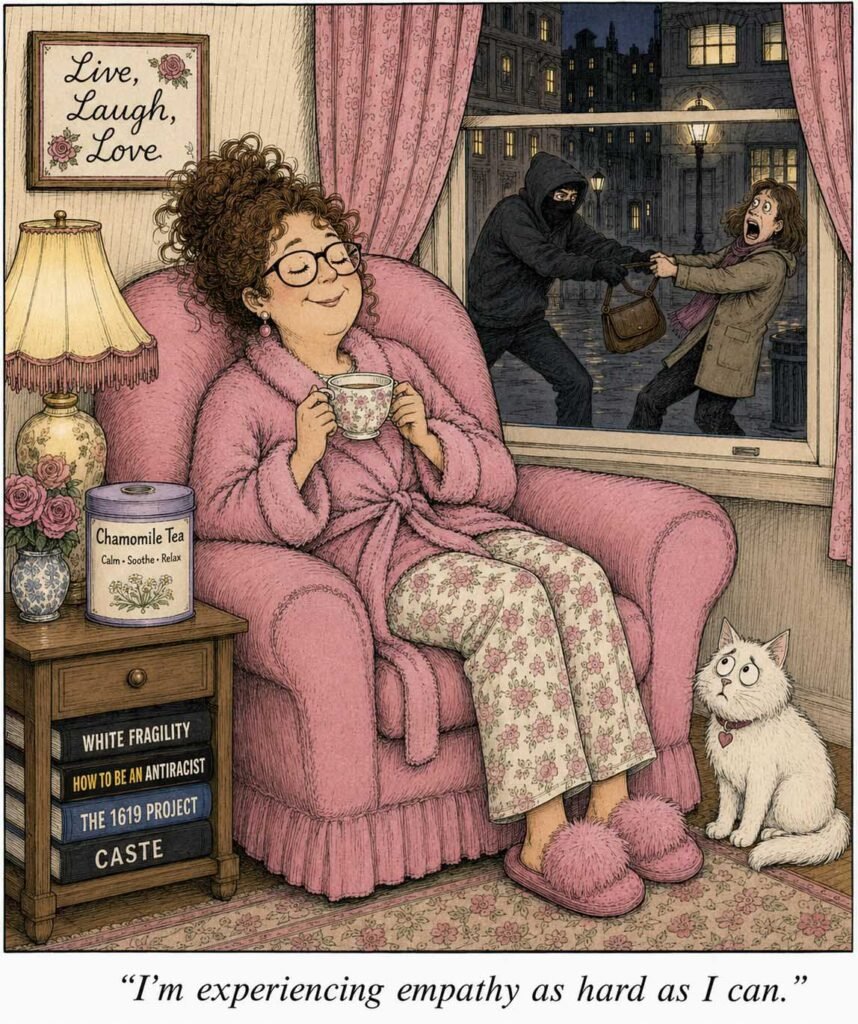
Gad Saad has written a book called Suicidal Empathy. Elon Musk has suggested that empathy has become a weakness of Western civilization. Others regard empathy as practically our highest human faculty—a moral superpower capable of healing everything from family quarrels to international relations.
Grandpa Jim approaches any argument containing the word “superpower” with caution.
Empathy is certainly a good thing. If your neighbor loses his wife, you ought to be able to imagine something of his grief. If your granddaughter comes home crying because the other girls excluded her, “Builds character” is probably not the opening line she needs.
Civilization would be unbearable without the ability to put ourselves in somebody else’s shoes.
The trouble begins when we become so pleased with ourselves for putting on the shoes that we forget to see where they are going.
Hannah Arendt wrote about something she called the “politics of pity.” Comparing the French and American revolutions, she noticed that the Americans spent an extraordinary amount of time arguing about constitutions, checks, balances and who was permitted to do what to whom.
The French discovered something more intoxicating: compassion.
They would remake society on behalf of the suffering masses.
Unfortunately, quite a few members of the suffering masses eventually had to be guillotined.
History is full of people who announce their love for Humanity and then become remarkably impatient with actual humans.
Adam Smith noticed another version of the problem. He warned about the “man of system,” who imagines society as a chessboard and assumes human pieces will move wherever enlightened people put them.
Human pieces are notoriously uncooperative.
They have families, religions, appetites, prejudices, loyalties and an irritating tendency to want things that weren’t included in the five-year plan.
Dostoevsky made essentially the same observation. It is easy to love mankind in the abstract. Loving the fellow next door, who leaves his garbage cans out all week, is considerably harder.
I have known people who possessed enormous compassion for oppressed populations 6,000 miles away but could barely tolerate the waitress who brought the wrong salad dressing.
The distant oppressed have advantages. They never interrupt you.
Which brings us to modern politics.
We routinely justify policies by asking how compassionate they sound rather than what they actually do. Drug policies are compassionate because addicts deserve compassion. Bail policies are compassionate because defendants deserve compassion. Immigration policies are compassionate because migrants deserve compassion. Policies involving sexually-confused young people are compassionate because those young people unquestionably deserve compassion.
All true.
But there is another question adults are paid to ask:
What happens next?
What happens to the addict? The neighborhood? The crime victim? The migrant? Wages, schools and housing? What happens to the troubled 14-year-old ten years later?
Asking these questions is not the opposite of empathy.
It may be empathy’s most demanding form.
Rob Henderson coined the useful phrase “luxury beliefs” for ideas that confer status on the people who hold them while imposing most of the costs on somebody else.
“Defund the police,” for example, sounded rather different at a faculty cocktail party than it did to the woman waiting for a bus at midnight in a neighborhood where shootings were rising.
The professor could display compassion and still call 911.
The woman at the bus stop had more skin in the game.
George Orwell understood this species of reformer. He observed that some intellectuals who professed enormous affection for the working class seemed strangely uncomfortable around actual working-class people.
Apparently mankind is easiest to love when properly categorized.
Most people advocating compassionate policies aren’t scheming villains. They are doing something much more ordinary.
They want to be good.
So do I.
The danger comes when wanting to be good becomes more important than wanting to do good.
Doing good requires consequences. Evidence. It requires admitting occasionally that the policy with beautiful intentions produced ugly results.
Worst of all, it may require changing your mind.
There goes the warm feeling.
Real empathy means understanding people as they actually are rather than casting them in our favorite moral drama. And compassion cannot be confined to whichever person is standing directly in front of us.
The addict deserves compassion.
So does his mother.
The defendant deserves compassion.
So does the woman whose house was burglarized.
The migrant deserves compassion.
So does the working family wondering why the rent went up again.
And the confused teenager deserves enormous compassion—which is precisely why adults owe that teenager something more substantial than applause.
Grandpa Jim is all for the warm, fuzzy feeling. At my age, warm and fuzzy is increasingly attractive in almost every department of life.
But feelings are beginnings, not conclusions.
Compassion tells us to care.
Wisdom asks what happens next.
And a functioning civilization probably needs both.
A look at Beaver County’s fair traditions, from Hookstown and Big Knob to tractor pulls, farm families, fair food and politicians courting rural voters.
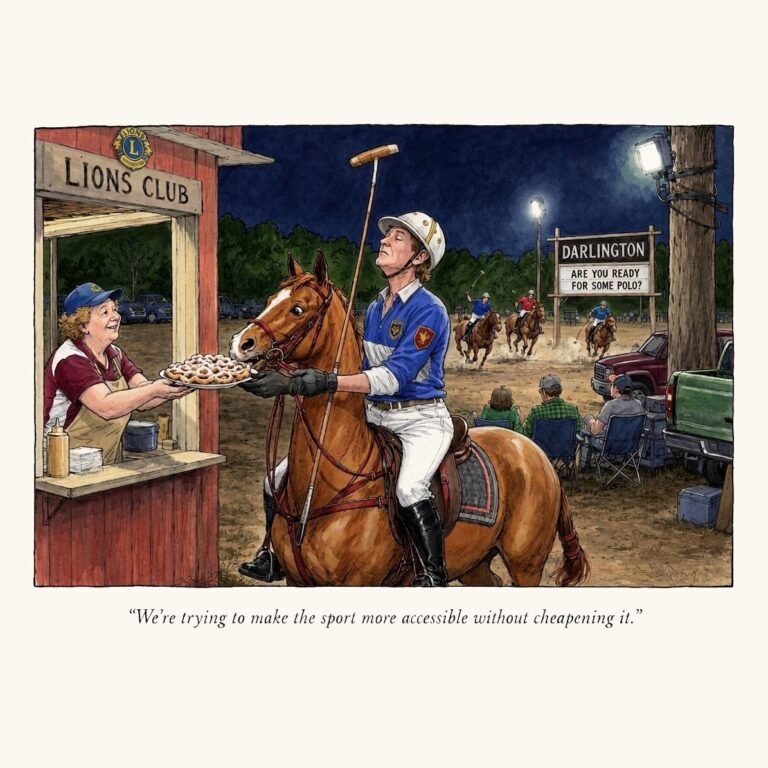
Darlington Polo Club brings the sport of kings to Beaver County with night matches, dirt fields, family tradition, pickup trucks and funnel cake.