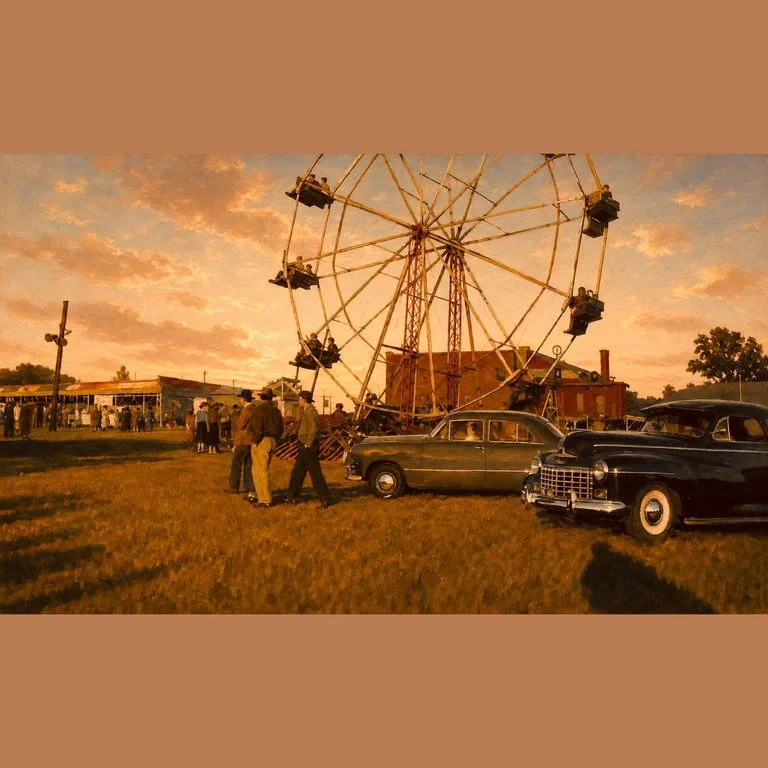
The Fair, the Farm, and the Candidate in Clean Shoes
A look at Beaver County’s fair traditions, from Hookstown and Big Knob to tractor pulls, farm families, fair food and politicians courting rural voters.
Scott Presler stood up at the Beaver County Republican Committee meeting Thursday night and talked about jury duty.
Not jury duty as most of us know it—the summons arrives, you study the calendar desperately for a wedding, funeral or previously undiscovered medical condition, and then begin negotiations with the County. Presler was interested in the people who don’t get jury duty because they aren’t American citizens.
Pennsylvania, being Pennsylvania, keeps a list of them.
Every county maintains records of people disqualified from jury service and why they were disqualified. Among the reasons is non-citizenship. The lists are public records, although they have apparently spent many happy years enjoying the kind of privacy available only to public records nobody knows exist.
Presler knows.
He lives in Beaver County now, runs Early Vote Action and recently won a seat on the Republican State Committee. Lately he and his people have been traveling around Pennsylvania collecting the names of people who told one arm of county government that they aren’t citizens and comparing them with the names kept by another arm of county government—the voter-registration office.
The theory does not require a degree in political science.
If John Smith is officially a non-citizen when the courthouse wants him for jury duty, Presler would like to know how John Smith becomes a citizen when Election Day rolls around.
This has led him into the wonderful world of Pennsylvania public-records law.
Some counties have cooperated. Others—including Erie, Allegheny, Lackawanna, Luzerne, Philadelphia and Butler—have required the records to be inspected in person. Philadelphia, Presler said, meant sitting in a government office and manually transcribing roughly 7,000 records involving people identified as non-citizens over an 18-month period.
One imagines the fluorescent lights. The institutional chairs. The clock on the wall whose minute hand moves only when nobody is looking.
Presler told the committee that his preliminary matching suggests roughly one in four of those names may also appear on the voter rolls.
Here in Beaver County, he said, his organization has found 57 such matches during the past six months.
That number deserves an important asterisk. A matching name is not proof that somebody voted illegally—or even necessarily proof that the person on the jury list is the same person on the voter roll. Election officials have pointed out that jury records may lack such useful details as birth dates and addresses. Presler’s numbers Thursday evening were his organization’s findings, not adjudicated cases of voter fraud.
He intends to find out what lies behind them.
And this was the part of his presentation I found most interesting. The plan isn’t particularly dramatic. In fact, it has the methodical quality of something devised by a county auditor with a thermos of coffee and no plans for the weekend.
First, collect the records from all 67 Pennsylvania counties.
Allegheny County gets its turn Friday. Then Butler, Erie, Lackawanna, Luzerne, Delaware, Montgomery, Chester and eventually everybody else. No county will be permitted to escape merely because the paperwork is tedious.
Then compare the names not only with voter registrations but with mail-in ballot requests and voting records.
Then document the matches.
Then, where the evidence indicates that a non-citizen actually registered or voted illegally, package it up and send it to law enforcement.
Presler said federal authorities have warned that officials who knowingly register ineligible non-citizens can face criminal consequences. His apparent intention is to provide prosecutors with cases sturdy enough to test that proposition.
His group is also comparing its findings with federal information, including Department of Homeland Security data.
There are no black helicopters in this plan. No mysterious vans arriving at three in the morning. No PowerPoint presentation explaining how Venezuela secretly controls the voting machines.
There are lists.
This may disappoint people on both sides of the election-integrity wars, which have developed an unfortunate dependence on excitement.
Presler’s proposition is considerably duller: Government keeps records. Compare them.
Whether the results ultimately support his suspicions is another matter.
State and county election officials have repeatedly maintained that non-citizen voting is rare. They also caution that voter rolls are living documents filled with people who move, die, become inactive, change names and otherwise refuse to arrange their lives for the convenience of election administrators.
Presler pointed Thursday to Philadelphia, where roughly 50,000 Democrats and 20,000 Republicans have recently moved from active to inactive status. Election officials say such changes can be part of ordinary voter-roll maintenance. Presler sees the broader movement as evidence that persistent scrutiny matters.
The records will have to settle the argument.
In the longer run, Presler wants Congress to enact legislation requiring photo identification and documentary proof of citizenship for voting. In the meantime, he urged Beaver County Republicans to do something considerably less glamorous: become poll watchers and election officials.
Elections, after all, are conducted not on television but in fire halls, school gymnasiums and municipal buildings by ordinary people working very long days at folding tables.
There is something almost quaint about Presler’s latest enterprise.
We live in an age of artificial intelligence, facial recognition, satellite surveillance and computers capable of knowing that you looked at a pair of loafers on Tuesday and showing you advertisements for loafers until Christmas.
Yet here is a man from Beaver County driving from courthouse to courthouse asking government employees to let him see pieces of paper the law says he is entitled to see.
Sometimes they give him a computer file.
Sometimes they don’t.
When they don’t, somebody sits down and types.
Whether this eventually uncovers a serious flaw in Pennsylvania’s election system, a collection of clerical errors, a handful of illegal registrations or some combination of the three remains to be seen. Fifty-seven names are questions, not convictions. Presler now has to establish exactly who those people are, whether the records refer to the same individuals and whether any of them actually cast ballots.
That’s the unglamorous part.
It’s also the part that matters.
For now, Presler has 67 counties, a collection of jury records and the patience to keep comparing one government list with another.
Friday morning, it’s Allegheny County’s turn.
The courthouse will be open.
The fluorescent lights will be waiting.
A look at Beaver County’s fair traditions, from Hookstown and Big Knob to tractor pulls, farm families, fair food and politicians courting rural voters.
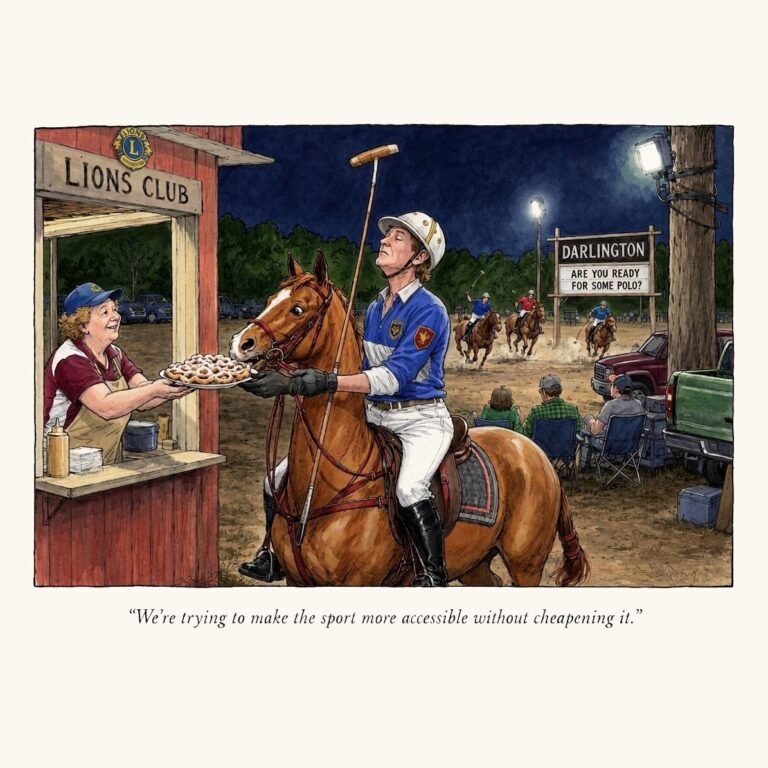
Darlington Polo Club brings the sport of kings to Beaver County with night matches, dirt fields, family tradition, pickup trucks and funnel cake.