Listen to a podcast discussion about this article.
Every few months now, some economist in a blazer worth more than a used Buick appears on television to inform the nation that artificial intelligence is a bubble about to burst. The evidence, we’re told, is obvious: data centers spreading across the countryside like crabgrass, Nvidia stock climbing as if gravity had been temporarily suspended, and venture capitalists throwing money around with the restraint of sailors on shore leave.
To hear the experts tell it, we are reliving the dot-com era all over again. Any day now, the whole thing is supposed to collapse into a smoking crater littered with bankrupt startups and young men named Trevor explaining blockchain strategy to bewildered bartenders.
Only there’s one problem with this theory.
The people making it don’t seem to remember what actually happened the first time.

Most folks recall the dot-com crash as the age of sock puppets and silly websites spending Super Bowl money to sell products nobody wanted. That was merely the comic relief. The real catastrophe was buried underground in the form of fiber-optic cable.
Back in the late 1990s, telecom companies spent more than half a trillion dollars laying fiber across America in a frenzy to build what politicians called the “Information Superhighway,” which sounded futuristic until you realized most Americans were still waiting five minutes for a photograph of a Labrador retriever to load over dial-up internet.
The telecom geniuses made one fatal mistake. They forgot the last mile.
You could lay enough fiber to wrap around the Earth several times, but if the final connection into people’s homes still ran through old copper phone lines, the whole system moved at the speed of cold molasses. Dial-up tied up the family telephone, screeched like a raccoon trapped in a trombone, and moved information with all the urgency of a township meeting on sewer permits.
So consumer adoption never arrived fast enough to justify the spending. By 2001, enormous portions of that fiber sat unused as “dark fiber,” one of the most expensive collections of dormant infrastructure in modern history. Telecom companies collapsed like cheap lawn chairs.
Today’s commentators look at AI spending and assume history is repeating itself. But there is one enormous difference.
There’s no such thing as a “dark” Nvidia chip.
Those chips aren’t sitting idle in warehouses waiting for demand to arrive someday. They are already running flat-out around the clock, generating so much heat that engineers increasingly talk about cooling systems the way steelmakers once talked about blast furnaces. The appetite for computing power isn’t theoretical. It’s ravenous.
And the reason is simple: information density.
Text is relatively lightweight. Images are heavier. Video is heavier still because it adds time itself into the equation. Two seconds of raw video contains roughly the informational equivalent of the entire Harry Potter series, which may explain why teenagers can now spend six hours watching TikTok clips yet still claim they’re too exhausted to unload the dishwasher.
As AI moves beyond chatbots and into robotics, medicine, autonomous systems, and real-world vision, the computational demands become staggering. This isn’t some speculative race to nowhere. The machines are already hungry.
That does not mean there are no dangers. There absolutely are.
The real bottleneck isn’t chips. It’s electricity.
America now faces the charming prospect of needing the equivalent output of dozens of new nuclear plants merely to keep future AI systems humming along. Utilities are already warning about grid constraints. Tech firms have become so desperate for dependable baseload power that they’re suddenly speaking fondly about nuclear energy again after spending twenty years pretending windmills and motivational speeches would run civilization.
Even Three Mile Island—the very phrase that once sent television reporters into dramatic whispering tones—is now being discussed as part of the solution.
This energy problem is today’s version of the “last mile.” Solve it, and AI keeps compounding into nearly every industry on Earth. Fail to solve it, and investors may discover that stock valuations can descend just as quickly as they once ascended.
We got a glimpse of this anxiety earlier in 2025 when China’s DeepSeek team reportedly produced a powerful AI model for a fraction of expected costs. Nvidia stock briefly plunged 17% in a single day as Wall Street convinced itself the infrastructure boom had suddenly become unnecessary.
But markets are prone to overreaction.
What happened next was a textbook example of Jevons Paradox, the economic principle stating that when something becomes dramatically cheaper and more efficient, humanity does not politely conserve the savings. It consumes vastly more of the thing.
Cheap kerosene didn’t lead families to keep using one lantern. It led them to put light in every room. Cheap automobiles didn’t reduce driving. They produced suburbs, shopping malls, and traffic jams stretching halfway to Cranberry Township.
Likewise, cheaper AI didn’t shrink demand. It detonated it.
Businesses suddenly realized these systems were becoming affordable enough to integrate into everyday operations. Lower costs don’t kill technological revolutions. They democratize them.
That’s why this moment differs fundamentally from the dot-com era. AI isn’t dangling out there as some speculative appendage disconnected from the real economy. It sits atop mature internet infrastructure, global cloud networks, and giant technology firms already woven into everyday business life.
This isn’t the planting of some fragile experimental sapling.
It’s the expansion of a forest that already covers the landscape.
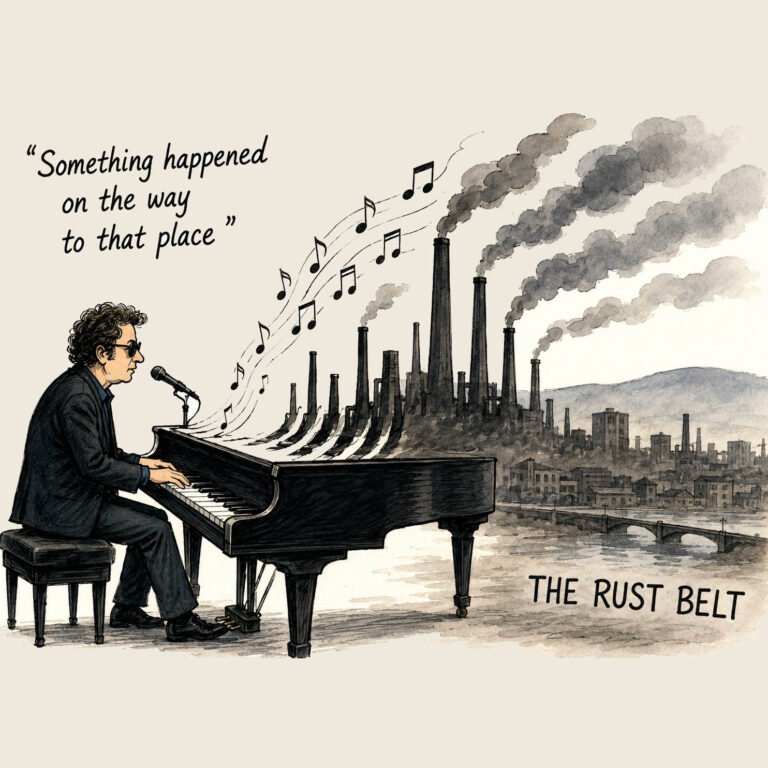
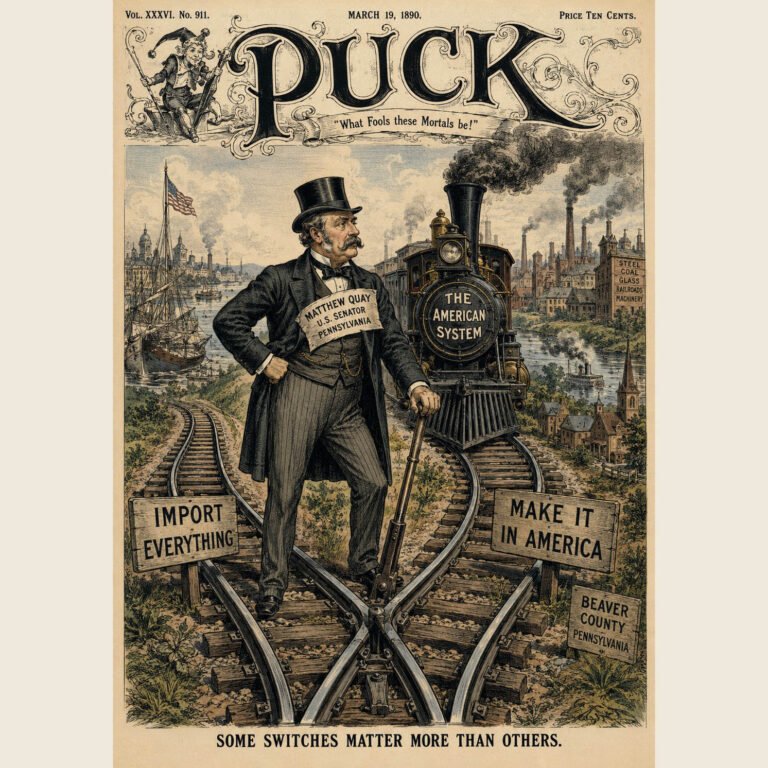
And here in Beaver County and across Western Pennsylvania, that matters more than people may realize. Regions with energy capacity, industrial land, manufacturing expertise, and engineering talent suddenly find themselves relevant again in a world starving for power and infrastructure.
That’s not a small thing in a place that once helped electrify and industrialize half the modern world.
The winners in this next era won’t necessarily be the loudest people on LinkedIn posting inspirational slogans about disruption. They’ll be the people who understand fundamentals: energy, infrastructure, cooling, manufacturing, logistics, and real-world productivity.
In other words, the same things that mattered when Andrew Carnegie was trying to figure out how not to go broke making steel.
The AI story is not a bubble waiting to pop.
It’s a civilization-scale transformation we’re still struggling to power.