Listen to a podcast discussion about this article.
If you’ve been mainlining cable news or haunting the foreign-policy seminar circuit, you’ve heard the solemn incantation: America and China are headed for the “Thucydides Trap.” A rising power threatens an established one, panic sets in, and war becomes inevitable. Some Greek wrote a book. A Harvard professor gave it a catchy name. Now every lanyard-wearing pundit repeats it like a hymn.
Baloney.
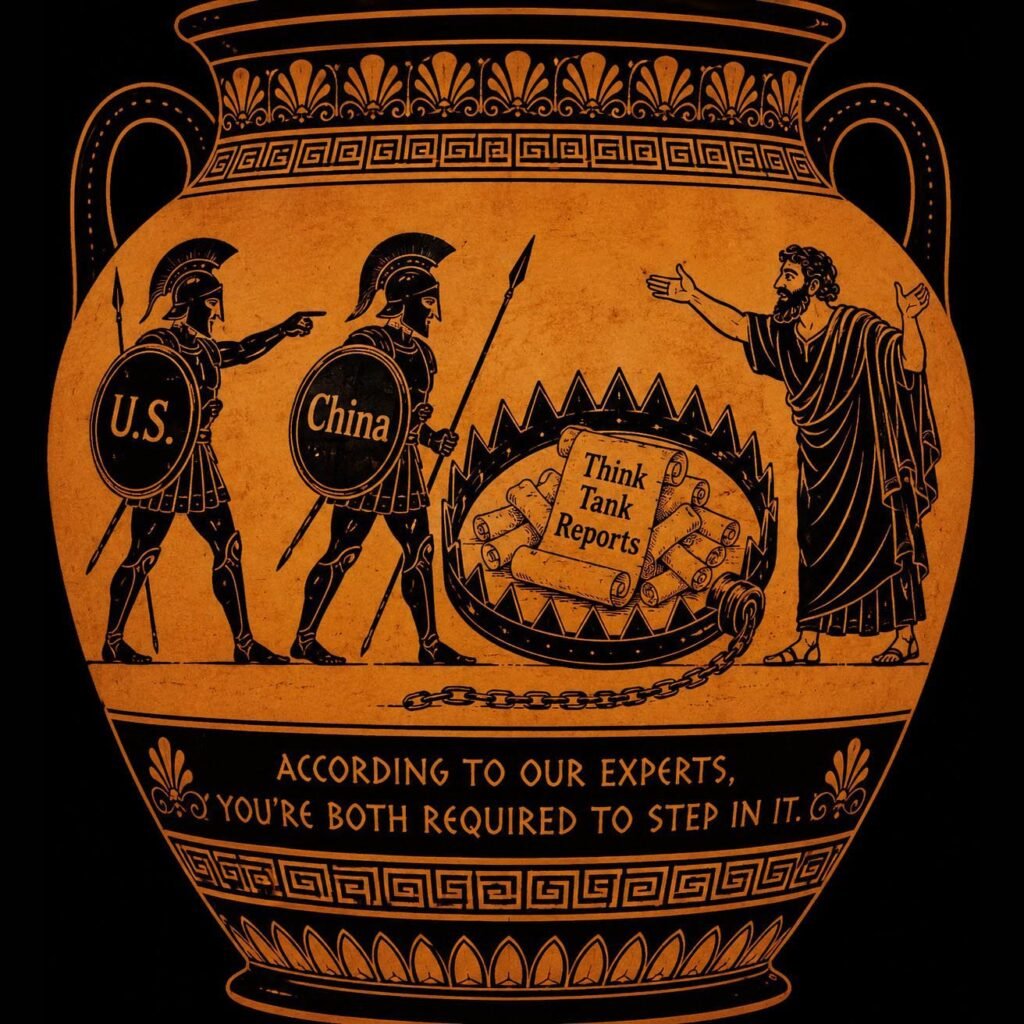
Two clear-eyed observers have taken a crowbar to this fashionable nonsense. Victor Davis Hanson, who actually reads Thucydides, and Bruce Director, in a sharp 35-minute strategic overview on the Promethean Action channel with host Tony Papert. Together they show the only real trap is the intellectual one built for the rest of us.
Hanson dismantles the theory at its roots. The Peloponnesian War was not a tidy “power transition.” Athens and Sparta had been rivals and occasional partners for decades. The real clash came from irreconcilable differences: noisy, seafaring Athenian democracy versus a grim Spartan oligarchy atop restless serfs. This wasn’t about spreadsheets. It was oil and water with spears.
History is full of peaceful power shifts. The United States eased past the British Empire between 1870 and 1920 without dreadnoughts dueling in the Atlantic. West Germany’s postwar miracle dominated Europe by the 1970s without another Panzer roll. When wars do come, it’s usually the cocky upstart that swings first—and loses. Imperial Germany, Nazi Germany, Imperial Japan, the Soviet Union: all bet the old power was soft. All paid dearly.
Apply that scorecard today. Is America a wheezing has-been while China bench-presses the planet? Hanson checks food security, energy independence, naval power, nuclear arsenal, and worker productivity. America still looks spry. China faces a shrinking population, dependence on imported food and energy, hidden debt, and a system that mistakes bullying for strategy.
Nuclear weapons focus the mind. No sane Washington voice wants a preventive war. What we’ll see instead is classic deterrence, alliances, and Kissinger-style balancing.
Director brings the argument to the present. Forget abstract traps. Watch what leaders actually do. The Trump-Xi summit featured genuine personal diplomacy. Xi personally walked Trump through a restricted imperial garden in his compound—an honor rarely extended even to Putin. That signaled respect and realism, not inevitable decline. Two strong leaders sizing each other up beat another stack of briefing papers.
On Iran, Director cuts through the hand-wringing. While media cried lost leverage, back channels involving China, Pakistan, Qatar, Saudi Arabia, and the UAE stayed active. A planned strike was postponed for serious talks—with one ironclad condition: Iran gets no nuclear weapon. Leverage looks different off the op-ed page.
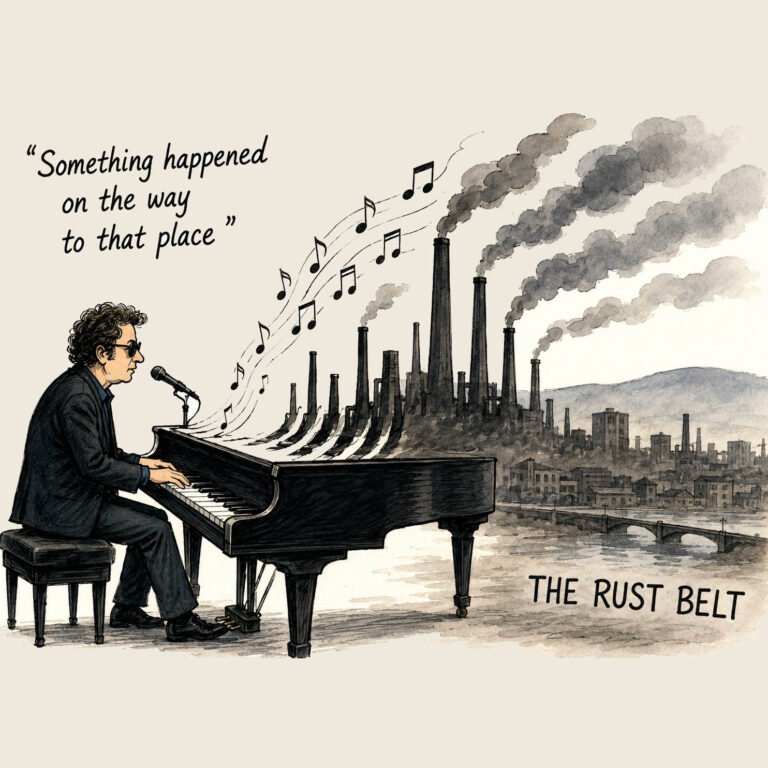
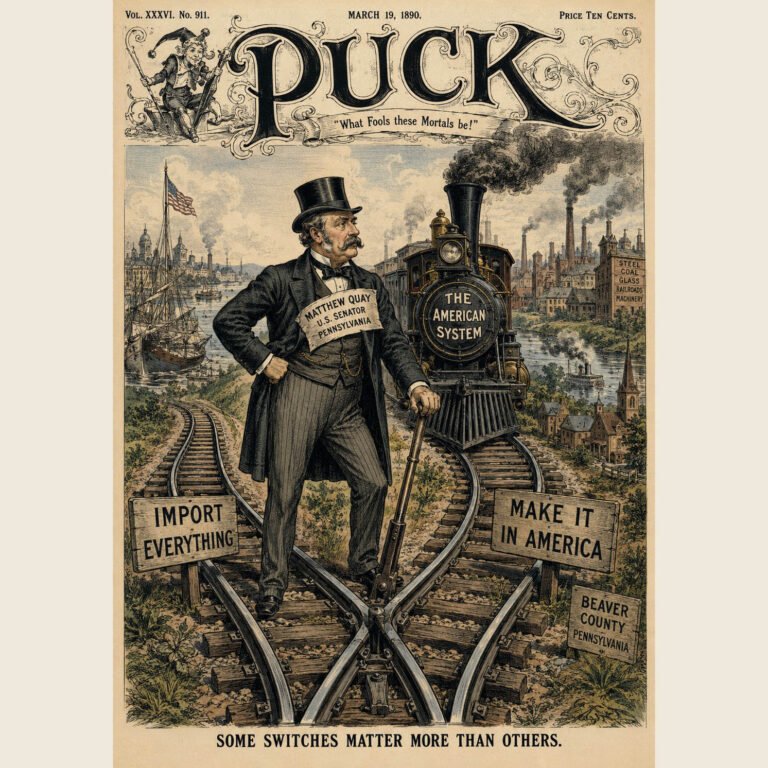
Domestically, grocery bills still sting. But a deeper shift is underway: turning away from hyper-globalization and rules that shipped factories overseas. The Pentagon is steering contracts toward nimble startups instead of Beltway giants, already creating tens of thousands of jobs.
Reindustrialization is slow and unglamorous, but real. It beats another seminar on “managing decline.”
The “Thucydides Trap” flatters fatalists. If decline is inevitable, nobody’s responsible. If conflict is baked in, leadership doesn’t matter. You can shrug while the country drifts.
But nations are not lab experiments. They are decisions, industries, alliances, and people refusing academic scripts. The real danger is psychological: convince Americans their best days are over and they might start acting like it.
Spend an afternoon in Beaver County and you understand why this matters. Places like this remember that industrial strength is steel mills, rail yards, welders, and the dignity of building things. When America talks seriously about energy security, manufacturing, and supply chains, Western Pennsylvania stops looking like a relic and starts looking like the future.
Hanson and Director offer a plainer map: study actual history. Watch what nations do, not what theorists predict. Manufacturing still matters. Alliances still work. Strong countries stay strong longer than intellectuals expect. Civilizations decline first in confidence, then in capability.
America is not sleepwalking into a 2,400-year-old Greek tragedy. The Greeks had their war because they were who they were. We still get to decide who we are. Choose realism over fatalism, strength over managed decline, and the trap stays where it belongs—in the footnotes.