Listen to a podcast discussion about this article.
The first IQ test I took came before I was old enough to tie my own shoes.
At four years old, I found myself sitting in the principal’s office at Central Elementary School in Beaver Falls, answering questions to determine whether I was ready for kindergarten. My parents wanted to enroll me a year early. Apparently somebody felt it was necessary to confirm that I possessed the intellectual firepower required to survive finger paints, construction paper, and afternoon naps.
I won’t tell you my score, but it was comfortably above the minimum standard for coloring inside the lines.
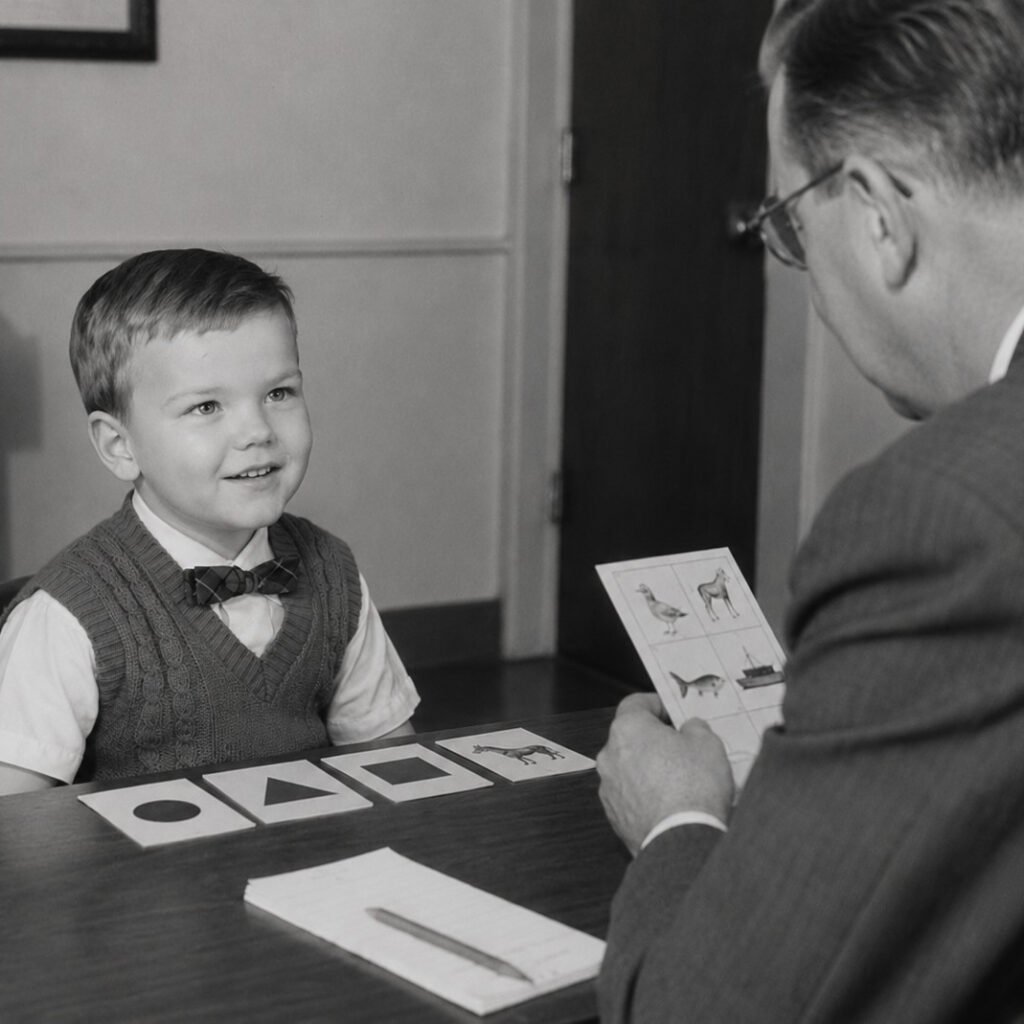
What I didn’t realize then was that the test measured far more than pattern recognition and puzzle-solving. In a strange way, it offered an early glimpse of how I’d move through the world for the rest of my life.
That becomes clearer with a little context.
I was an only child growing up on a farm in Chippewa Township.
Our nearest neighbor lived half a mile away. He was a bachelor farmer who didn’t care much for company. Looking back, he may have been the happiest man in Beaver County. At the time, however, my parents viewed him less as a role model than as a cautionary tale.
They worried I wasn’t being properly socialized.
My circle of companions consisted primarily of a dog named Smokey, a cat named Fluffy, two American Saddlebred horses, and a herd of Black Angus cattle. It was an agreeable arrangement. The cattle rarely interrupted. The horses never discussed politics. The cat wasn’t much of a conversationalist, but neither are some people I’ve met since.
So my parents sent me to school early.
What that IQ test hinted at—and what decades of research have since confirmed—is that intelligence often comes packaged with a distinctive set of personality traits. The score mattered less than the operating system running behind it.
Those patterns have followed me ever since.
Not because intelligence is a burden. Quite the opposite. It’s been one of the great blessings of my life.
Like most blessings, though, it arrived with a few attachments.
One of the first things researchers have discovered about highly intelligent people is that many of them genuinely enjoy solitude.
That sounds suspiciously like something introverts invented to avoid neighborhood barbecues, but the evidence is surprisingly strong. Studies suggest that highly intelligent individuals often derive less satisfaction from frequent social interaction than average. Large groups can feel draining rather than energizing.
I understand the instinct.
Given the choice between a crowded networking reception and an afternoon spent reading an obscure book about British imperial history, I’ll often choose the book. Not because I dislike people. I like people very much.
I simply appreciate them more when there aren’t 200 of them talking at once.
Highly intelligent people also tend to possess minds that never entirely shut down.
Most people experience thoughts.
Some people experience committee meetings.
Their brains are constantly analyzing, comparing, questioning, reorganizing, and exploring. Conversations get replayed. Problems get reconsidered. Possibilities get examined from six different angles.
At three o’clock in the morning, while normal citizens are sleeping peacefully, somebody with a high IQ may be debating whether tariffs helped build American industry, whether the Roman Empire ever truly ended, and whether he remembered to pay his electric bill.
Usually in that order.
The electric bill, unfortunately, is often the one that matters most.
This relentless mental activity has advantages. It also explains why many bright people look perpetually tired.
Another surprise is that intelligence often comes bundled with emotional sensitivity.
Popular culture favors the image of the detached genius calmly surveying humanity from a safe intellectual distance. Reality is usually more complicated.
Many highly intelligent people are deeply empathetic. Because they notice more, they often absorb more.
A passing criticism may linger for days. A friend’s disappointment may feel personal. A tragic news story may be difficult to forget.
The same mind that excels at analysis often works overtime on compassion.
That emotional sensitivity helps explain another common characteristic: self-doubt.
The smartest people I’ve known are rarely the most certain.
In fact, certainty and intelligence sometimes seem to move in opposite directions. People with limited knowledge often possess immense confidence. People with extensive knowledge understand how much remains unknown.
The result is what psychologists call impostor syndrome.
Many gifted individuals secretly suspect they’re less competent than others believe. They know too much about complexity to trust simple answers.
That’s why the smartest person in the room is often the one saying, “I’m not sure.”
And the least informed person is often the one saying, “I’m absolutely certain.”
Intelligence also shapes conversation.
Many bright people struggle with small talk—not because they think it’s beneath them, but because they find it difficult to remain interested in subjects that don’t spark their curiosity.
They’d rather discuss history, technology, economics, philosophy, theology, artificial intelligence, or some obscure subject nobody else at the dinner table has ever heard of.
This can create an odd sense of isolation. Not because they can’t connect with people. Because they’re always searching for someone on the same wavelength.
Another common trait is intellectual humility.
People with high IQs are often surprisingly comfortable admitting ignorance. They don’t see gaps in knowledge as embarrassing. They see them as opportunities.
The older I get, the more convinced I become that wisdom begins with three simple words:
“I don’t know.”
Those words terrify some people.
To curious minds, they’re an invitation.
Highly intelligent individuals also tend to be remarkably flexible thinkers. They’re willing to revise opinions when new evidence appears. They can examine competing viewpoints without feeling personally threatened.
In today’s political climate, where many people treat opinions like family heirlooms that must never be questioned, that flexibility is increasingly rare.
Yet it may be one of intelligence’s greatest gifts.
Curiously, many gifted people are also chronic procrastinators.
Not because they’re lazy.
Usually because they’re perfectionists.
Their minds generate so many possibilities that choosing one becomes difficult.
While everyone else is building a garden shed, they’re still revising blueprints for a cathedral.
The result is often magnificent work.
Eventually.
Finally, there’s a characteristic that rarely appears in discussions of intelligence but may be the most important of all.
Many gifted people carry a lifelong feeling that they don’t quite belong.
Their humor is different. Their interests are different. Their pace of thought is different. They often feel more like observers than participants.
Not lonely, exactly.
Just slightly out of sync.
I suspect that’s why that long-ago IQ test remains in my memory.
It wasn’t merely measuring intelligence.
It was quietly predicting a way of moving through the world.
The solitude. The curiosity. The overthinking. The self-doubt. The fascination with ideas. The occasional feeling of standing just outside the crowd, watching.
For years, I assumed those traits were mine alone. Then I met enough scientists, entrepreneurs, engineers, writers, inventors, and relentless question-askers to recognize the pattern. Different careers. Different backgrounds. The same look in their eyes when a conversation finally reaches something worth having.
The real gift of intelligence isn’t answering more questions.
It’s finding other people who are asking the same ones.
Once that happens, the feeling of being out of step begins to fade. The distance between observer and participant narrows. The room feels less like a puzzle and more like home.
Which, come to think of it, may have been what my parents were hoping for when they hauled a four-year-old farm boy into the principal’s office to see whether he was qualified for kindergarten.
I passed the test.
The socialization project is still underway.