Listen to a podcast discussion about this article.
There are certain things even a large black-and-white Newfoundland prefers not to think about before supper. Vacuum cleaners. Squirrels with a death wish. The possibility that the mailman is plotting against civilization. And now, thanks to recent events in Aliquippa, dogfighting.
I am Seamus Morrow, Hooman Interest Editor, and I have spent considerable time studying the peculiar habits of hoomans from my observation post near the living room window. Most of you are decent creatures, if somewhat anxious and chronically under-snacked. You build us dog beds softer than mashed potatoes at a church picnic. You buy us beef-lung treats costing more per pound than filet mignon. Some of you even address us in baby talk that would embarrass a Disney princess.
Which is why the existence of dogfighting rings remains one of the great mysteries of the hooman species, right alongside kale smoothies and cable news.
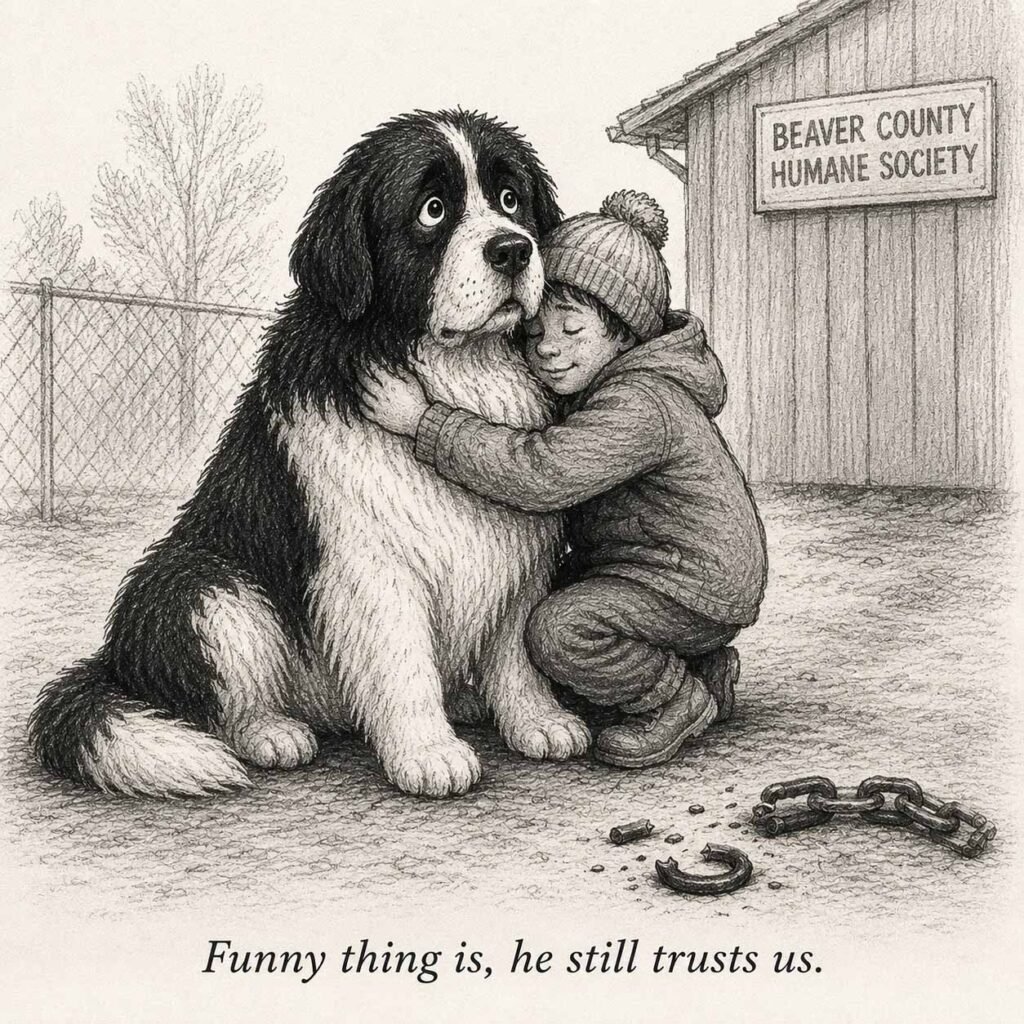
On January 25, authorities in Aliquippa uncovered what they suspect was an illegal dogfighting operation. Investigators initially found dogs chained outside during a winter storm before eventually removing 23 dogs from the property and placing them in the care of the Beaver County Humane Society. Twenty-three. That’s enough dogs to start a respectable canine union local.
Instead, investigators say these poor creatures spent their days chained outdoors in freezing weather while being treated less like companions than like furry boxing gloves.
The shelter says the dogs have now been in its care for more than 100 days—twice the typical stay—and are beginning to show signs of kennel stress. You don’t need a veterinary degree to understand why. Dogs are social animals. We are pack creatures. We are designed by nature to nap beside fireplaces, patrol kitchens for falling meatballs, and gaze wistfully out car windows while Morgan Wallen songs play on the radio.
We are not designed to be tied to chains in snowstorms like condemned pirates.
The alleged suspects, Ronald Dean Kidder and Terry Rahman Decarlos, remain sought by authorities, who are asking for the public’s help locating them. I will refrain from offering my own investigative services because, frankly, my tracking abilities become unreliable near hot dog stands.
Still, even an ordinary household dog understands something important here: dogfighting corrupts the very nature of what dogs are.
Contrary to popular mythology, most dogs do not wake each morning eager to recreate scenes from Gladiator. Your average canine has three principal ambitions in life: food, affection, and identifying suspicious movement near the garbage cans. Aggression severe enough for organized fighting is usually beaten, starved, bred, or terrorized into an animal by hoomans.
And therein lies the particular cruelty.
Dogs possess one of the rarest qualities in the natural world: we trust you people almost unreasonably. Wolves may admire the moon. Cats admire themselves. But dogs? Dogs admire you.
We wait by the door when you leave. We follow you into bathrooms despite overwhelming evidence that nothing interesting ever happens there. We forgive you for dressing us as pumpkins on Halloween. Some of us even tolerate sweaters.
That kind of loyalty ought to earn a creature a warm bed and perhaps the occasional scrap of roast beef. Instead, in places like these fighting operations, loyalty gets repaid with chains, injuries, fear, and neglect.
A dogfighter looks at an animal and sees money, intimidation, or entertainment. The rest of us look at a dog and see a soul wearing fur pants.
The truly heartbreaking thing is imagining how those 23 dogs probably still reacted when humans approached them: tail wagging, hopeful eyes, the ancient canine instinct to believe the next human might finally be kind.
That’s the part that gets you.
Beaver County, for all its rough edges and occasional civic oddities, has always struck me as a place where most people understand the bond between working people and working dogs. Around here, dogs rode in mill trucks, guarded shop floors, slept on porches overlooking the Ohio River, and listened patiently while old men explained carburetors over cans of Iron City.
A dog was never merely property. He was family with muddy paws.
The Beaver County Humane Society deserves credit not merely for rescuing these animals, but for enduring the difficult aftermath. Shelters are crowded, stressful places operating on limited budgets and exhausted hearts. Caring for traumatized animals over long stretches takes patience bordering on sainthood.
As for the rest of us, perhaps the lesson is simple enough even for a Newfoundland.
A society can often be judged by how it treats creatures entirely at its mercy. Dogs give hoomans their trust without contracts, lawyers, or conditions. Betraying that trust for sport may be one of the lowest things a person can do.
Now if you’ll excuse me, I need to go sit quietly beside my hooman and remind myself that most people, thankfully, are better than this.