Listen to a podcast discussion about this article.
There was a time, not very long ago, when a tract of land in Big Beaver Borough was valued chiefly for the racket it made.
It was the wholesome American sort of racket — engines roaring, tires squealing, and men in ball caps discussing lap times as if the republic depended on proper braking into Turn 4. It was BeaveRun first, then Pitt Race, and it gave Beaver County the agreeable distinction of having a place where speed, machinery, and burnt rubber were still considered signs of civilization.
Now the modern world has arrived with a deed book, a Dallas mailing address, and a face like a compliance officer.
The former Pittsburgh International Race Complex property, roughly 385 to 400-plus acres depending on how generously one counts, has been sold for $50 million to Wampum I LLC. And just like that, Beaver County appears to be trading horsepower for server power.
No formal redevelopment plan has yet been publicly filed. But the deed was signed by Julian Hawkes Jr., president of Provident Data Centers, and the buyer is tied to a Dallas address associated with Provident affiliates. This is not the sort of paper trail that usually ends with a petting zoo and a revised motocross schedule.
So while nobody has officially said the words out loud, all signs point to a data center.
That would fit the spirit of the age nicely. Beaver County, blessed with land, grid access, and enough industrial-grade infrastructure to make out-of-town developers develop a shimmer in the eye, has become catnip for the people building the artificial-intelligence future. Where earlier generations looked at our landscape and saw steel mills, rail yards, and power plants, the current generation sees server racks, cooling systems, and federal tax incentives.
A race track, after all, is easy to understand. Cars go around. People cheer. Somebody overpays for a hot dog. Nearby businesses enjoy the traffic. Even those who never set foot on the grounds could grasp the arrangement. It was noisy, yes, but it had the decency to sound like what it was.
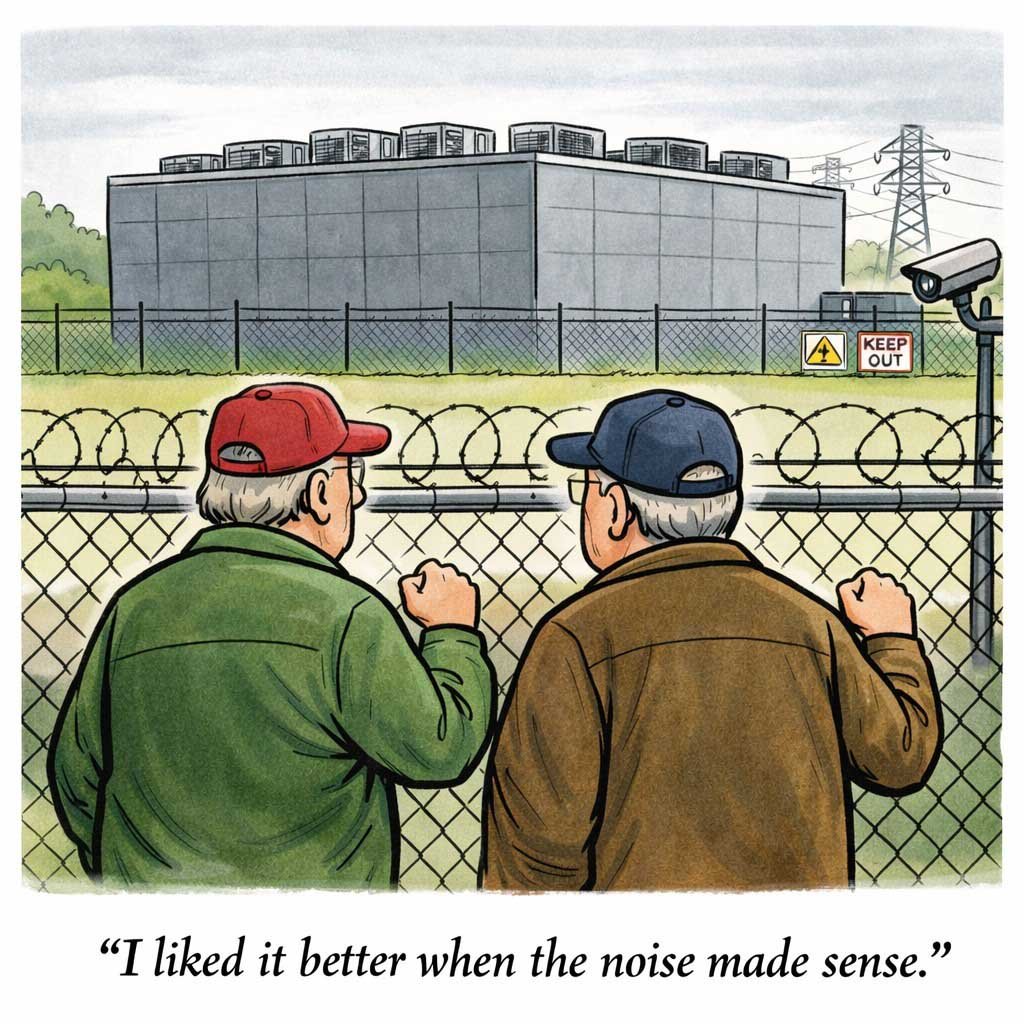
A data center is different. It sits quietly, consumes staggering amounts of electricity, drinks water by the gallon for cooling, employs fewer people than the average ribbon-cutting speech suggests, and performs feats of digital importance invisible to the naked eye. Where the old economy clanked, smoked, and announced itself like a man entering a VFW hall in golf shoes, the new one hums behind fencing.
This, naturally, is called progress.
To be fair, Jim and Kathy Stout gave Pitt Race a very good run. They bought the property in 2011 and reportedly invested more than $15 million in improvements, turning it into a real regional draw. In October 2025, they announced they were stepping away from ownership, and the facility closed after its final public events in November.
So the surprise isn’t that the property sold. The surprise is what the likely next chapter says about us.
It says the internet has now come for the race tracks.
It says even our recreational landscapes are being drafted into the service of cloud computing. It says Beaver County remains useful to America, though not always in ways a normal person would put on a postcard.
There is, I admit, something melancholy about that.
Pitt Race was more than a business. It was one of those odd local institutions that gave a county texture. It brought in racers, families, crews, and enthusiasts who could speak of suspension geometry for 40 straight minutes without once noticing they’d lost the women and children. It generated noise, traffic, commerce, and memories.
If local motorists still feel the need to hear something louder than a cooling fan, they do have options. Dirt-track fans can head to Lernerville in Sarver. Drag racers can point themselves toward Keystone Raceway Park in New Alexandria. And for those who prefer a proper road course — the sort of place where men discuss apexes with the gravity of cardiologists — Summit Point in West Virginia remains in operation. In other words, yes, there are still places nearby to race a car. There just aren’t any quite so close, or quite so much our own.
A server farm may generate tax revenue and strategic value, and perhaps it’ll prove a fine thing in the long run. But nobody will ever stand at the fence line of a data center and feel his pulse quicken.
At least not for sporting reasons.
Perhaps the deal will work out splendidly. Perhaps the tax base will improve, the site will be put to productive use, and Beaver County will march into the AI age wearing its usual expression of wary suspicion. Stranger things have happened here.
Still, one is allowed a sigh.
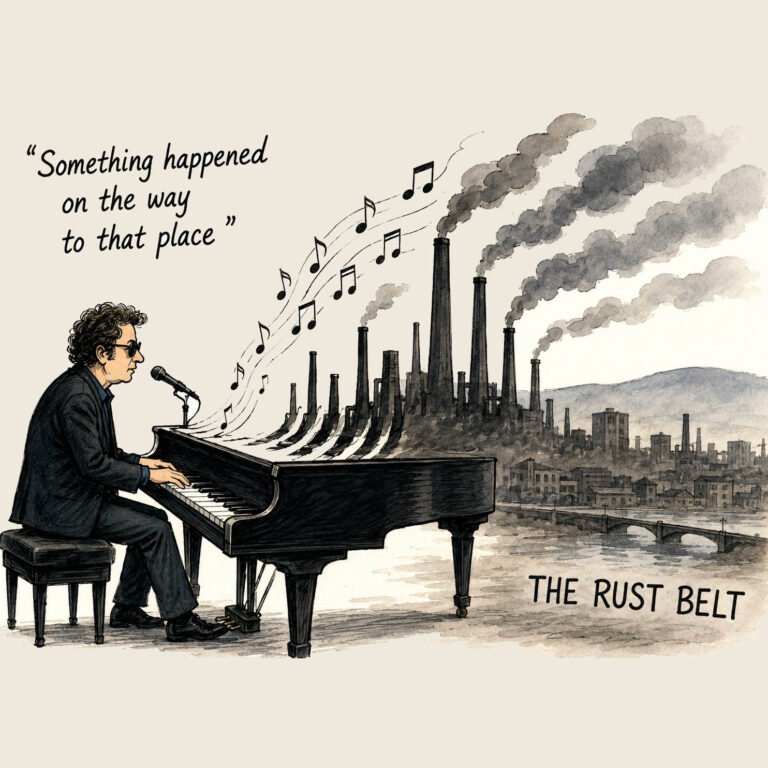
It’s an odd business, watching a raceway disappear into the cloud. First the mills went quiet. Then the malls faded into retail hospice. Now even the places built for velocity are becoming silent infrastructure for other people’s information.
That is how the future arrives in Beaver County.
Not with a bang.
With a closing.